
Lexus
Toyota's luxury masterpiece — crafted to perfection through Takumi artisans and Japanese Omotenashi hospitality.
Origins & Heritage
Lexus was born from one of the most audacious secret projects in automotive history. In 1983, Toyota's chairman Eiji Toyoda challenged his engineers with a single question: can we create the best car in the world? Chief Engineer Ichiro Suzuki led a covert development programme — codenamed F1 — that would run for six years, employ more than 3,700 engineers and designers, build 450 prototype vehicles, and consume over 2.3 million kilometres of test driving before a single car reached a showroom.
The result, the LS 400, was unveiled at the 1989 North American International Auto Show in Detroit. It arrived with a 4.0-litre V8 engine that was quieter, faster, and smoother than the V8s fitted to the Mercedes-Benz S-Class and BMW 7 Series of the era — while costing substantially less. American automotive press were stunned. The LS 400 shattered the assumption that luxury cars had to come from Europe.
The brand's commitment to customer satisfaction quickly became legendary. J.D. Power Initial Quality Studies repeatedly ranked Lexus first in its early years, and the dealer experience — rooted in the Japanese philosophy of Omotenashi (wholehearted hospitality) — set a new benchmark for how luxury car buyers expected to be treated. In 1998, Lexus launched the RX 300, effectively inventing the luxury crossover segment.
The 2005 IS brought a sharper, sports-orientated identity to Lexus. The F performance division followed, culminating in the handbuilt LFA supercar — 552 bhp, a 9,000 rpm naturally aspirated V10, and a carbon-fibre monocoque assembled by dedicated Takumi craftsmen at just one car per day. Only 500 were produced.
Today, Lexus is steering firmly towards electrification. The NX and RX hybrid SUVs are segment-defining, while the 2022 LF-Z Electrified concept signalled the brand's intention to transition to an all-electric lineup. The RZ 450e, launched in 2023, begins a new chapter in the brand's story.
Key Milestones
Iconic Models in Pictures
From the breathtaking LC 500 grand tourer to the segment-defining RX 500h hybrid SUV, Lexus builds cars that are as beautiful to look at as they are exceptional to drive.
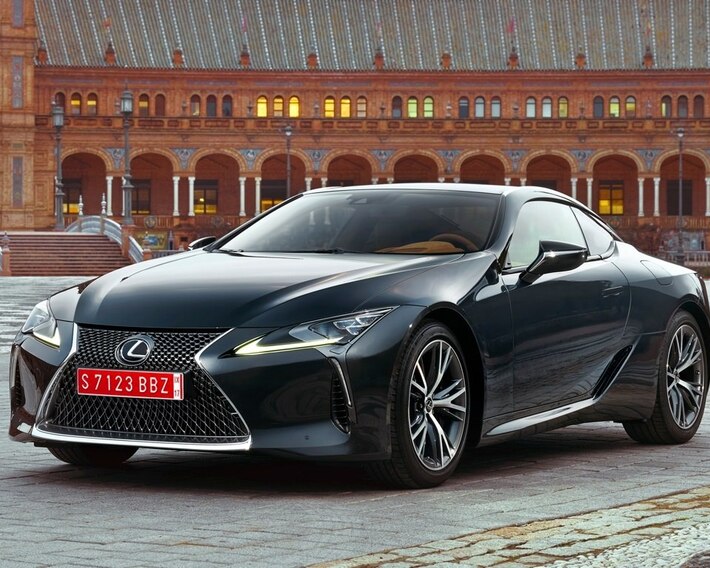
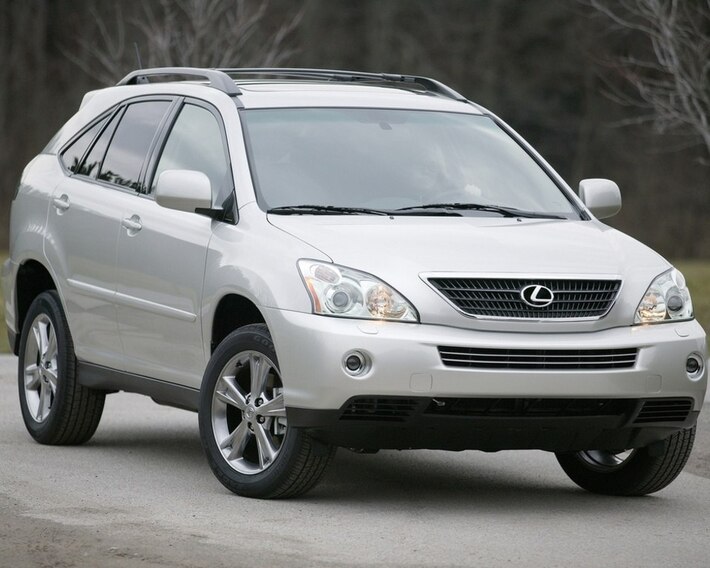
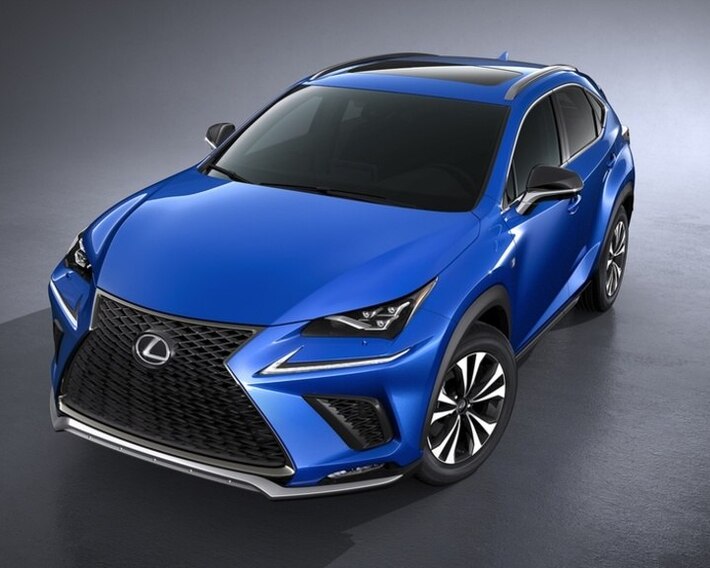
Current Model Lineup
Lexus fields a carefully curated range that spans flagship saloons, grand tourers, luxury SUVs, and performance variants — each engineered to deliver the brand's signature blend of serenity, quality, and driver engagement.
Innovation & Technology
Lexus technology is defined by decades of refinement rather than raw novelty. The Lexus Hybrid Drive system — inherited from Toyota but tuned to Lexus standards of smoothness — has been progressively developed across over 20 years of real-world deployment, making Lexus hybrids among the most mature and reliable electrified powertrains available in the luxury segment.
The brand's approach to craftsmanship is equally distinctive. Takumi craftsmen — artisans who have undergone years of intensive training — hand-finish interior components to tolerances measured in fractions of a millimetre. The needle stitching on a Lexus steering wheel, the perfectly symmetrical wood veneer on a dashboard, and the hand-polished aluminium trim pieces are all products of this philosophy of human precision.
- Lexus Hybrid Drive — decades of refinement delivering class-leading smoothness and real-world efficiency
- F SPORT tuning — Adaptive Variable Suspension, sport-calibrated steering, and aerodynamic body kits
- Mark Levinson Reference audio — 23-speaker, 2,400-watt reference-grade sound system tuned to each model's cabin acoustics
- Takumi hand-crafted finishing — master artisans applying decades of skill to every interior surface
- Lexus Safety System+ 3.0 — pre-collision with pedestrian and cyclist detection, proactive driving assist, emergency steering
- BladeScan adaptive high beams — rotating LED blades that precisely shape light without dazzling oncoming traffic
- 3D head-up display — depth-layered augmented reality navigation projected onto the windscreen
- LBX Morizo RR performance — GR-derived hot hatch technology bringing Gazoo Racing DNA to the Lexus entry level
Lexus in Azerbaijan & the Caucasus
Lexus occupies a distinct and prestigious position in the Azerbaijani automotive market. Premium hybrid SUVs — particularly the NX 350h and RX 500h — are extremely popular among Baku's professional and executive class, offering the refinement expected of a luxury vehicle alongside the efficiency advantages that have become increasingly relevant as fuel awareness rises across the region.
In the Azerbaijani market, Lexus is broadly regarded as a prestige brand on a par with Mercedes-Benz, with its Japanese precision and exceptional build quality resonating strongly with buyers who value long-term reliability alongside luxury. The NX in particular has found a devoted following in Baku, praised for its striking spindle-grille styling, hushed hybrid powertrain, and the brand's celebrated dealer experience.
Why Choose Lexus?
- Unmatched reliability in luxury: Lexus consistently tops J.D. Power dependability studies — rare for a luxury brand, and a direct consequence of Toyota Group engineering discipline.
- Omotenashi dealer experience: Lexus dealerships operate to a hospitality standard inspired by Japanese cultural values — every interaction is designed to exceed expectations.
- Hybrid leadership: More than two decades of hybrid refinement mean Lexus hybrid models are the most proven electrified luxury vehicles in the world.
- Takumi craftsmanship: Every Lexus is finished by hand by master artisans, ensuring a level of interior quality that no mass-production process can replicate.
- F SPORT performance: For drivers who want engagement alongside luxury, F SPORT models deliver adaptive suspension, sport-tuned steering, and distinctive aerodynamic styling.
- Strong resale value: Lexus models hold their value exceptionally well, making them a rational as well as an aspirational choice for discerning buyers.
BakuWheels uses cookies to improve your experience, analyse site traffic, and personalise content. By clicking Accept All, you consent to our use of cookies. Learn more in our Cookie Policy.