
Premier
Premier is one of India's oldest car manufacturers — the company that built the iconic Padmini sedan and played a foundational role in establishing India's automotive industry.
Origins & History
Premier Automobiles Limited was established in 1944 in Mumbai, making it one of India's very first automotive manufacturers. The company began production in the early post-independence era with a technical collaboration with Fiat of Italy — assembling Fiat 1100 models under licence in a period when India's industrialisation policy required domestic production of vehicles rather than outright importation.
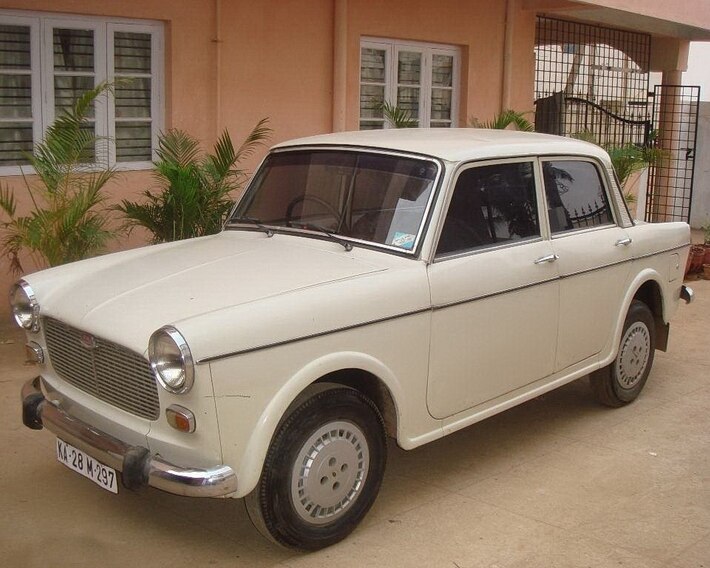
Premier's most famous product was the Padmini — an Indianised adaptation of the Fiat 1100D that entered production in the 1960s and became one of the most recognisable vehicles on Indian roads for three decades. Robustly built and mechanically straightforward, the Padmini served as taxi, family car, and business vehicle across Indian cities, particularly in Mumbai where it became the defining character of the city's taxi fleet for generations.
The opening of the Indian market in the 1990s brought international competition that Premier struggled to meet. The company attempted to adapt with new models including the Premier Sigma and Rio, but faced formidable competition from Maruti Suzuki, Hyundai, and Tata. Premier's production of passenger cars effectively ended in the 2000s, though the brand has retained a presence in electric vehicles and light commercial vehicles. The Padmini remains a beloved symbol of mid-century Indian automotive culture.
Key Milestones
Notable Models
Premier's vehicle range centred on practical, affordable sedans produced under international licence — particularly the long-lived Padmini that defined Indian urban transport for a generation.
Engineering Philosophy
Premier's technical approach was shaped by the requirements of Indian conditions and the economics of a developing market — prioritising durability, simplicity of maintenance, and affordability over technical sophistication or performance.
- Localisation of imported technology — Premier's success with the Padmini demonstrated the importance of adapting foreign vehicle designs to Indian conditions, improving durability, simplifying maintenance procedures, and enabling local parts production
- Taxi-grade durability standards — the Padmini's legendary durability in Mumbai taxi service — often running hundreds of thousands of kilometres — reflects Premier's understanding that Indian commercial users needed vehicles that could operate reliably with minimal maintenance in demanding conditions
- Accessible repair philosophy — the Padmini's simple mechanics could be understood and repaired by small workshops throughout India, giving it a total cost of ownership advantage over more sophisticated competitors in markets where dealer service networks were limited
- Urban mobility adaptation — Premier's long experience producing vehicles for Indian cities gave it deep understanding of the dimensions, turning circles, and power requirements appropriate for dense, slow-moving urban traffic
Premier in Azerbaijan
Premier vehicles are not present in the Azerbaijani market. The brand was primarily a domestic Indian manufacturer that never established distribution outside South Asia. Any Premier vehicle in Azerbaijan would represent a highly unusual personal import.
For those interested in global automotive history, Premier's story is a compelling illustration of India's post-independence industrialisation — a company that used licensed foreign technology to build a domestic automotive industry from scratch, producing vehicles that shaped a generation's experience of urban mobility.
Why Premier Matters
- India's automotive founding story: Premier's establishment in 1944 — and its decades of production using Fiat and Nissan technology — represents one chapter of the foundational story of Indian automobile manufacturing, a story that runs through to India's current position as one of the world's largest car markets.
- The Padmini's cultural legacy: The Premier Padmini occupies a unique place in Indian popular culture — the quintessential Mumbai taxi, the car that transported ordinary Indians through the city's growth from post-independence megacity to modern metropolis.
- Durability as engineering achievement: The Padmini's ability to sustain commercial taxi service for hundreds of thousands of kilometres on Indian roads represents a genuine engineering achievement — producing a vehicle so robust and maintainable that it outlasted virtually every competitor from the same era.
- Import substitution success: Premier's decades of licensed production under Indian industrial policy demonstrate how developing economies can build automotive manufacturing capability using foreign technology partnerships as a foundation — a model that influenced automotive development in multiple emerging markets.
Iconic Models in Pictures
Premier vehicles — a visual selection of the iconic models produced by this manufacturer.
BakuWheels uses cookies to improve your experience, analyse site traffic, and personalise content. By clicking Accept All, you consent to our use of cookies. Learn more in our Cookie Policy.