

UAZ — Ulyanovsk Automobile Plant
UAZ builds some of the most capable and durable off-road vehicles ever made — military-grade 4x4s born from wartime necessity, refined through decades of use in the world's harshest environments, and beloved by hunters, farmers, and adventurers across the former Soviet world.
Origins & Heritage
The Ulyanovsk Automobile Plant (UAZ) was established in 1941 in the city of Ulyanovsk on the Volga River — relocated eastward from Moscow as German forces advanced in the early months of Operation Barbarossa. The plant's original mandate was to produce military vehicles for the Red Army, and its first products were adapted from GAZ designs — rugged, simple machines built for the demands of war rather than the expectations of peacetime comfort. This military DNA has never left UAZ: every vehicle the company has ever built reflects the doctrine that a car must work in conditions where a lesser machine would fail.
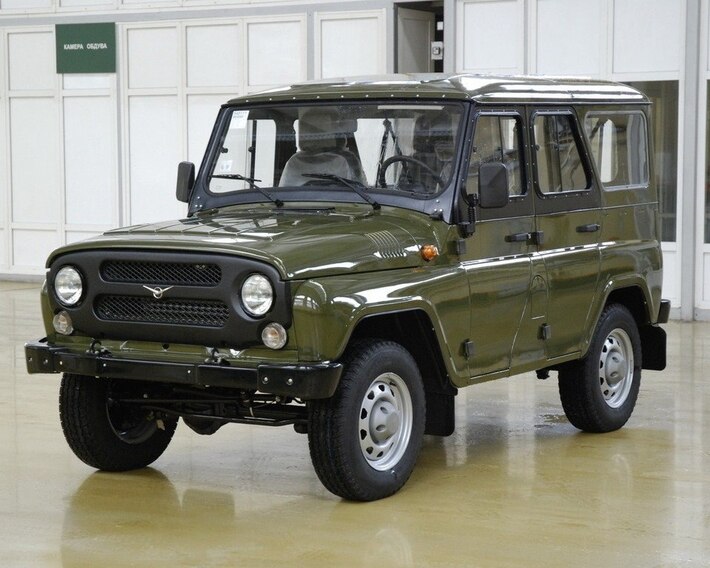
The UAZ 469 — introduced in 1972 — became the definitive expression of this philosophy and one of the most celebrated off-road vehicles in history. With 400 mm (nearly 16 inches) of ground clearance, differential locks front and rear, a bulletproof beam-axle construction that could be repaired with basic tools in the field, and the ability to ford water up to 700 mm deep, the UAZ 469 was used by the Soviet military in Afghanistan, Angola, and dozens of other conflicts. It served as an ambulance, troop carrier, command vehicle, and general-purpose workhorse across the entire Warsaw Pact and many client states beyond.
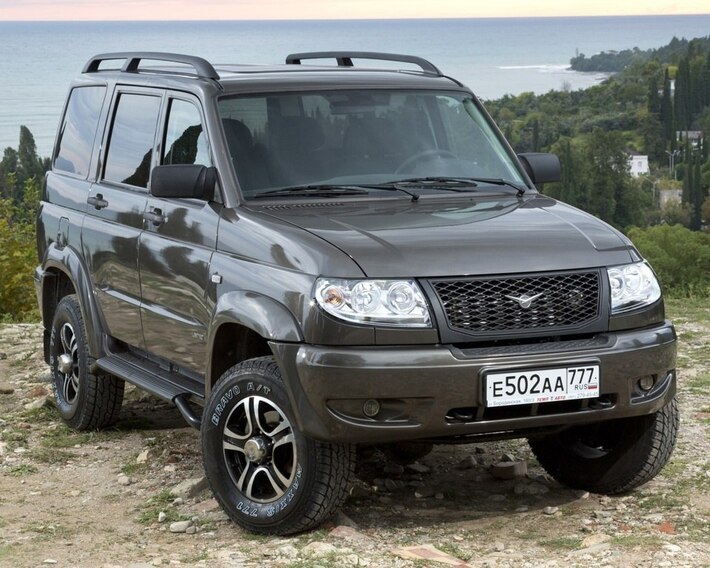
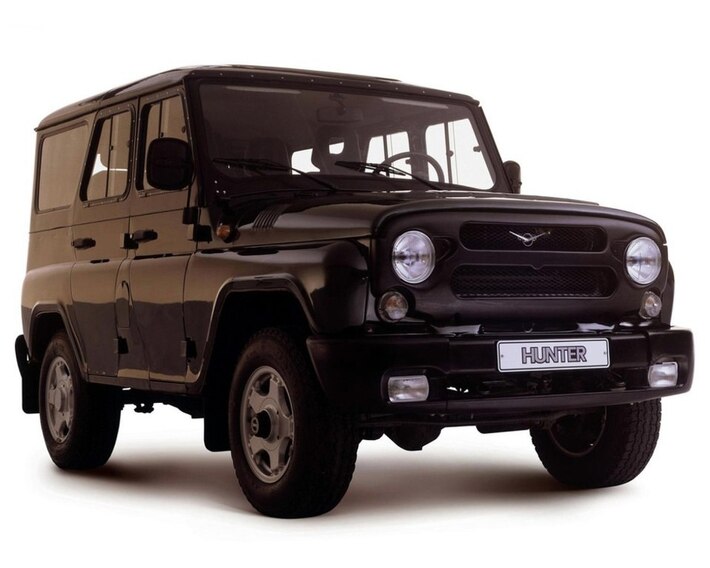
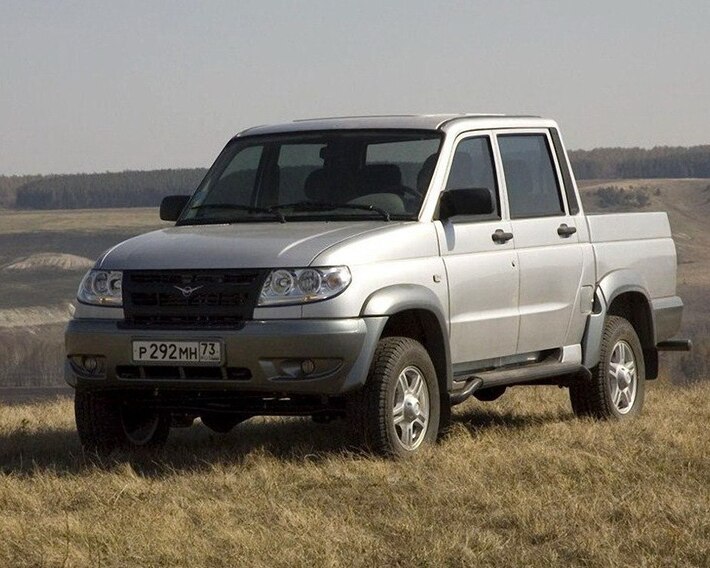
Today, UAZ operates under the Sollers Group and produces three core vehicle families: the Patriot SUV, the Pickup (a light truck based on the Patriot platform), and the Hunter — a modernised descendant of the original UAZ 469 that remains in production, still beloved by hunters, farmers, and off-road enthusiasts who value capability over comfort. UAZ exports to over 25 countries, with strong markets in Latin America, Africa, and Central Asia.
Key Milestones
Iconic Models in Pictures
UAZ's vehicles are defined by their raw capability — the Hunter's military-grade design philosophy and the Patriot's modern interpretation of the same unstoppable ethos.
Model Lineup
UAZ's current lineup is small and focused on genuine off-road capability — each model shares the brand's commitment to mechanical robustness, field-repairability, and go-anywhere performance that made the UAZ 469 legendary.
Technology & Innovation
UAZ's technology philosophy has always prioritised repairability and reliability over sophistication. The UAZ 469 and its Hunter successor can be completely disassembled and reassembled by one person with basic hand tools — a design philosophy that reflects the realities of operating in remote locations thousands of kilometres from the nearest dealership. Every UAZ vehicle features manually-operated 4WD engagement, manual transfer case, and conventionally-designed beam axles that can be serviced with components available in any agricultural supply shop across the CIS.
Recent investment has brought the Patriot closer to international standards — an updated 2.7-litre ZMZ Pro petrol engine with sequential fuel injection meets Euro 5 emissions requirements while improving fuel efficiency and reliability. A six-speed manual gearbox replaced the older four-speed unit, and electronic stability control (ESC) and ABS were added to the Patriot's safety equipment list. However, UAZ has been careful to preserve the mechanical simplicity that makes its vehicles repairable in the field — avoiding the complex electronic systems that can strand more sophisticated vehicles when they fail far from a service centre.
- Manual 4WD with low-range transfer case — true off-road capability at the touch of a lever, no electronics required
- Solid beam axles front and rear — maximum durability, maximum ground clearance, maximum repairability
- ZMZ Pro 2.7L engine — updated fuel injection for improved efficiency and Euro 5 compliance
- 300 mm fording depth (Hunter) — water crossing capability that most modern SUVs cannot match
- Field-repairability design — every UAZ serviceable with basic tools and widely available standard parts
UAZ in Azerbaijan & the Caucasus
UAZ vehicles have deep roots in Azerbaijan — the country's Soviet-era military, border guard, and agricultural fleets relied heavily on UAZ 469s and UAZ-452 Bukhanka vans. These vehicles are still visible across Azerbaijan's rural regions, where their legendary durability has kept many examples in daily service for decades. The Nagorno-Karabakh conflict period saw UAZ vehicles used extensively in military and logistical roles by Azerbaijani forces — cementing the brand's association with reliability in extreme conditions.
The Greater Caucasus mountain range — with its rough terrain, narrow roads, and extreme seasonal conditions — is exactly the environment where UAZ vehicles excel. Hunters, shepherds, and villagers in Azerbaijan's mountain regions continue to choose UAZ Hunters for the same reason they always have: these vehicles simply do not stop when others would. The brand's used car market in Azerbaijan remains active, and finding spare parts is straightforward given the vehicle's widespread historical distribution across the region.
Why Choose UAZ?
- Military-grade off-road: UAZ 469/Hunter capability — 400 mm ground clearance, differential locks, and water fording that surpasses vehicles costing three times the price.
- Field repairability: Every UAZ can be serviced with basic tools and standard parts available anywhere in the CIS — zero dependence on specialist dealers or electronic diagnostics.
- Legendary durability: UAZ vehicles have operated in Afghanistan, Angola, Siberia, and the Caucasus — tested in conditions that destroy less robust machines.
- Affordable ownership: UAZ pricing is significantly lower than Western SUV equivalents — accessible off-road capability for farmers, hunters, and mountain community residents.
- Unique character: UAZ ownership connects you to a genuine piece of automotive history — a vehicle with purpose, provenance, and personality unlike any modern crossover.
BakuWheels uses cookies to improve your experience, analyse site traffic, and personalise content. By clicking Accept All, you consent to our use of cookies. Learn more in our Cookie Policy.