

ZIS
ZIS — Zavod imeni Stalina, or the Stalin Automobile Plant — was one of the Soviet Union's most historically significant vehicle manufacturers, producing luxury state limousines, trucks, buses, and military vehicles from its vast Moscow factory between 1916 and 1956. The ZIS name was inextricably linked to Soviet state power: its limousines carried Stalin, Beria, and the Politburo; its trucks moved the Red Army; and its buses connected Moscow. After Stalin's death, the plant was renamed ZIL and continued production into the post-Soviet era.
Origins & Heritage
The factory that would become ZIS was established in 1916 as the AMO plant — Avtomobilnoye Moskovskoye Obshchestvo, or Moscow Automobile Society — to manufacture Fiat trucks under licence for the Russian Imperial Army. The Revolution of 1917 interrupted production, but the Soviet state recognised the factory's strategic importance and invested heavily in its modernisation through the 1920s and early 1930s.
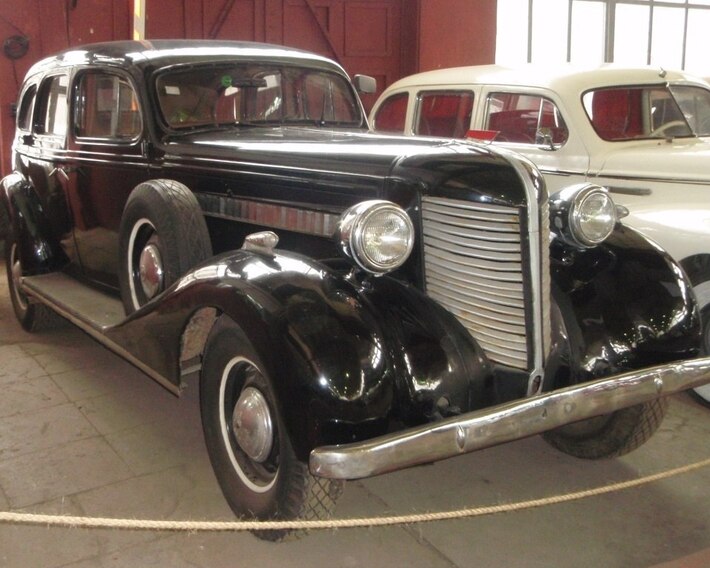
In 1933, the plant was renamed ZIS — Zavod imeni Stalina — in honour of Joseph Stalin, reflecting the factory's central importance to the Soviet industrialisation programme. Under this name, ZIS produced its first automobile: the ZIS-101, a large luxury limousine designed for senior Party officials and state functions. The ZIS-101 was directly inspired by American luxury cars of the period — particularly the Buick — and represented the Soviet Union's ambition to project both power and modernity through its state vehicles.
ZIS produced vehicles under this name until 1956, three years after Stalin's death, when the de-Stalinisation campaign led by Khrushchev resulted in the factory being renamed ZIL — Zavod imeni Likhacheva — after the plant's long-serving director Ivan Likhachev. The ZIS era represents one of Soviet industry's most historically loaded chapters: a period when automotive production was inseparable from political ideology, and when the vehicles produced expressed the ambitions and contradictions of the Stalin period.
Key Milestones
Notable Models
ZIS produced a range of vehicles serving the Soviet state's needs — from ceremonial limousines used by the leadership to the workhorses that built and defended the country. Each model reflects the period's political and industrial priorities.
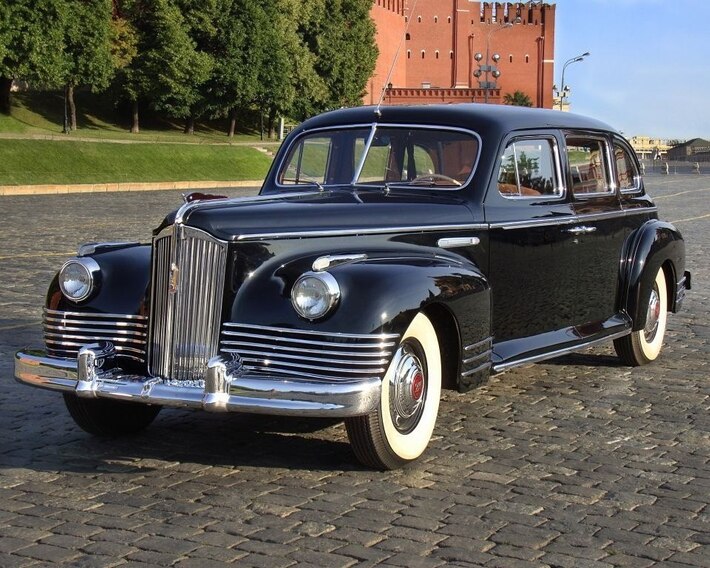
ZIS in Pictures
ZIS vehicles represent Soviet design at its most politically loaded — luxury limousines that expressed state power and industrial ambition, and trucks that moved an empire.
Technology & Manufacturing
ZIS manufacturing was characterised by Soviet industrial pragmatism: large-scale production of functional, robust vehicles using adapted American engineering principles and Soviet-sourced materials. The luxury limousines drew directly on American design and mechanical concepts — the ZIS-101 on Buick, the ZIS-110 on Packard — adapted for Soviet production conditions and the specific requirements of state ceremonial use.
- American-inspired chassis engineering — ZIS luxury models were designed around American chassis principles of the 1930s and 1940s, providing the large, stable platforms suitable for formal state use
- Armoured variant capability — ZIS-115 (armoured ZIS-110) featured steel armour plating and bulletproof glass for the Soviet leadership, representing an early integration of protection technology into state vehicle manufacture
- Mass truck production expertise — ZIS truck platforms were engineered for extreme durability in Soviet conditions: harsh winters, unpaved roads, and demanding logistics requirements that broke less robustly built alternatives
- Bus platform integration — the ZIS-155 bus demonstrated the factory's capability to adapt automotive platforms for public transport applications, a flexibility that reflected Soviet industrial planning priorities
- In-house body manufacturing — unlike many Western manufacturers that used specialist coachbuilders, ZIS produced its own bodies in-house, reflecting the Soviet preference for self-sufficient factory operations
ZIS in Azerbaijan
ZIS vehicles — particularly the ZIS-5 truck and its successors — were present throughout Soviet Azerbaijan during the ZIS manufacturing period. Soviet industrial vehicles served Azerbaijan's oil industry, agriculture, and construction in the same way they did across all Soviet republics, and ZIS trucks were among the most common heavy vehicles of the period.
Today, surviving ZIS vehicles in Azerbaijan are rare and historically significant collector items, representing a tangible connection to the Soviet industrial period. The ZIS-101 and ZIS-110 limousines, in particular, are exceptionally rare survivors — few outside dedicated Soviet vehicle museums and private collections in Russia. For Azerbaijani automotive historians and collectors, ZIS vehicles represent an important chapter in the mechanical heritage of the Soviet era.
Why ZIS Matters
- Unmatched Soviet automotive history: ZIS vehicles are among the most historically significant Soviet-era automobiles, representing the intersection of Stalinist industrialisation, Cold War state symbolism, and Soviet design ambition in a single manufacturer.
- Exceptional collector rarity: Surviving ZIS automobiles — particularly the ZIS-101 and ZIS-110 limousines — are among the rarest Soviet vehicles in existence, with very few examples outside dedicated museum collections. Any complete, running example represents an extraordinary find.
- Direct connection to Soviet history: ZIS vehicles carried Stalin and the Soviet leadership; their ownership carries a weight of historical context that no other type of vehicle can provide — a physical connection to one of the twentieth century's most consequential political periods.
- Soviet industrial design at its most ambitious: The ZIS limousines represent the Soviet Union's attempt to match American luxury car design using its own resources — a fascinating hybrid of American mechanical influence and Soviet political symbolism.
- Heritage of the entire ZIL lineage: ZIS is the direct predecessor of ZIL, and understanding ZIS is essential to understanding the complete history of Moscow's most important automotive factory — a lineage that runs from 1916 to 2014 and encompasses state limousines, trucks, buses, and military vehicles.
BakuWheels uses cookies to improve your experience, analyse site traffic, and personalise content. By clicking Accept All, you consent to our use of cookies. Learn more in our Cookie Policy.