

ZIL
The Limousine of the Soviet State. An Icon of Russian Power.
Origins & Heritage
ZIL — Zavod imeni Likhacheva, or the Likhachev Plant — traces its origins to 1916, when the AMO automobile plant was established in Moscow. After the Bolshevik revolution, the facility was nationalised and reorganised as part of the Soviet industrial programme. In 1931, following a major reconstruction assisted by Ford Motor Company technical cooperation, the plant was renamed ZIS (Zavod imeni Stalina — Stalin's Plant) and began producing trucks and buses modelled on American designs. The factory name was changed again to ZIL in 1956, after Stalin's death, and the brand remained a symbol of Soviet manufacturing capability throughout the Cold War era.
ZIL became most celebrated for its large, handcrafted limousines — vehicles of state reserved for the exclusive use of Soviet Communist Party leadership, heads of government, and visiting foreign dignitaries. Unlike mass-market vehicles, ZIL limousines were produced in extremely small numbers, each assembled by hand over many months by skilled craftsmen. The ZIL-111, ZIL-114, ZIL-115, and ZIL-41047 — the flagship limousines of their respective eras — were direct expressions of Soviet industrial ambition and political theatre, designed to project power and permanence to domestic and foreign audiences.
Beyond state limousines, ZIL was a major producer of heavy-duty trucks — workhorses of the Soviet construction, military, and agricultural sectors. The ZIL-130 truck, produced from 1964, became one of the most widely used vehicles in the Soviet Union and across the socialist bloc, with production eventually exceeding three million units. After the Soviet collapse in 1991, ZIL struggled to adapt to market conditions, and passenger car production effectively ceased by the 2010s. The Moscow city government, as a major shareholder, eventually shifted the plant site to a mixed-use development, effectively ending ZIL as an active vehicle manufacturer.
Key Milestones
Iconic Models in Pictures
ZIL's vehicle history encompasses handcrafted state limousines used by Soviet leaders, heavy-duty trucks that built the socialist economy, and armoured vehicles that defined Soviet military logistics — each representing a distinct dimension of the ZIL industrial legacy.
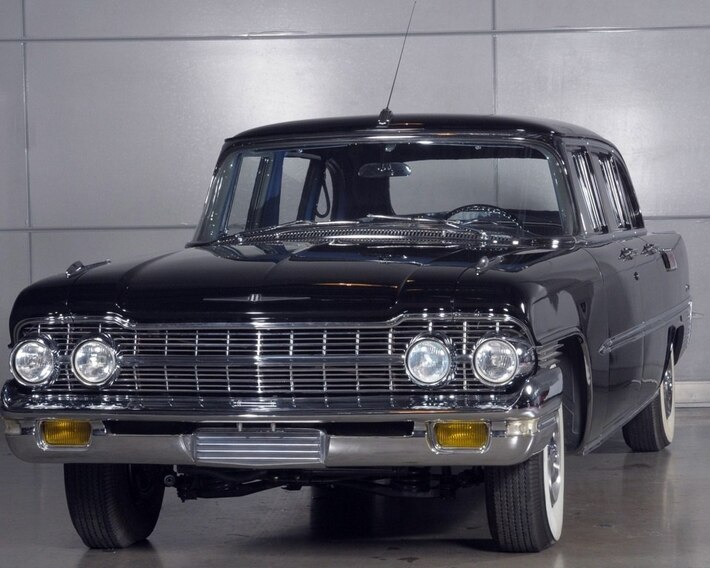
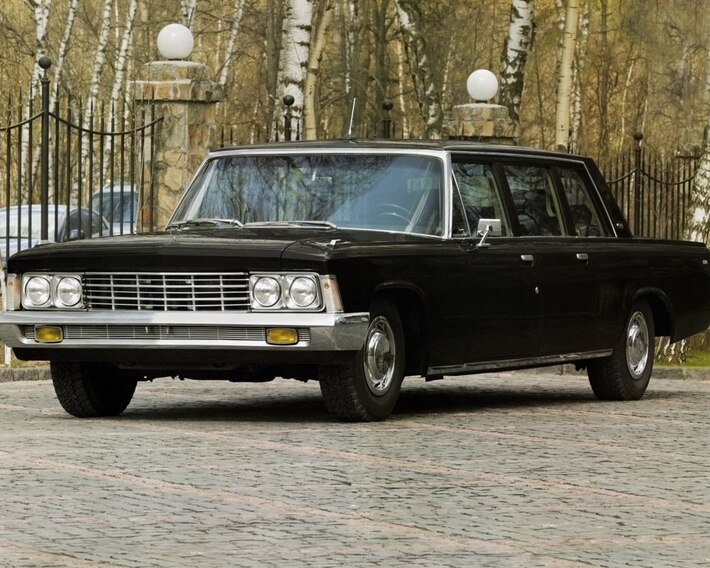
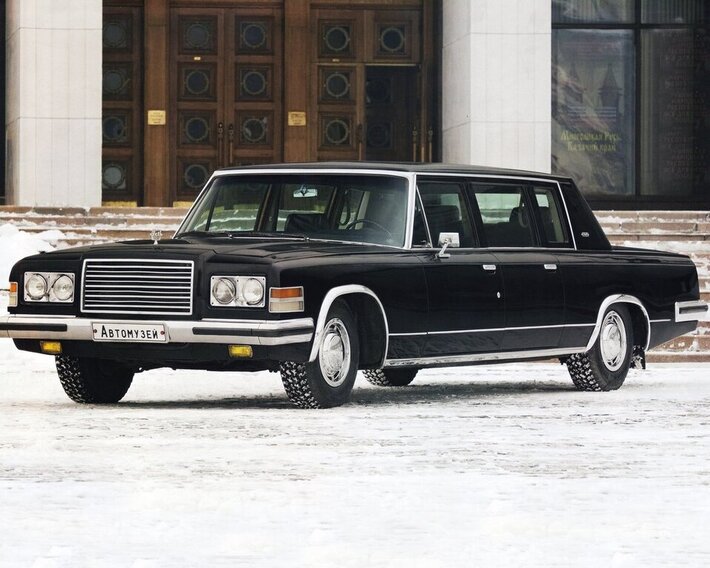
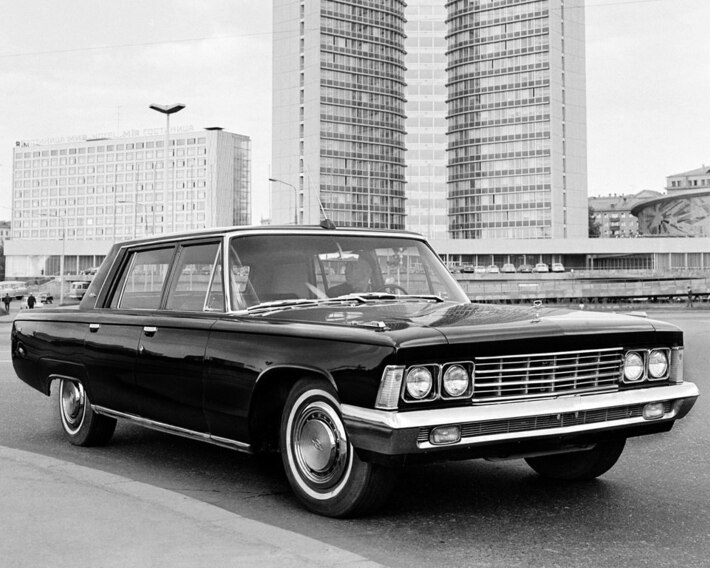
Model Lineup
ZIL's passenger vehicle history is defined by a succession of exclusive state limousines, each representing the aesthetic and political priorities of its era, alongside a vast commercial vehicle range that underpinned Soviet and post-Soviet industrial operations.
Engineering & Technology
ZIL's engineering philosophy prioritised prestige, reliability, and Soviet self-sufficiency over lightness or fuel economy. State limousines were engineered with the expectation of indefinite operational life — maintained by dedicated teams of government mechanics — and were built with redundant systems, armoured bodywork, and powerful naturally aspirated V8 engines designed to function reliably without sophisticated service infrastructure. The commercial vehicle range applied similar principles of durability and mechanical simplicity to the demands of large-scale industrial and agricultural operations.
- Large-displacement naturally aspirated V8 engines — ZIL's passenger limousines used 5.5–7.7 litre V8 units delivering smooth, effortless power delivery suitable for the sedate, dignified travel requirements of state occasions
- Armoured bodywork on state limousines — ZIL government vehicles incorporated substantial steel armour in doors, floor, and roof, with ballistic glass in all passenger compartments, providing protection exceeding most contemporary Western equivalents
- Full hydraulic systems — power steering, power brakes, and hydraulic seat adjustment were standard on ZIL state cars from the late 1950s, unusual levels of sophistication for Soviet engineering of that era
- Air suspension on later limousine models — providing the smooth, controlled ride quality required for formal state transport and allowing ride height adjustment for ceremonial and security requirements
- Heavy-duty portal axle systems on military and off-road platforms — enabling ZIL's four-wheel-drive and eight-wheel-drive vehicles to traverse terrain inaccessible to conventional military and civilian vehicles across the vast Soviet territory
ZIL in Azerbaijan
ZIL vehicles — particularly the ZIL-130 truck — were a ubiquitous presence across Soviet Azerbaijan and remained in service long after independence. As one of the USSR's primary medium-duty trucks, the ZIL-130 was deployed throughout Azerbaijani agriculture, construction, and industrial logistics networks. Many ZIL-130 units remained operational in rural Azerbaijan well into the 2000s, maintained by local mechanics using the vehicle's simple and widely understood mechanics — a testament to the engineering pragmatism that defined ZIL's commercial range.
ZIL state limousines are occasionally encountered in Azerbaijan as collector and historic vehicles — prized by enthusiasts of Soviet-era automotive history. The ZIL-41047, in particular, carries strong associations with the Soviet leadership era that shaped Azerbaijan's political and industrial development. For buyers or collectors with an interest in the Soviet automotive heritage, encountering a ZIL in the Azerbaijani used market represents access to a genuinely historic vehicle category with no equivalent in contemporary production.
Why Consider a ZIL?
- Unmatched Soviet heritage value: ZIL state limousines are among the rarest and most historically significant vehicles produced in the Soviet era — genuine artefacts of the Cold War political landscape that carry extraordinary cultural and historical provenance.
- ZIL-130 truck durability: The ZIL-130 truck was engineered for Soviet industrial service conditions and has demonstrated operational lives far exceeding Western equivalents — units maintained by knowledgeable mechanics continue to provide reliable service decades after manufacture.
- Simple, serviceable mechanics on commercial models: ZIL's truck and utility range used mechanically straightforward designs with large, accessible components — the ZIL-130's engine, gearbox, and axles can be serviced by any skilled mechanic with basic tooling and widely available parts.
- Distinctive collector and display value: ZIL passenger vehicles are exceptionally rare outside of Russian state collections — a ZIL limousine in Azerbaijan represents a unique collector piece with provenance, visual impact, and historical significance that no modern vehicle can replicate.
- Robust extreme-condition capability on off-road models: ZIL's all-terrain military and utility vehicles were designed for the harshest operating environments in the Soviet Union — Siberian winters, Central Asian desert conditions, and roadless terrain — making surviving examples capable off-road platforms with genuine operational pedigree.
BakuWheels uses cookies to improve your experience, analyse site traffic, and personalise content. By clicking Accept All, you consent to our use of cookies. Learn more in our Cookie Policy.