

Alfa Romeo 1900 (1950–1959)
The Alfa Romeo 1900 was a landmark in Italian automotive history — Alfa Romeo’s first car built on a true assembly line, its first unibody construction, and the bridge between the hand-built pre-war models and the modern mass-production era. Launched in 1950, the 1900 carried Alfa’s renowned twin overhead camshaft engine and was offered with a range of coachbuilt bodies by Touring, Zagato, and Pininfarina that produced some of the most beautiful Italian cars of the early 1950s.
Overview
When Alfa Romeo presented the 1900 at the Paris Motor Show in October 1950, the company was making a statement that went far beyond the technical specifications of the car itself. For the first time, Alfa Romeo was committing to genuine mass production on an assembly line — a transformation that the company hoped would bring its twin-cam engineering excellence to a wider market than the hand-built, coachwork-dependent models of the pre-war and immediate post-war years had allowed. The 1900’s advertising tagline captured this ambition perfectly: “La macchina da corsa per la famiglia” — the racing car for the family.
The 1900 was technically significant in several respects. It was the first Alfa Romeo to use unibody (monocoque) construction, abandoning the separate body-on-frame approach of all previous Alfa models. It was the first Alfa Romeo to be built on an assembly line using modern production techniques, though the standard of assembly remained high compared to contemporary mass-market vehicles. And it carried Alfa’s twin overhead camshaft four-cylinder engine — a design that traced its lineage directly to the racing cars of the immediate post-war period — in a form accessible to a family buyer at a realistic price.
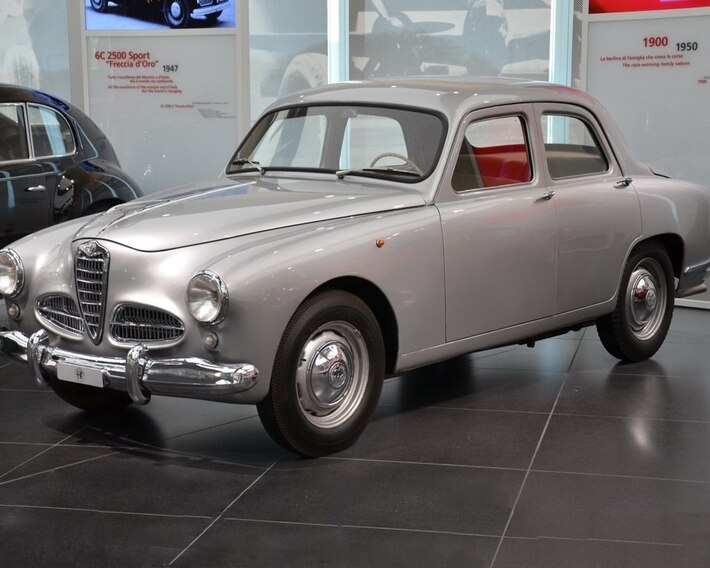
The standard 1900 Berlina body was clean and modern by early 1950s standards, with a full-width body, an integrated boot, and a three-box sedan profile that looked thoroughly contemporary rather than the inherited pre-war design language that still influenced many European cars of the period. The interior was well-appointed for the segment, and the driving position and instrument layout reflected Alfa’s sporting tradition even in a family car context.
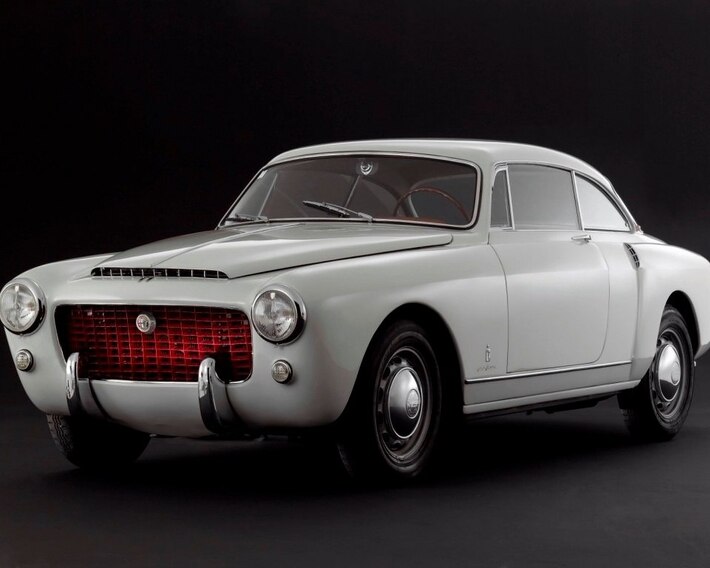
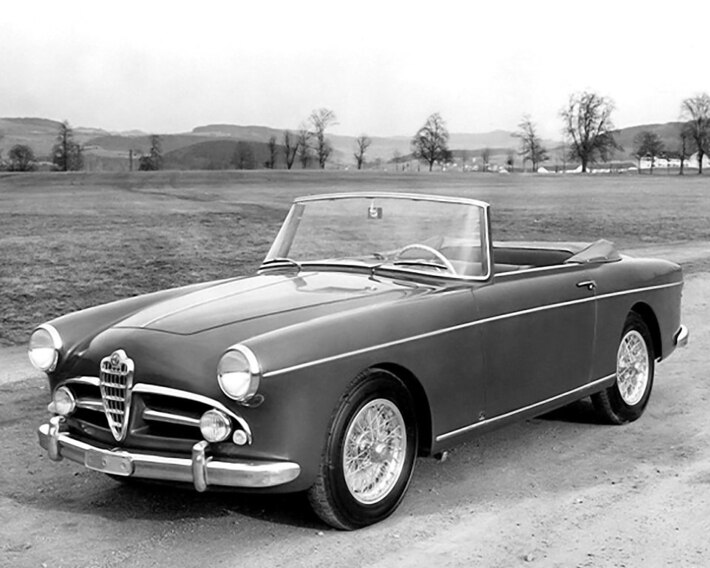
The 1900 became the basis for a remarkable range of coachbuilt variants that showcased the finest Italian coachbuilding talent of the period. Touring Superleggera produced the 1900 Sprint coupe using the superleggera lightweight construction method; Zagato built the competition-oriented CSS (Coupe Sprint Zagato) berlinetta with the distinctive double-bubble roofline; and Pininfarina produced both a coupe and a cabriolet on the 1900 chassis. These coachbuilt variants — particularly the Zagato CSS and the Touring Sprint — are now among the most highly valued Italian collector cars of the early 1950s.
Competition use of the 1900 was immediate and successful. The TI (Turismo Internazionale) variant with its higher compression engine and closer-ratio gearbox was used extensively in Italian racing, including multiple Mille Miglia entries. The CSS Zagato was built specifically for competition use and achieved success in Italian and European GT racing events throughout the mid-1950s. The 1900’s twin-cam engine proved easily tuneable to significant power outputs with competition preparation, reinforcing the claim in the advertising copy.
Alfa Romeo 1900 in Pictures
The coachbuilt 1900 variants — particularly the Touring Sprint and the Zagato CSS — represent Italian coachbuilding at its finest, using the 1900’s twin-cam chassis as a canvas for extraordinary bodywork.


Key Specifications
- Engine: 1884cc twin overhead camshaft inline-four cylinder; aluminium cylinder head with hemispherical combustion chambers; chain-driven camshafts; twin Solex or Weber carburettors; 80 hp (berlina standard), 90 hp (TI), 90–115 hp (Sprint/CSS variants). The architecture is the same lineage that would evolve into the celebrated 1570cc and 1750cc engines of the 105/115 series twelve years later.
- Construction: Unibody (monocoque) steel construction — the first Alfa Romeo to abandon the separate body-on-frame architecture. This was a fundamental engineering commitment to modern manufacturing; the 1900 was designed from the outset to be assembled on a production line rather than hand-built by coachbuilders.
- Suspension: Independent front suspension with wishbones and coil springs; live rear axle with coil springs and radius rods on the berlina variants. More sophisticated than the beam front axle of pre-war designs; the independent front gave the 1900 a markedly more refined ride and handling balance than its predecessors.
- Gearbox: 4-speed manual; synchromesh on top three gears (first gear non-synchromesh, requiring a heel-and-toe technique for smooth downchanges). The TI used a closer-ratio gearbox for better performance in competition use.
- Coachbuilt variants: Touring Superleggera Sprint (1951–1954): lightweight coupe using the superleggera tube-frame and aluminium panel construction over the standard chassis; approximately 700 built. Zagato CSS (1953–1956): competition berlinetta with double-bubble roofline and full aluminium body; approximately 30 built; among the most valuable. Pininfarina coupe and cabriolet: elegant coachwork on standard or Sprint chassis; limited production.
- Production volume: Approximately 17,000 total including all variants — berlina (the vast majority), TI, Sprint, CSS, and cabriolet. The berlina was by far the most numerous; the CSS Zagato was built in very small numbers for competition customers.
- Racing history: The 1900 TI competed extensively in the Mille Miglia throughout the early 1950s. The CSS Zagato won multiple GT class events in Italian national racing. The twin-cam engine’s development in this period directly informed the race engines that would power the Giulietta and Giulia racing programmes in the late 1950s and 1960s.
- Historical significance: The 1900 was the pivotal transition model in Alfa Romeo’s post-war history; it transformed the company from an artisanal manufacturer of expensive, limited-production cars into a producer of sports-oriented cars for a broader Italian middle-class market. Without the 1900, the Giulietta, Giulia, and 105/115 series cars that followed would not have been possible.
Variant Comparison
| Variant | Engine | Power | Gearbox | Best For |
|---|---|---|---|---|
| Alfa Romeo 1900 Berlina (1950–1958) | 1884cc DOHC inline-four, twin carburettors | 80 hp at 5,200 rpm | 4-speed manual (synchromesh top 3) | The most numerous variant and the foundation of the 1900 family; the first Alfa built on a production line; combines post-war Italian elegance with the engineering sophistication of the Alfa twin-cam; now the most accessible 1900 variant for collectors |
| Alfa Romeo 1900 TI (1951–1953) | 1884cc DOHC inline-four, higher compression, twin carburettors | 90 hp at 5,500 rpm | 4-speed manual (close-ratio) | The Turismo Internazionale — the sporting version of the berlina; higher compression ratio, close-ratio gearbox, and uprated suspension; used extensively in Italian motorsport including the Mille Miglia; more desirable to collectors than the standard berlina due to its competition history |
| Alfa Romeo 1900 Sprint (1951–1954) | 1884cc DOHC inline-four, tuned | 90–100 hp at 5,500 rpm | 4-speed manual | The Touring Superleggera coupe body on the 1900 chassis; one of the most elegant Italian coupe designs of the early 1950s; relatively small production numbers (~700 built); significantly more valuable than the berlina; sought by collectors who want a definitive early 1950s Italian GT coupe |
| Alfa Romeo 1900 CSS Zagato (1953–1956) | 1884cc DOHC inline-four, competition-prepared | 100–115 hp | 4-speed manual (competition) | The most extreme and rarest 1900 variant; lightweight Zagato berlinetta body with distinctive double-bubble roofline; built for competition use; among the most sought Zagato-bodied Alfa Romeos and consequently among the most valuable; prices regularly exceed €200,000 at major auctions for exceptional examples |
What Makes the 1900 Stand Out
The 1900 is not merely a collector car — it is a landmark in the development of the modern Italian automobile, a bridge between the artisanal pre-war era and the industrialised post-war world.
- The foundation of modern Alfa Romeo: Every Alfa Romeo road car built between 1950 and 2010 can trace its mechanical lineage to the 1900. The twin-cam engine, the unibody construction, the sports-oriented family car philosophy — all originate with the 1900. Owning one is owning the root of Alfa Romeo’s most celebrated era.
- First Alfa on a production line: The 1900 represents Alfa Romeo’s democratic moment — the first car that ordinary Italian professionals could realistically aspire to own. This historical context gives the 1900 a significance beyond its technical specifications.
- The CSS Zagato — among the great competition classics: The Zagato CSS berlinetta is one of the most distinctive and valuable Alfa Romeo collector cars ever built. The double-bubble roofline, the lightweight aluminium body, and the competition twin-cam engine make it a genuine Italian racing classic. Prices for exceptional CSS examples at major auctions regularly exceed €200,000.
- The Touring Sprint — Italian GT coupe at its purest: The 1900 Sprint by Touring is one of the finest expressions of the superleggera construction method: lightweight, elegant, and beautiful. In good condition, Sprint examples regularly achieve €60,000–100,000 at specialist Italian classic car auctions.
- Directly accessible Mille Miglia eligibility: Many 1900 TI and Sprint variants are eligible for the Mille Miglia Storica — the reenactment of the original race on Italian public roads — giving owners access to one of the world’s most prestigious historic car events.
Maintenance & Repairability in Azerbaijan
The 1900 is a 65–75 year old car whose maintenance requires specialist expertise, access to Italian vintage parts suppliers, and a realistic understanding of the costs and challenges of keeping a 1950s Italian classic operational.
- Twin-cam engine service: The 1900’s 1884cc twin-cam is mechanically similar in principle to the later 105/115 twin-cams and can be serviced by any specialist familiar with DOHC Alfa engines. Valve clearance adjustment, carburettor service, and ignition timing are the primary periodic service items. Rebuild kits and oversize pistons are available from Italian classic parts specialists including Alfaricambi and equivalent suppliers.
- Carburettor specification: The 1900 uses Solex or Weber carburettors in various specifications. Both types are comprehensively supported by rebuild specialists worldwide; parts are available from Italian and German suppliers. Period-correct carburettors should be retained where possible for concours and Mille Miglia eligibility.
- Body and chassis: The 1900 berlina’s steel unibody is now 65–75 years old and structural rust is the primary concern. Coachbuilt variants (Sprint, CSS Zagato) have aluminium bodies over steel or tube-frame structures; the aluminium itself resists rust but the underlying structure may not. Any 1900 acquisition should involve a thorough structural assessment by a specialist.
- Parts availability: The 1900 is supported by Italian vintage Alfa specialists including the Alfa Romeo museum restoration department, the Registro Alfa Romeo Classiche (Alfa Romeo’s official classic car certification programme), and Italian classic parts specialists. Parts availability is better for the engine than for body-specific items; some structural and interior parts require fabrication from new.
- Azerbaijan-specific considerations: A 1900 in Azerbaijan would require import from Italy or a major European classic car market. The car should be transported by enclosed trailer rather than driven; Azerbaijan’s road surfaces are unsuitable for a 70-year-old Italian classic in standard condition. Storage in a dry, climate-controlled environment is essential. Maintenance should be entrusted to a specialist with European classic Italian car experience.
- Alfa Romeo Classiche certification: For any 1900 acquired as a collector vehicle, Alfa Romeo Classiche certification (obtainable from Alfa Romeo Museum in Arese, Italy) provides official authenticity documentation and a certificate of historical accuracy. This is valuable for insurance purposes and for participation in concours events; it also adds to the car’s provenance and eventual resale value.
Alfa Romeo 1900 vs. Contemporaries
| Model | Core Strength | Main Compromise |
|---|---|---|
| Alfa Romeo 1900 Berlina/TI | First Alfa on a production line; twin-cam engineering far ahead of contemporaries; strong Italian coachbuilding tradition with Touring, Zagato, and Pininfarina bodies available; the foundation of all subsequent Alfa Romeo road cars; meaningful collector history | 50–75 year old car demanding specialist maintenance and parts sourcing; not a practical vehicle in any modern sense; limited driving range on original fuel system; requires climate-controlled storage and specialist insurance |
| Lancia Aurelia (1950–1958) | Contemporary Italian classic; the Aurelia B20 coupe is one of the most beautiful Italian cars of the early 1950s; innovative V6 engine; de Dion rear axle; elegant Pininfarina styling on the coupe; equally significant to the 1900 in Italian automotive history | The Aurelia is in a similar collector bracket to the 1900; Lancia spares even more challenging than Alfa; the V6 engine is more exotic to maintain; prices for the B20 GT coupe comparable to or higher than the 1900 Sprint |
| Fiat 1900 (1952–1958) | Contemporary Italian sedan from the same era; large OHV engine; Fiat dealer network support; the Fiat 1900 Granluce coupe had genuine beauty; more produced than some Alfa variants giving better parts availability | The Fiat 1900 is significantly less prestigious than the Alfa Romeo 1900; no twin-cam racing heritage; collector values lower; less sought in the international market |
| BMW 501 (1951–1958) | Contemporary German post-war sedan; elegant Baur body; early V8 available from 1954; BMW brand prestige; significant German collector market; the “baroque angel” styling distinctive | Different character entirely — German post-war engineering versus Italian racing heritage; the BMW 501 is valued in Germany but less so internationally; no equivalent to the Alfa 1900 Sprint or CSS Zagato coachbuilt variants |
Cost-of-Ownership Calculator (Azerbaijan)
Annual cost estimates for a 1900 used as a carefully maintained collector car. Low mileage defaults reflect the appropriate use pattern for a 70-year-old Italian classic.
- Estimated annual fuel use: 1200 litres
- Estimated annual fuel cost: $960
- Total annual ownership estimate: $5260
- Average monthly ownership estimate: $438
Collector Buying Checklist
Buying an Alfa Romeo 1900 requires specialist knowledge of early Italian classics, access to professional authentication services, and a realistic assessment of the restoration or preservation requirements.
- Alfa Romeo Classiche certification: Obtain Alfa Romeo Classiche certification for any 1900 acquisition. This official programme verifies the car’s authenticity, matching numbers, and historical accuracy. Without Classiche documentation, the car’s provenance cannot be officially confirmed, which affects insurance value, concours eligibility, and resale.
- Numbers matching: Verify engine number, chassis number, and (where applicable) body number against the original factory records. The Alfa Romeo Museum Archive in Arese maintains production records for the 1900; a numbers-matching car is significantly more valuable than one with replacement components.
- Structural assessment (berlina): The steel unibody berlina must be inspected for structural rust at the sills, floor pan, inner wings, and roof structure. Restoration of a severely rusted 1900 berlina is expensive (€30,000–60,000 for a full body restoration) and the result should be compared against the car’s market value before committing.
- Coachbuilt body condition (Sprint/CSS): Aluminium panels should be assessed for accident repair, incorrect panel replacement, and corrosion at steel-to-aluminium joins. CSS Zagato bodywork must be verified against Zagato factory records; there have been instances of non-Zagato bodies presented as CSS variants.
- Provenance and auction history: Request the full ownership history for any 1900 offered at a significant price. Italian auction records (Bonhams Italy, RM Sotheby’s Italy, Artcurial) are useful reference points; a car with auction history at a reputable specialist auction house has had at least one prior professional assessment.
Alfa Romeo 1900 FAQ
How is the 1900 different from the pre-war Alfa Romeos?
The pre-war Alfa Romeos (6C, 8C, 2500) were hand-built on separate chassis frames, typically with coachbuilt bodies from specialist Italian carrozzerie. The 1900 was the first Alfa to use unibody construction and the first assembled on a production line. The twin-cam engine architecture connects the two eras, but the 1900 is fundamentally a modern car in its construction philosophy, while the pre-war models are artisanal.
How many CSS Zagato berlinettas survive?
Approximately 30 1900 CSS Zagato berlinettas were built; most are believed to survive in some form. The Zagato Archive in Milan maintains records of these cars, and the Registro Alfa Romeo Classiche tracks known survivors. Many are in museum or significant private collections; occasionally one surfaces at a major Italian specialist auction.
Is the 1900 suitable for participation in the Mille Miglia Storica?
Yes — the 1900, particularly the TI and Sprint variants, is eligible for the Mille Miglia Storica reenactment, which is open to cars that participated in the original Mille Miglia (1927–1957) with documented history. 1900 TI models with documented Mille Miglia participation history are among the most sought variants precisely because of this eligibility. Even cars without original race history may participate in other historic events under Italian ACI (Automotoclub Storico Italiano) regulations.
Should You Buy an Alfa Romeo 1900?
The Alfa Romeo 1900 is a landmark collector car for those who want to own a piece of Italian automotive history rather than merely a beautiful old machine. A berlina or TI represents an accessible entry into the 1950s Italian classic market; a Sprint by Touring is a genuine GT coupe of considerable beauty and historical importance; a CSS Zagato is among the most significant Italian competition classics of the early 1950s. In each case, the 1900 occupies a special place in the narrative of how modern Alfa Romeo came to be.
For buyers in Azerbaijan, the 1900 is a niche collector purchase requiring importation from Italy, specialist maintenance planning, and appropriate storage and insurance. It is not a practical car in any conventional sense. But for the collector who values historical significance, Italian heritage, and the satisfaction of preserving one of the most important Italian cars of the post-war era, the 1900 offers rewards that few other vehicles can match.
BakuWheels uses cookies to improve your experience, analyse site traffic, and personalise content. By clicking Accept All, you consent to our use of cookies. Learn more in our Cookie Policy.