
Alfa Romeo 2600 (1961–1968)
The Alfa Romeo 2600 was the first Alfa Romeo production car to be powered by a six-cylinder engine, carrying a 2.6-litre DOHC straight-six that produced a sound unlike any other Italian car of its era. Available as a berlina by Alfa’s own body department, a Sprint coupe by Bertone, a Spider convertible by Touring Superleggera, and the ultra-rare SZ berlinetta by Zagato, the 2600 family represents the pinnacle of early 1960s Italian GT car culture.
Overview
When Alfa Romeo presented the 2600 at the 1961 Geneva Motor Show, the car marked a significant step in the brand’s ambitions. The 2600 was the replacement for the 2000 series and introduced Alfa’s first production six-cylinder engine — a 2584cc twin overhead camshaft straight-six that represented both a technical achievement and a statement of intent for the company’s position in the luxury GT market. The six-cylinder engine brought a new dimension of refinement and character to the Alfa range, with a smoothness and a sound that the four-cylinder 1900 and 2000 series cars simply could not replicate.
The 2600 was offered in multiple body styles from launch, reflecting the Italian coachbuilding tradition that was still at its height in the early 1960s. The berlina was the volume seller — a four-door sedan built in-house by Alfa Romeo with conventional proportions and four-door practicality. The Sprint coupe, designed by Bertone (with significant involvement from the young Giugiaro), was the sporting variant — a clean, elegant two-door coupe with a slightly higher-tuned engine and a body that communicated the 2600’s GT character more explicitly than the berlina’s practical form. And the Spider by Touring Superleggera was the jewel of the range: an open-top convertible of extraordinary beauty that is now considered one of the most elegant Italian cars of the 1960s.
The straight-six engine was an entirely new design, unrelated to the four-cylinder twin-cam units used in the contemporary Giulietta and Giulia. It used twin overhead camshafts (consistent with Alfa’s engineering tradition), fed by three twin-choke carburettors in the Sprint and Spider variants for maximum power. The engine’s sound — particularly in the open Spider with the exhaust note unrestricted by closed bodywork — was one of the outstanding automotive experiences of the early 1960s.
The 2600 was not produced in large numbers — the Sprint and Spider in particular were produced in relatively small quantities, and the SZ Zagato berlinetta numbered only approximately six examples — making all surviving 2600 coupes and convertibles significant collector cars. Production ended in 1968, and no direct six-cylinder successor was offered in the 2600’s market position for many years; Alfa’s next six-cylinder road car would be the GTV6 and the Alfa 6 in the late 1970s, using the new Busso V6 rather than the straight-six of the 2600.
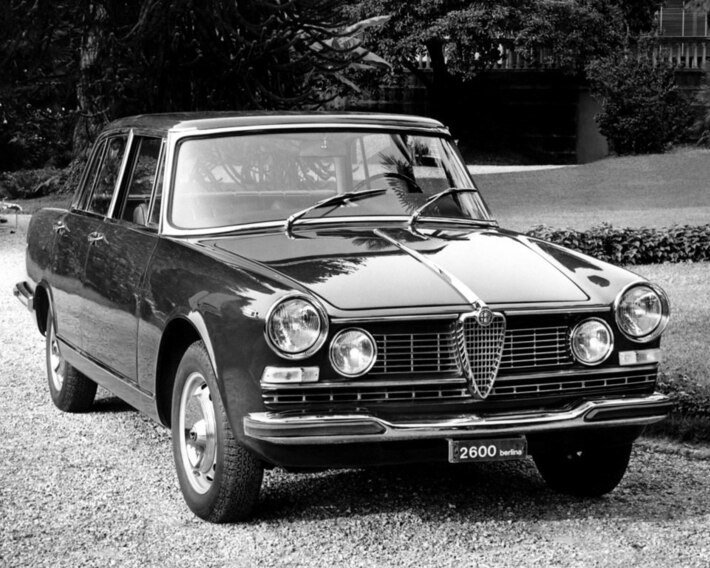
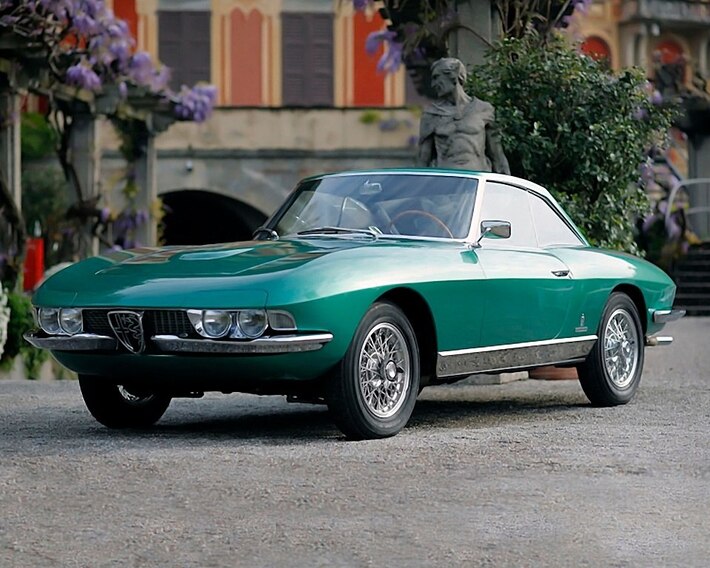
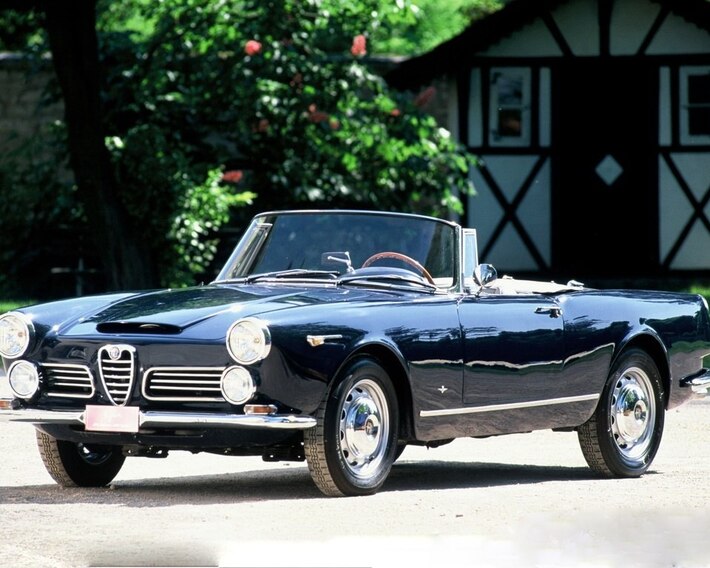
Alfa Romeo 2600 in Pictures
The 2600 Spider by Touring is frequently cited as one of the most beautiful Italian convertibles ever built — a car that combined the mechanical excellence of the straight-six with bodywork of extraordinary grace.


Key Specifications
- Engine: 2584cc twin overhead camshaft DOHC straight-six; aluminium cylinder head; chain-driven camshafts; three twin-choke Solex or Weber carburettors (Sprint/Spider) or single carburettor (berlina); 130 hp (berlina) or 145 hp (Sprint/Spider) at 5,900 rpm. The engine’s smoothness, low-speed tractability, and high-rpm sound are its defining characteristics; unlike any other Alfa engine of the era.
- Construction: Steel monocoque body with separate front subframe; the Sprint and Spider bodies are coachbuilt over the standard platform using the superleggera method (Touring) or conventional steel fabrication (Bertone Sprint). The Spider uses Touring’s proprietary light-alloy over tube-frame construction, reducing weight significantly versus steel.
- Suspension: Independent front suspension with wishbones; live rear axle with trailing arms and coil springs. Not as sophisticated as some contemporaries but well-suited to the GT touring character of the 2600; the car is designed for fast, comfortable long-distance driving rather than circuit-style performance.
- Gearbox: 5-speed manual (standard on Sprint and Spider); automatic option available on berlina. The five-speed manual provides close ratios for spirited driving and a relaxed overdrive top gear for long-distance cruising at motorway speeds.
- Sprint production: Approximately 6,999 Sprint coupes built from 1962 to 1966, making the Sprint the most numerous of the coachbuilt variants. The Sprint body, while produced in the largest numbers of the coachbuilt variants, is still a relatively rare car by collector standards and values reflect this.
- Spider production: Approximately 105 Spider convertibles built by Touring Superleggera from 1962 to 1965. The combination of extreme rarity, beautiful open bodywork, and the magnificent straight-six soundtrack (unfiltered by a closed body) makes the Spider the most sought and most valuable 2600 variant; auction values for exceptional examples reach €150,000–250,000.
- SZ Zagato: Only approximately 6 examples built; the SZ is Zagato’s berlinetta interpretation of the 2600 Sprint platform with a unique aerodynamic body. Competition-tuned engine. Among the rarest and most valuable Alfa Romeo cars of the 1960s; prices are irregular due to extreme rarity but museum-quality examples have been valued at over €400,000.
- Straight-six legacy: The 2600’s straight-six was not continued in Alfa’s later product range; the Busso V6 of the 1970s-2000s replaced it in spirit if not in architecture. The straight-six era in Alfa Romeo road car production lasted only from 1961 to 1968 with the 2600 family, making it a unique and historically isolated chapter in the company’s history.
Variant Comparison
| Variant | Engine | Power | Gearbox | Best For |
|---|---|---|---|---|
| Alfa Romeo 2600 Berlina (1961–1968) | 2584cc DOHC straight-six, three twin-choke carburettors | 130 hp at 5,900 rpm | 5-speed manual or automatic | The most produced 2600 variant; the berlina body provided a genuine four-door, six-cylinder Italian touring car; the most accessible price point in the 2600 collector market; suitable for buyers who want the straight-six driving experience in a practical body |
| Alfa Romeo 2600 Sprint (1962–1966) | 2584cc DOHC straight-six, three twin-choke carburettors | 145 hp at 5,900 rpm | 5-speed manual | The Bertone coupe — the most sporting 2600 body; slightly higher power output than the berlina; the coupe form by Bertone (with significant styling input from Giugiaro, then at Bertone) is one of the finest Italian GT coupes of the 1960s; preferred by driving enthusiasts and coupe collectors; values significantly above the berlina |
| Alfa Romeo 2600 Spider (1962–1965) | 2584cc DOHC straight-six, three twin-choke carburettors | 145 hp at 5,900 rpm | 5-speed manual | The Touring Superleggera open-top variant; widely considered one of the most beautiful Alfa Romeo convertibles ever made; the open straight-six soundtrack is magnificent; very rare (only approximately 105 built); auction values accordingly high; for serious collectors who want both visual beauty and mechanical character |
| Alfa Romeo 2600 SZ Zagato (1963–1966) | 2584cc DOHC straight-six, competition-prepared | 145–160 hp | 5-speed manual | The ultimate 2600 rarity; approximately 6 examples built; Zagato berlinetta body; among the most valuable 2600 variants; the Zagato aerodynamic treatment combined with the straight-six produces an extraordinary driving and collecting proposition; for specialist collectors only |
What Makes the 2600 Stand Out
The 2600 occupies a unique position in the Alfa Romeo lineage — the only production straight-six the company ever built, housed in some of the most beautiful Italian coachwork of the early 1960s.
- Alfa Romeo’s only production straight-six: The 2600’s engine was a unique and isolated achievement in Alfa Romeo’s production history. The company never produced another straight-six for a road car; when six-cylinder power returned in the late 1970s, it came in the form of the Busso V6. The 2600’s straight-six is therefore historically unique in the Alfa Romeo catalogue.
- The Spider — among the most beautiful Alfa Romeos ever made: The 2600 Spider by Touring Superleggera is consistently cited among the greatest open Italian sports cars of the 1960s. The flowing, low body, the exposed headlamps, and the perfectly proportioned convertible profile achieve an aesthetic harmony that can only be described as genuinely beautiful. In 2024, exceptional Spider examples command prices that reflect this aesthetic distinction.
- The Sprint coupe — early Giugiaro at Bertone: The 2600 Sprint was designed by Bertone with significant involvement from the young Giugiaro, and its clean, well-proportioned coupe form is a direct precursor to the 105/115 GTV that Giugiaro would design two years later. The Sprint provides the 2600 straight-six experience in a more usable coupe body at a lower acquisition cost than the Spider.
- The straight-six sound in the open Spider: Driving a 2600 Spider with the top down provides access to the DOHC straight-six’s sound without the filtering effect of a closed body. The three twin-choke carburettors produce a distinctive induction roar through the rev range; the exhaust note of the 145 hp six in an open car is one of the great Italian automotive experiences.
- Historical bridge between the 1900 and the 105 series: The 2600 sits chronologically between the 1900 (Alfa’s post-war foundation) and the 105 series (the golden era of Alfa GT coupes). It represents a brief, specific chapter in the company’s history during which the straight-six was available — a chapter that ended when the 105 series four-cylinder coupes replaced it in the GT market.
Maintenance & Repairability in Azerbaijan
The 2600 is a 55–65 year old Italian classic requiring specialist maintenance. The straight-six engine and the coachbuilt body variants add complexity beyond what is required for the more numerous four-cylinder Alfa classics.
- Straight-six engine service: The 2584cc six requires periodic valve clearance adjustment, carburettor synchronisation (three twin-choke units on Sprint/Spider), ignition timing, and oil service with classic car ZDDP-supplemented oil. The engine is mechanically robust when properly set up but requires balancing all three carburettors simultaneously for smooth running — a task requiring specialist equipment and experience.
- Parts availability: The 2600 straight-six is not as well supported by the aftermarket as the four-cylinder twin-cam engines because it was produced in smaller numbers and for a shorter period. Engine-specific parts (pistons, camshafts, crankshaft bearings in specialist sizes) may require sourcing from Italian vintage Alfa specialists or, in some cases, fabrication. Establish a supply relationship with a specialist before purchase.
- Spider body condition: The superleggera-bodied Spider uses aluminium panels over a complex tube frame; any damage to the body requires specialist repair. The tube frame itself can corrode, particularly at stress points; comprehensive inspection is essential. Any Spider acquisition should include a full structural assessment by a Touring/superleggera specialist.
- Sprint body condition: The Bertone Sprint uses conventional steel construction with similar rust vulnerabilities to the 105/115 series coupes of the same era (sills, inner wings, floor pan). Inspect thoroughly; rust repair on a 2600 Sprint is expensive due to the car’s collector value and the need to preserve originality.
- Azerbaijan context: A 2600 in Azerbaijan would be a niche collector import from Italy — the primary source market. Transport by enclosed trailer, dry climate-controlled storage, and access to a specialist with Italian 1960s car experience are prerequisites for realistic ownership. Routine driving on Baku’s roads is not recommended for a 60-year-old Italian GT in irreplaceable condition.
- Alfa Romeo Classiche: Obtain Alfa Romeo Classiche certification for any 2600 Sprint or Spider acquisition. The programme verifies authenticity, provides official documentation, and is recognised by the major Italian and European insurance specialists who provide agreed-value classic car coverage.
Alfa Romeo 2600 vs. Contemporaries
| Model | Core Strength | Main Compromise |
|---|---|---|
| Alfa Romeo 2600 Sprint / Spider | Alfa Romeo’s only production straight-six in the 1960s; magnificent engine sound; GT coupe styling by Bertone and convertible by Touring among the finest of the era; direct successor to the 6C tradition; meaningful collector pedigree | 60-year-old cars demanding specialist maintenance; parts challenging even by Italian classic standards; straight-six service more complex than the four-cylinder 105/115; collector values require significant purchase investment |
| Lancia Flaminia (1957–1970) | Italy’s other luxury GT of the era; Pininfarina bodies of extraordinary beauty on the coupe and convertible; V6 engine; Lancia GT prestige; direct contemporary; the Flaminia Zagato Sport is arguably the most beautiful car of the era | Even rarer than the 2600 and spares more challenging; Lancia brand less global than Alfa; V6 character different to the Alfa straight-six; values comparable for equivalent body styles |
| Fiat 2300 / 2300S Coupe (1961–1968) | Contemporary Italian GT; Ghia coupe body by Michelotti; inline-six engine; more affordable than the Alfa 2600 when new and in the current collector market; the 2300S coupe has genuine style | Less prestigious badge than Alfa Romeo; the Fiat 2300 did not achieve the same collector recognition as the 2600; parts challenges comparable; less internationally traded as a collector car |
| BMW 2000 CS (1965–1969) | Contemporary German GT coupe; M10 four-cylinder engine; Karmann body; BMW collector status; more accessible parts network than the Alfa; the 2000 CS is a clean, purposeful German GT of the same era | Four-cylinder rather than six; German character versus Italian passion; no equivalent to the Alfa straight-six sound; BMW GT coupe design less emotionally involving than the Bertone 2600 Sprint |
Cost-of-Ownership Calculator (Azerbaijan)
Annual estimates for a 2600 used as a collector car with moderate annual mileage. The straight-six service complexity and specialist parts sourcing are reflected in the service budget.
- Estimated annual fuel use: 1200 litres
- Estimated annual fuel cost: $960
- Total annual ownership estimate: $5260
- Average monthly ownership estimate: $438
Collector Buying Checklist
The 2600 Spider and Sprint are serious collector purchases requiring careful authentication and condition assessment.
- Body variant confirmation: Verify the body constructor (Touring for Spider, Bertone for Sprint, Zagato for SZ) from factory records. Consult the Alfa Romeo Classiche programme and the Touring Superleggera archive (for Spider) or Bertone archive (for Sprint) for confirmation. Misrepresented body variants do exist in the classic car market.
- Numbers matching: Engine number, chassis number, and coachbuilder plate must all match the factory records. The Alfa Romeo Museum in Arese has production records; verify all numbers before purchase. A numbers-matching 2600 Spider or Sprint carries a significant premium over cars with replacement components.
- Straight-six engine condition: Listen for smooth idle on all six cylinders; any rough running indicates carburettor imbalance or cylinder issues. Conduct a cylinder compression and leak-down test; the six-cylinder should show even readings across all cylinders. Any significant variation indicates bore wear, valve issues, or head gasket problems.
- Spider bodywork: Inspect the superleggera tube frame through the wheelarches and under the car for corrosion. The aluminium panels should be assessed by a specialist for accident damage and previous repair. Any Spider offered at a price below the market rate should be thoroughly scrutinised for undisclosed structural issues.
- Auction and provenance history: Request the full ownership history and any previous auction records. A car sold through a reputable Italian specialist auction (RM Sotheby’s, Bonhams Italy, Artcurial) has had at least one professional assessment. Documentation of this history significantly supports the car’s provenance.
Alfa Romeo 2600 FAQ
Why did Alfa Romeo not continue with straight-six engines after the 2600?
The 2600’s straight-six was a complex and expensive engine to produce; Alfa Romeo’s subsequent technical direction favoured the four-cylinder twin-cam for the mainstream 105/115 range and ultimately the Busso V6 for luxury/performance models from the mid-1970s. The V6’s more compact dimensions allowed easier packaging in front-wheel-drive cars, which became Alfa’s primary architecture from the 1980s onward. The straight-six’s long physical length was a disadvantage in the increasingly transverse-engine-oriented European market.
How does the 2600 Spider compare in value to the 105/115 GTV?
The 2600 Spider is significantly more valuable than even the finest 105/115 GTV series cars. An exceptional, fully authenticated 2600 Spider in concours condition may reach €200,000–250,000 at auction. An exceptional, fully restored 105/115 GTV 2000 in comparable condition would typically achieve €60,000–100,000. The 2600 Spider’s rarity (approximately 105 built versus over 200,000 GTV family), the open straight-six experience, and the Touring Superleggera provenance justify the premium for serious collectors.
Is the 2600 Sprint a better buy than the Spider for driving?
The Sprint is more usable as a driving car: a closed coupe provides more all-weather protection, the body is structurally stiffer than the open Spider, and maintenance is simpler with steel construction versus the superleggera tube frame. The Sprint also costs significantly less than the Spider while providing the same straight-six driving experience in a closed GT format. For a buyer who wants the 2600 straight-six as a driving proposition rather than primarily as a collector piece, the Sprint is the practical choice.
Should You Buy an Alfa Romeo 2600?
The Alfa Romeo 2600, in Sprint or Spider form, is one of the most historically significant and beautiful Italian GT cars of the early 1960s. The straight-six engine, the coachbuilt body variants, and the car’s position as the bridge between the post-war 1900 era and the golden age of the 105/115 coupes give it a historical weight that few Italian classic cars can match. For the collector who wants to own something genuinely rare, genuinely beautiful, and genuinely significant in Italian automotive history, the 2600 Spider or Sprint is a compelling proposition.
Practical ownership in Azerbaijan requires importation from Italy, specialist support, appropriate storage, and agreed-value insurance through a specialist Italian classic car broker. These are not obstacles so much as prerequisites for responsible custodianship of an irreplaceable piece of automotive heritage. Engage with the Alfa Romeo Classiche programme and the specialist Italian auction community before making any purchase above €80,000.
BakuWheels uses cookies to improve your experience, analyse site traffic, and personalise content. By clicking Accept All, you consent to our use of cookies. Learn more in our Cookie Policy.