
Talbot
Talbot is a European automotive marque with a complex history spanning three countries and multiple corporate ownerships. Originally Clément-Talbot in Edwardian England, the name was revived by PSA Group in 1979 when it acquired Chrysler Europe, giving its Horizon, Samba, Alpine, and Tagora models the Talbot badge before the brand was discontinued in 1994.
History & Origins
The Talbot name originated in 1903 when Charles Rolls (of Rolls-Royce fame) helped establish Clément-Talbot Ltd in Bayswater, London, importing French Clément cars. The company established its own manufacturing facility at North Kensington and built a reputation for high-quality touring cars. The Talbot name was a combination of the French marque Clément and the Talbot family name — a branding exercise that reflected the Anglo-French nature of the enterprise from the very beginning.
The marque passed through numerous corporate hands over the following decades. Sunbeam-Talbot-Darracq (STD Motors) absorbed it in 1920. After STD's collapse it was sold to the Rootes Group. Chrysler then acquired Rootes in the 1960s, using the Talbot name for Rootes-badged models sold in specific markets. In 1978 Chrysler sold its European operations — plants in France, Britain, and Spain — to PSA Group (Peugeot-Citroën), which immediately faced the challenge of what to do with the inherited brands.
PSA's solution was elegant: retire the Chrysler and Simca names and rebrand the whole European range as Talbot. In 1979 the Talbot Horizon (originally the Simca Horizon) launched the new era, followed by the Samba, the Alpine/Solara, and the large Tagora. The strategy ultimately did not succeed commercially — buyers found the Talbot identity confusing, and the models competed directly with PSA's own Peugeot range. PSA phased out the Talbot name between 1985 and 1994, ending a marque that had survived for over 80 years.
Key Milestones
Iconic Models in Images
Talbot's PSA-era models represent a distinctive chapter in early 1980s European motoring — compact, practical, and characteristically French in proportion and character.
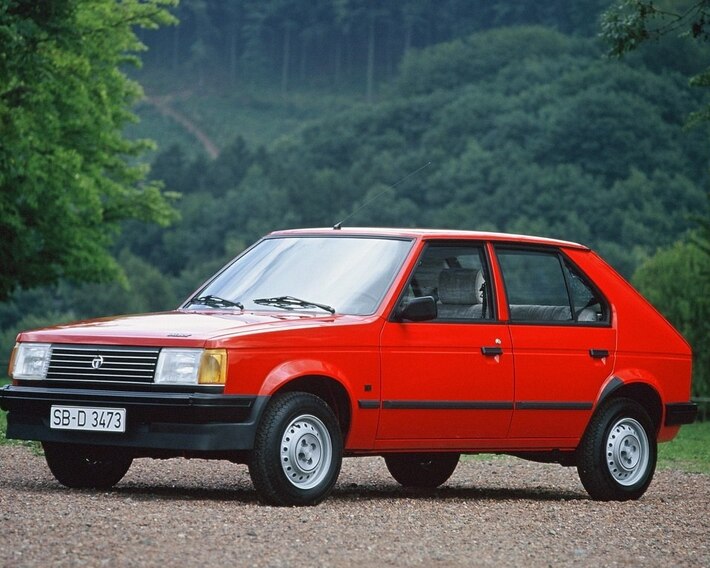
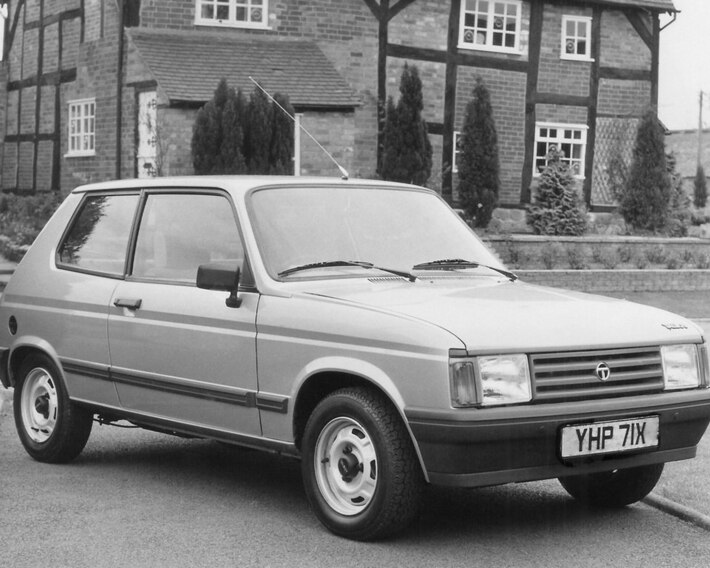
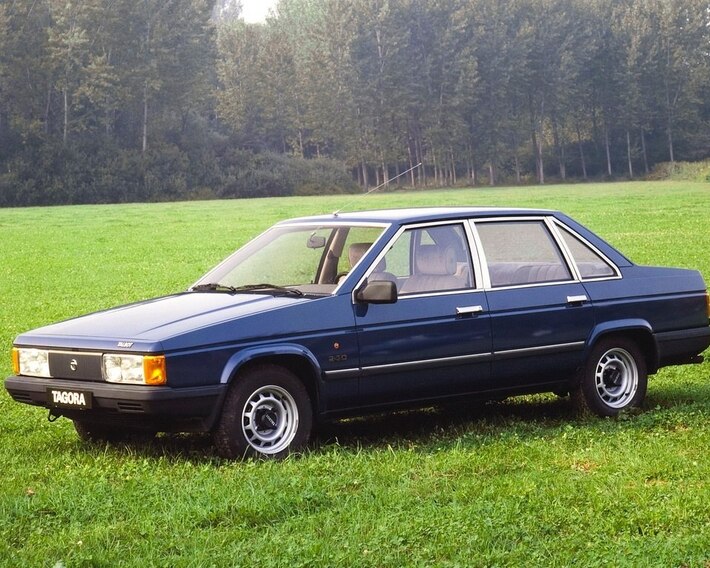
Model Range
The PSA-era Talbot range covered compact to executive segments, each rebadged from Simca or developed on PSA platforms.
Technology & Engineering
Talbot vehicles of the PSA era were built on platforms inherited from Simca and Chrysler Europe. PSA progressively updated the engineering, introducing diesel engine options and improving build quality, but the brand was essentially a transitional identity while PSA integrated its acquired European manufacturing capacity.
- Simca-derived 1.1–2.7 litre petrol engines covering the Samba to Tagora range
- Diesel engine options in later Horizon models — early adoption of diesel in the European family car segment
- Front-wheel drive architecture across the Horizon, Samba, and Alpine / Solara range
- Tagora offered V6 and turbodiesel variants — the most sophisticated engineering in the Talbot range
- PSA manufacturing integration allowed progressive platform updates across the model range
Talbot in Azerbaijan
Talbot vehicles are extremely rare in Azerbaijan — the brand's short lifespan (1979–1994) and limited export presence outside Western Europe means that any surviving examples in the Caucasus region are exceptional. Occasional European imports of classic Talbots have appeared in the region, appreciated by vintage car collectors.
For Azerbaijan's classic car enthusiasts, Talbot represents a fascinating chapter in European automotive history — the story of a great British name that became French and then quietly disappeared. A well-preserved Talbot Horizon or Samba in Azerbaijan would be a genuinely unusual collector piece, maintainable using PSA group spare parts compatible with contemporary Peugeot and Citroën models of the same era.
Why Choose Talbot?
- Anglo-French heritage: Talbot's history spans Britain, France, and Spain — an unusually international story for a single automotive brand spanning more than 80 years.
- PSA engineering reliability: Talbot models of the 1979–1994 era were built on Simca and PSA platforms — mechanically straightforward, with spare parts compatible with Peugeot and Citroën equivalents.
- Classic European design: The Samba and Horizon represent the design sensibilities of early 1980s European motoring — compact, practical, and characteristically European in proportion.
- Historical collector interest: The relatively short Talbot era (1979–1994) makes surviving examples genuinely rare — an advantage for collectors seeking an unusual piece of European automotive history.
- Accessible maintenance: PSA platform compatibility means that Talbot models can be serviced using Peugeot and Citroën compatible parts — practical for collectors seeking to maintain a running example.
BakuWheels uses cookies to improve your experience, analyse site traffic, and personalise content. By clicking Accept All, you consent to our use of cookies. Learn more in our Cookie Policy.