
Paykan
The Paykan is more than a car — it is Iran's national automobile, a cultural symbol woven into the fabric of Iranian daily life for four decades. Based on the British Hillman Hunter, the Paykan (meaning "arrow") outlived its creator, its era, and most of the cars it competed with, becoming one of history's most remarkable automotive stories.
Origins & Heritage
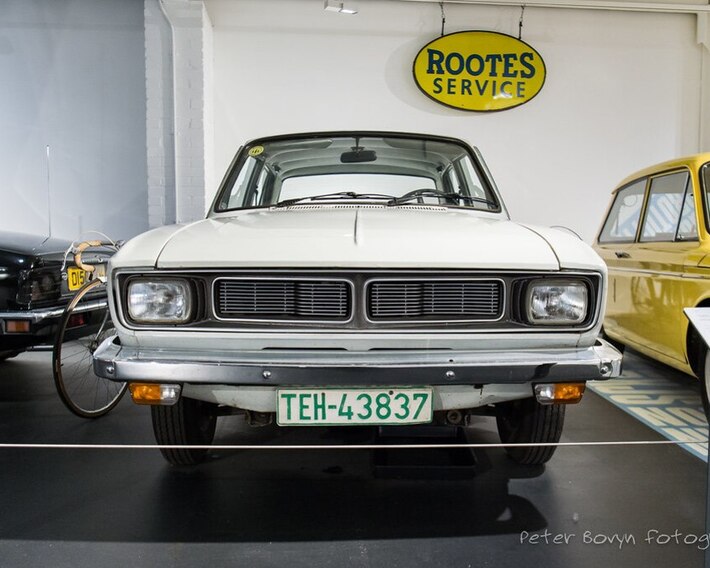
The Paykan's story begins in Coventry, England, where the Rootes Group had designed the Hillman Hunter — a conservative but handsome family saloon introduced in 1966. In 1967, Iran National (later Iran Khodro) signed a licence agreement with Rootes to produce the Hunter in Iran, selling it under the name "Paykan" — Persian for "arrow." The timing was fortunate: Iran was experiencing rapid economic growth during the oil boom years of the late 1960s and 1970s, and personal car ownership was expanding dramatically among the Iranian middle class. The Paykan was affordable, practical, and available — and it sold in enormous numbers.
What makes the Paykan extraordinary is not its origins but its longevity. The Hillman Hunter ceased production in Britain in 1979. The Rootes Group was absorbed into Chrysler and then PSA. The entire concept of the car it was based on became obsolete. Yet in Iran, the Paykan rolled on — continuing to be produced through the Islamic Revolution, through the devastating Iran-Iraq War of the 1980s, through every sanction regime and period of international isolation. By the time production finally ended in 2005, the Paykan had been in continuous production for 38 years — outlasting dozens of more modern designs that had come and gone across the same period.
The reason for this remarkable persistence was economic and practical: Iran Khodro had localised production to an extraordinary degree, manufacturing almost all components domestically. When foreign technology was unavailable due to sanctions, Iranian engineers adapted, improvised, and developed substitute solutions. The Paykan became a monument to self-sufficiency — a car that Iran could build, repair, and sustain entirely from its own resources, whatever the external political circumstances. This made it irreplaceable until a genuinely domestically-engineered alternative — the Samand — was finally ready.
Key Milestones
The Paykan in Pictures
The Paykan's classic 1960s British proportions became as Iranian as Persian poetry — a familiar, beloved presence on every road across the country for four generations of drivers.
Model Variants
Over its 38-year production run, the Paykan evolved and diversified far beyond the original Hillman Hunter template — with Iran Khodro engineers developing multiple body variants and drivetrain adaptations to serve different market needs.
Enduring Engineering
The Paykan's engineering is fundamentally British — the original Rootes "Arrow" platform with a live rear axle, front MacPherson struts, and an in-line four-cylinder overhead-valve engine. What makes it remarkable is what Iran Khodro's engineers did with this foundation. Over 38 years, they localised virtually every component — from body stampings to engine castings to interior plastics — developing a supply base that could sustain production regardless of external circumstances. When international sanctions cut off British-sourced parts, Iranian engineers reverse-engineered and manufactured alternatives domestically.
The engine itself evolved over the production run: the original 1.6-litre Hunter unit was replaced with locally developed versions with improving specifications, and a CNG (compressed natural gas) conversion became available in later years as Iran expanded its natural gas vehicle infrastructure. The simplicity of the Paykan's mechanical systems — conventional enough to be maintained by village mechanics with basic equipment — was, in the context of Iran's geography and infrastructure, a genuine engineering virtue.
- Complete domestic localisation — virtually all components manufactured in Iran by final production years
- CNG variant — factory natural gas conversion available in later years for Iran's gas vehicle infrastructure
- Extreme repairability — maintained by any mechanic anywhere in Iran for 38 years with universally available parts
- Multiple body variants — sedan, hatchback, pickup, and estate versions from a single platform
- Wartime resilience — continuous production through revolution, war, and sanctions without supply chain failure
Paykan in Azerbaijan & the Caucasus
The Paykan has a meaningful historical presence in Azerbaijan — one of the most natural consequences of the two countries' shared border. During the Soviet period and its immediate aftermath, Iranian goods crossed the border in significant quantities through the Astara crossing, and Paykan vehicles were among the imports that appeared in Azerbaijani markets from the late Soviet era onward. For Azerbaijanis living near the Iranian border, the Paykan was a familiar and affordable car — often more accessible than Soviet alternatives of comparable vintage.
Today, Paykan vehicles are occasionally found in Azerbaijan's used car market — mostly older examples maintained by enthusiasts or owners who appreciate the car's legendary simplicity and the cultural connection it represents. The Paykan holds particular resonance in Azerbaijan's Azerbaijani-speaking population, who share ethnic and linguistic heritage with Iranian Azerbaijanis in the border regions — the car is part of a shared cultural landscape that transcends the political boundary between the two countries. Classic Paykan examples are increasingly sought after as collector's pieces in both Iran and among Azerbaijani car enthusiasts.
Why the Paykan Matters
- Cultural icon: The Paykan is Iran's national automobile — as culturally significant as the Mini in Britain or the Beetle in Germany. Owning one connects you to Iranian automotive history.
- Unmatched longevity: 38 years of continuous production — no modern car can claim to have served a national market for four consecutive generations with the same fundamental design.
- Perfect repairability: The simplest car conceivable — maintained by any mechanic, with parts available everywhere. A mechanical education in a vehicle.
- Historical significance: The Paykan survived Islamic Revolution, war, and sanctions — a unique testimony to industrial perseverance and national self-reliance.
- Collector potential: Early Paykan saloons in good condition are increasingly rare and desirable among classic car enthusiasts in Iran, Azerbaijan, and the diaspora.
BakuWheels uses cookies to improve your experience, analyse site traffic, and personalise content. By clicking Accept All, you consent to our use of cookies. Learn more in our Cookie Policy.