
Renault Samsung
Renault Samsung Motors — now operating as Renault Korea — is the South Korean manufacturing and sales arm of the global Renault Group, established in 1994 through a partnership with Samsung Group and producing vehicles for the Korean domestic market under the SM and QM model designations. The brand represents the localisation of Renault's global engineering expertise for Korean buyer preferences, combining French automotive culture with the specific quality expectations of the South Korean market.
Origins & Heritage
Renault Samsung Motors was established in 1994 as a joint venture between Samsung Group — one of South Korea's largest conglomerates — and Nissan Motor Co., which provided the initial engineering and platform foundations for the brand's first vehicles. Samsung had long aspired to enter the automotive industry and saw the growing South Korean middle-class demand for premium domestic vehicles as a significant opportunity. The Busan manufacturing facility was constructed specifically for the venture, capable of producing up to 240,000 vehicles annually.
Following the 1997 Asian financial crisis, Samsung Group's automotive ambitions faced severe financial pressure, and Renault — which had been seeking an Asian manufacturing base — acquired a controlling stake in the company in 2000, rebranding it as Renault Samsung Motors. Under Renault's ownership, the brand retained the Samsung name under license for the Korean market, where Samsung's brand equity remained enormously valuable, while transitioning the product lineup to Renault-derived platforms and powertrains. This gave Korean buyers access to Renault's engineering sophistication dressed in a Korean context.
The SM (Samsung Motors) sedan lineup and QM (Quatre-quatre Motors) SUV range were developed specifically for Korean buyer preferences, offering a level of interior refinement, ride comfort, and equipment specification that positioned Renault Samsung as a premium alternative to domestic Korean brands. The brand competed directly with Hyundai's Genesis division (before it became a standalone brand) and Kia's premium offerings, with a distinctively different character derived from its French engineering heritage. In 2020, Samsung Group sold its stake in the brand, which subsequently rebranded as Renault Korea, though some export markets still carry the Renault Samsung designation.
Key Milestones
Models in Pictures
Renault Samsung models are characterised by a restrained, sophisticated design language that reflects both French aesthetic influence and Korean buyer preferences for elegant, understated premium vehicles — a combination that has served the brand well in the Korean market.
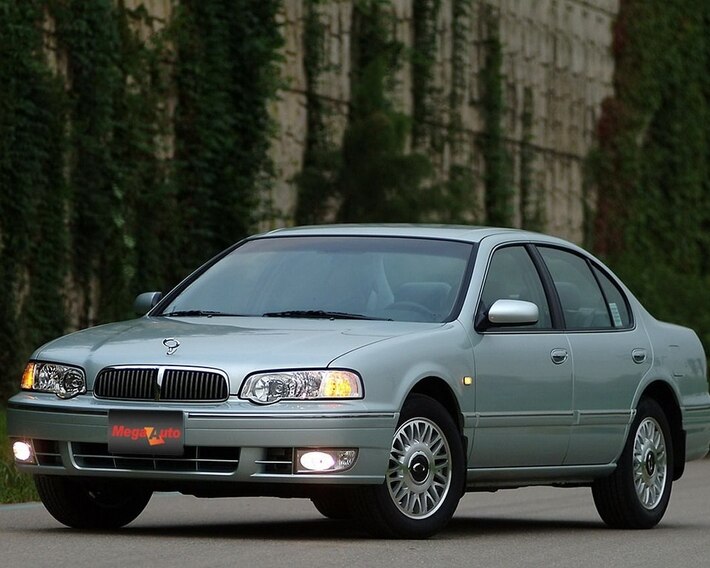
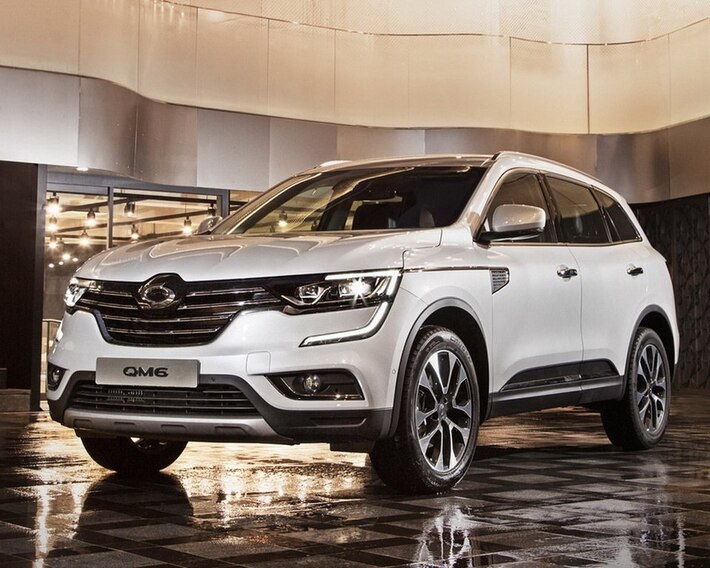
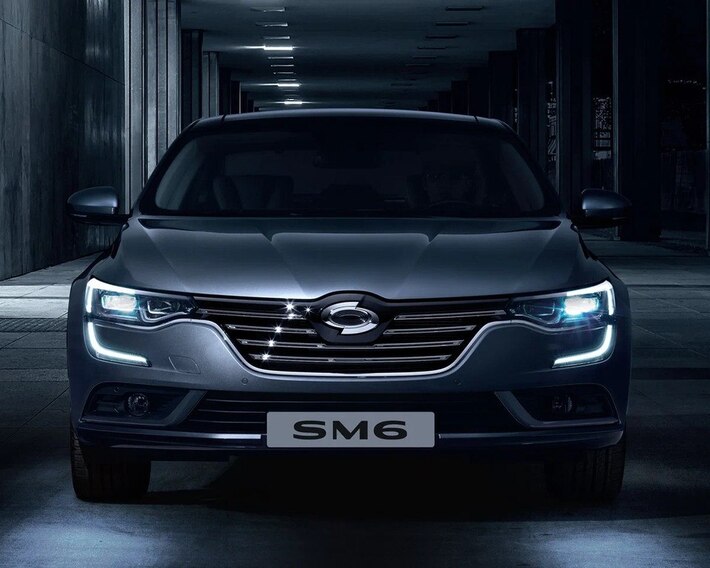
Key Models
Renault Samsung's lineup has been defined by two families — the SM sedan range and the QM SUV/crossover range — with each model carefully positioned to address specific Korean buyer segments with a combination of Renault engineering foundations and Korean market-specific development.
Engineering & Quality
Renault Samsung vehicles are built on Renault-Nissan Alliance platforms at the Busan facility — one of the most modern automotive production facilities in Asia. The Busan plant has consistently achieved high quality ratings in global manufacturing assessments, reflecting the combination of Renault's engineering standards and Korean manufacturing precision.
- Renault-Nissan Alliance platforms — Renault Samsung vehicles share engineering foundations with Renault and Nissan models produced globally, benefiting from Alliance-scale investment in platform development and safety engineering
- Busan manufacturing quality — the Renault Samsung Busan plant has earned recognition as one of the highest-quality automotive manufacturing facilities in the Alliance's global network; Korean manufacturing precision applied to French engineering specifications
- Korean market localisation — Renault Samsung models are specifically developed and calibrated for Korean buyer preferences, including suspension tuning for Korean roads, interior specifications matched to Korean quality expectations, and LPG powertrain options unique to the Korean market
- Safety emphasis — Renault Samsung models consistently achieve high scores in Korean and international crash safety assessments; the brand's positioning as a premium alternative to domestic brands requires strong safety credentials to justify its pricing
- Electrification development — as Renault Korea, the brand is increasingly aligned with Renault Group's electrification strategy, with EV and hybrid powertrain options planned for future models as Korean EV demand accelerates
Renault Samsung in Azerbaijan
Renault Samsung models are not officially sold in Azerbaijan, where the Renault brand is represented through its European model range rather than the Korean-market SM and QM product lineup. However, Renault Samsung vehicles appear occasionally in the Azerbaijani used car market as private imports from South Korea, Russia (where the SM5 was popular), and other regional markets where the brand had a presence.
For Azerbaijani buyers, Renault Samsung models represent an interesting intersection of familiar Renault engineering — well-known in Azerbaijan through the Renault Duster, Megane, and Logan — with Korean-market specifications and Korean manufacturing quality. A used SM5 or QM6 imported from Korea would offer strong build quality, a comfortable ride, and relatively accessible maintenance through Renault's existing service network in Azerbaijan.
Why Renault Samsung Is Significant
- Alliance engineering in Korean specification: Renault Samsung vehicles represent the Renault-Nissan Alliance's commitment to market-specific product localisation — the SM and QM lineup is not simply rebadged Renault product but specifically developed for Korean buyer preferences, making it genuinely different from equivalent European-market Renault models.
- Korean manufacturing quality benchmark: The Busan plant has earned recognition as one of the highest-quality production facilities in the Alliance's global network; Renault Samsung vehicles benefit from Korean manufacturing precision that is often cited as exceeding the quality of equivalent European-built Renault models.
- LPG powertrain expertise: Renault Samsung has developed and refined LPG powertrain variants for multiple models — a significant capability given South Korea's well-developed LPG refuelling infrastructure and the ongoing relevance of LPG vehicles in several CIS and Middle Eastern markets.
- Electrification transition insight: Renault Korea's transition from the Renault Samsung brand era is a useful case study in automotive brand evolution under changing corporate ownership and market conditions — relevant to students of the automotive industry studying brand management and corporate restructuring.
- Gateway to Korean automotive quality: For buyers in markets adjacent to South Korea's automotive exports, Renault Samsung models offer access to Korean manufacturing quality combined with a European engineering foundation — a combination that provides distinctive value compared with either purely domestic Korean brands or European-manufactured Renault alternatives.
BakuWheels uses cookies to improve your experience, analyse site traffic, and personalise content. By clicking Accept All, you consent to our use of cookies. Learn more in our Cookie Policy.