

Simca
Simca — Société Industrielle de Mécanique et Carrosserie Automobile — was one of France's most important post-war automobile manufacturers. Founded in 1934 and active until 1980, Simca produced a succession of popular, well-engineered French family cars that sold in millions across Europe, before being absorbed into Chrysler Europe and eventually rebranded as Talbot.
Origins & Heritage
Simca was founded in 1934 in Nanterre, France, by Italian-born entrepreneur Henri-Théodore Pigozzi. The company's name — Société Industrielle de Mécanique et Carrosserie Automobile — reflected its origins as a Fiat licensee, initially producing French-market versions of Fiat designs at competitive prices. The early Simca 5 and Simca 6 models were, in essence, Fiat Topolinos adapted for French tastes and produced at Simca's Nanterre facility.
After World War II, Simca moved beyond its Fiat origins to develop genuinely original designs. The Simca Aronde — introduced in 1951 — was Simca's first wholly original design and became a major sales success, selling over a million examples in nine years of production. The Aronde's modern styling, reliable mechanics, and value pricing established Simca as a significant independent French manufacturer. Further success followed with the compact rear-engined Simca 1000 (1961), which became France's most popular small car of the early 1960s.
Simca's independence ended in stages: Chrysler Corporation acquired a controlling stake in 1963 and full ownership in 1970. Under Chrysler, Simca produced the advanced Simca 1100 — a front-wheel-drive, transverse-engine hatchback that anticipated the design of the Volkswagen Golf by seven years. When Chrysler sold its European operations to Peugeot in 1978, the Simca brand was gradually phased out in favour of Talbot, with the last Simca-badged cars produced in 1980. The models themselves continued into the mid-1980s as Talbots.
Key Milestones
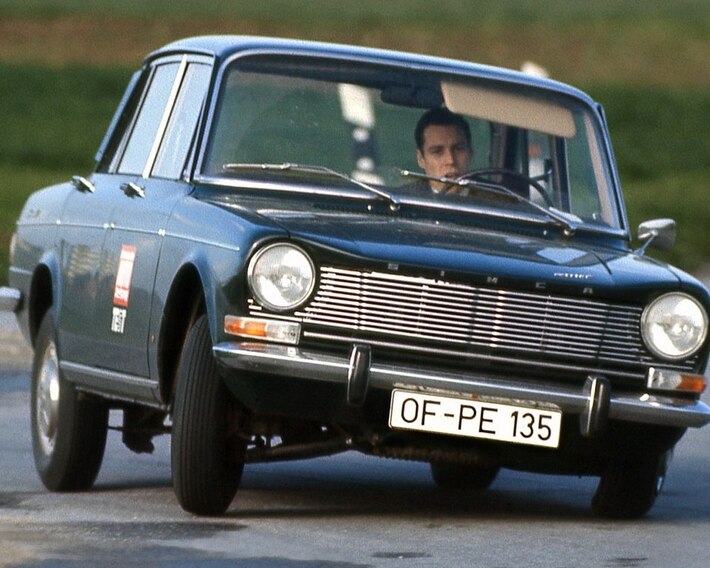
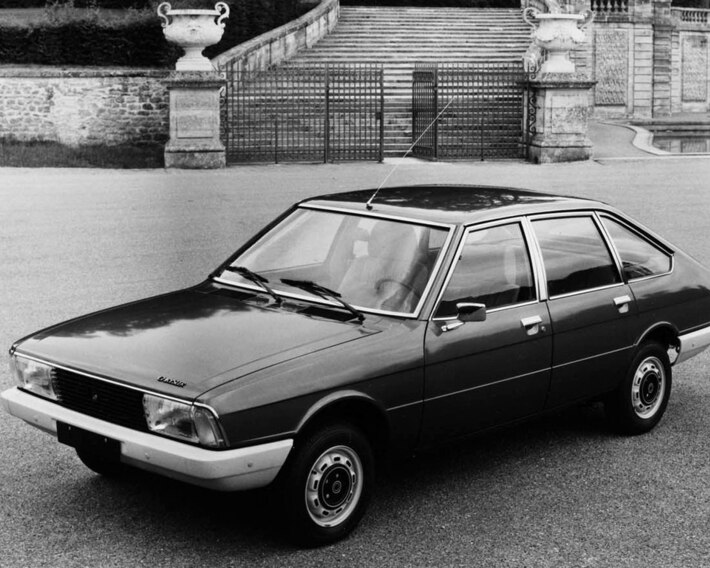
Iconic Models in Pictures
Simca produced some of France's most successful post-war cars — from the charming Aronde to the technically progressive 1100, a front-wheel-drive hatchback that anticipated the modern family car formula a decade before its competitors.
Model Lineup
Simca's range evolved from Fiat-derived economy cars in the 1930s through entirely original French designs in the 1950s and 1960s, culminating in the technically advanced 1100 and the Chrysler-era Horizon.
Engineering & Technology
Simca's engineering reputation rests on several genuine technical achievements — particularly the 1100's front-wheel-drive, transverse-engine layout, which became the universal formula for family cars from the 1980s onwards. The 1100's adoption of this architecture in 1967 placed Simca ahead of Ford, Volkswagen, and Renault in recognising the practical advantages of this arrangement for family car packaging.
- Simca 1100 (1967) — front-wheel drive, transverse engine, five-door hatchback; this layout, seven years before the Golf, became the universal family car formula
- Simca Aronde overhead valve engine — modern OHV unit replacing the Fiat-derived side-valve; improved performance and fuel efficiency over its predecessor
- Simca 1000 Rallye variants — tuned versions of the 1000 with uprated engines; popular in French rally and hillclimb competition throughout the 1960s and 1970s
- Chrysler Horizon engineering — shared architecture between French Horizon and US Dodge Omni; first European–American co-developed front-wheel-drive family car
- Simca packaging efficiency — the 1100 offered class-leading interior space relative to exterior dimensions; a Simca engineering priority that reflected the brand's French market values
Simca in Azerbaijan
Simca vehicles are very rare in Azerbaijan — the brand's geography was largely Western European, and few examples reached Soviet bloc countries during the brand's production era. However, Simca's significance in automotive history is considerable: the 1100's front-wheel-drive hatchback formula essentially defined the family car for the next fifty years, making Simca one of the most technically influential manufacturers of the 20th century.
For Azerbaijani collectors of classic European cars, a Simca Aronde or 1000 in good condition represents an appealing piece of French automotive history — a car that evokes the charm and optimism of post-war European motoring. The Simca 1000 Rallye variants are particularly sought after by European collectors for their motorsport heritage, and any example reaching Azerbaijan would be a genuine collector's piece.
Why Consider Simca?
- French automotive history: Simca produced some of France's most successful post-war cars — the Aronde and 1000 defined French family motoring for two decades and remain charming and characterful classics.
- Technical pioneer: The Simca 1100's front-wheel-drive, transverse-engine hatchback layout anticipated the modern family car formula by nearly a decade — making Simca one of the most technically important manufacturers of the 20th century.
- Simca 1000 Rallye heritage: The Simca 1000 Rallye versions have an outstanding motorsport pedigree in French national competition — a heritage that adds sporting appeal to what is superficially an economy car.
- Affordable classic charm: Simca classics offer the charm and character of French post-war motoring at acquisition prices well below equivalent Citroën or Peugeot classics — excellent value for buyers entering the classic French car market.
- Horizon legacy: The Chrysler/Simca Horizon won the 1979 European Car of the Year and demonstrates Simca's continued relevance in the transition from independent French manufacturer to Chrysler Europe brand.
BakuWheels uses cookies to improve your experience, analyse site traffic, and personalise content. By clicking Accept All, you consent to our use of cookies. Learn more in our Cookie Policy.