

Adler 10/20 PS (1919–1927)
The Adler 10/20 PS was Frankfurt’s primary touring car in the years immediately following the First World War — a conventional four-cylinder open tourer that kept Adler in the automotive market during Germany’s difficult economic recovery of the early 1920s. Built to the PS-rating system common to German cars of the era, the 10/20 indicates ten fiscal horsepower (tax rating) and twenty brake horsepower (actual output), from a 2.6-litre four-cylinder engine driving the rear wheels.
Overview
The years immediately after the First World War were among the most difficult in German industrial history. Defeated, stripped of significant territories by the Treaty of Versailles, and facing punishing reparations, Germany’s manufacturing sector had to rebuild from a position of severe economic constraint. Adler’s response was the 10/20 PS — a straightforward, dependable touring car that drew on pre-war engineering knowledge while meeting the new market realities of a Germany that needed affordable, practical transport above all else.
The 10/20 PS designation followed the German PS-rating convention of the period: the first number (10) represented the fiscal horsepower used as a basis for road taxation; the second (20) represented the actual brake horsepower measured at the engine. The engine itself was a 2.6-litre inline four-cylinder with side valves — a proven, simple configuration that prioritised reliability over performance and could be maintained by the increasing number of German drivers who were learning to service their own cars.
The body was a conventional open four-seat tourer with a folding hood, side screens against weather, and running boards for dignified entry and exit. This configuration was standard for German touring cars of the period: the enclosed body designs that would become common by the late 1920s were not yet widespread, and open tourers remained the practical choice for buyers who needed a car that could serve multiple purposes.
Production of the 10/20 PS continued until approximately 1927, when it was superseded by the updated 10/25 PS with its improved engine output. During its eight-year production run, the 10/20 PS served as Adler’s primary model and established the company’s reputation for honest, well-built touring cars that performed reliably in the demanding conditions of early 1920s German roads.
For the collector, the 10/20 PS is a genuinely veteran-era car: it belongs to a world of acetylene headlamps, hand-starting, acetone-cellulose paint, and canvas hoods. Maintaining and driving such a car today requires deep knowledge of veteran car mechanics and a philosophical acceptance of the limitations of the period. The reward is a direct connection to Germany’s automotive history in its most formative post-war decade.
Adler 10/20 PS in Pictures
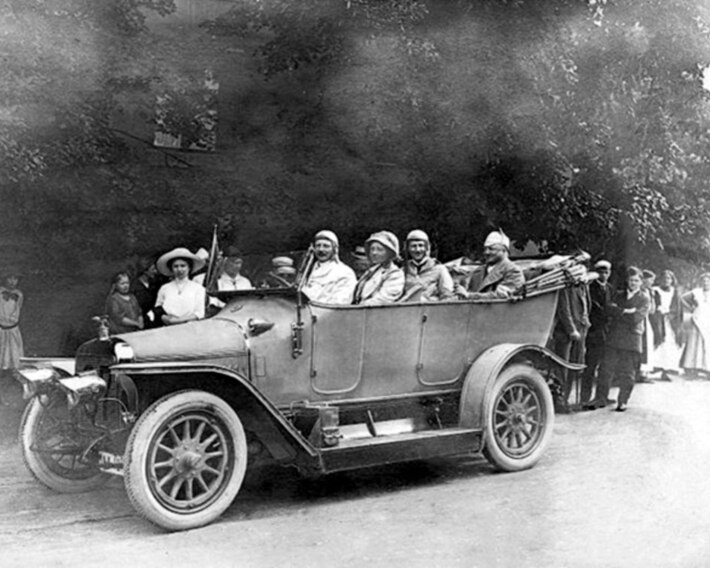
The 10/20 PS’s open tourer body, high stance, large-diameter wheels, and exposed mechanical components are characteristic of the immediate post-WWI German touring car design of the early 1920s.


Key Specifications
- Engine: 2.6-litre inline 4-cylinder, side-valve (L-head) configuration; 20 hp (PS) at approximately 2,200 rpm. Water-cooled; cast iron block and head. Simple, robust design intended for reliability rather than performance.
- Drive layout: Rear-wheel drive; bevel-gear rear axle; open propshaft. Conventional for the period. No differential lock; standard open differential.
- Transmission: 3-speed manual gearbox, sliding mesh (no synchromesh); double-declutching required for smooth downshifts. Floor-mounted gear lever. A skill requirement that demands veteran car driving technique from the driver.
- Chassis: Conventional ladder frame; beam front axle with semi-elliptic leaf springs; semi-elliptic leaf springs at rear. High ground clearance typical of the era.
- Body: Open four-seat tourer with folding canvas hood, detachable side screens, and running boards. Acetylene or early electric headlamps depending on year of production. All body panels hand-formed and coach-painted.
- Brakes: Rear-wheel only mechanical brakes on early production; four-wheel mechanical brakes introduced progressively through the production run. No hydraulics; cable-operated mechanisms requiring regular adjustment.
- Performance: Top speed approximately 70–75 km/h on good roads; significantly less on typical early 1920s German road surfaces. Fuel consumption approximately 12–15 litres per 100 km depending on load and road conditions.
- Starting: Hand-crank starting standard; electric starter fitted to some examples. Hand-cranking requires correct technique to avoid injury from kickback; veteran car ownership skills essential.
Variant Comparison
| Variant | Engine | Power | Gearbox | Best For |
|---|---|---|---|---|
| 10/20 PS Standard (1919–1924) | 2.6L inline 4-cylinder, side-valves, RWD | 20 hp (PS) at 2,200 rpm | 3-speed manual, sliding mesh | The original post-war Adler touring car; correct specification for the earliest post-WWI Adler collector; open four-seat tourer body with period hood and side screens; mechanically simple and accessible for basic classic car servicing |
| 10/20 PS Sport (1921–1925) | 2.6L inline 4-cylinder, tuned valves, RWD | 22 hp at 2,500 rpm | 3-speed manual | The slightly higher-output sporting variant of the 10/20 PS; lighter body, two-seat specification; intended for the sporting driver of the early 1920s; rarer than the standard tourer and more sought-after by veteran car collectors |
What Makes the 10/20 PS Stand Out
The 10/20 PS is significant not as a technically innovative car — it was not — but as a piece of the social and industrial history of Germany’s post-war recovery.
- Post-WWI German automotive history: The 10/20 PS was built in a Germany still reeling from defeat, economic collapse, and hyperinflation. Owning one is to own a piece of Germany’s first tentative steps back toward normal civilian life after the catastrophe of the First World War.
- Veteran car era authenticity: The 10/20 PS qualifies for veteran car status by age and type at most international events. Participation in veteran car events provides a community of like-minded collectors and access to the specialist knowledge network that veteran car ownership requires.
- Extreme rarity: Very few 10/20 PS cars survive in any condition worldwide. A complete, running example is a genuinely exceptional find. The survivor population is small enough that any acquisition brings with it a degree of curatorial responsibility.
- Bridge between Adler’s bicycle era and its FWD revolution: The 10/20 PS was built when Adler was still largely known as a bicycle and typewriter maker; the Trumpf Junior — the first affordable FWD car in Germany — was fifteen years in the future. The 10/20 PS connects the beginning of Adler’s automotive story with the later pioneering FWD models.
- Demanding and rewarding driving experience: Driving a veteran car of this era is an immersive historical experience that no modern car can replicate: double-declutching the crash gearbox, reading the road ahead for surface changes, managing the modest braking capability, and listening to the side-valve four produce its characteristic exhaust note are all part of a uniquely authentic experience.
Maintenance & Repairability in Azerbaijan
Maintaining a 10/20 PS in Azerbaijan requires the highest level of specialist knowledge and the most committed relationship with European veteran car specialists. This is not a casual collector car.
- Side-valve engine service: The L-head side-valve engine requires specialist knowledge of pre-war valve geometry and timing; valve grinding, seat reconditioning, and correct tappet clearances are critical. Any mechanic working on this engine must understand side-valve architecture. German veteran car specialists are the correct resource.
- Lubrication: Many components on a veteran car of this era rely on grease-cup lubrication rather than pressure oil; these cups must be checked and refilled regularly. Some bearings may also use individual oil-holes requiring an oil can during or after every run. Establish a complete lubrication map of the car at the start of ownership.
- Parts fabrication: Almost all mechanical parts for the 10/20 PS must be either fabricated to original drawings or found as old-stock through European veteran car parts dealers. Shipping from Germany takes 1–2 weeks. Plan any significant maintenance well in advance.
- Mechanical brakes: The cable-operated mechanical brakes require regular adjustment to maintain effectiveness; cables stretch with use and age. Inspect brake cable condition annually and replace any frayed or corroded cables before they fail. Mechanical brake adjustment is a skill that modern mechanics may not have; veteran car knowledge is required.
- Electrical system (if fitted): Early electric lighting systems on the 10/20 PS are 6-volt or lower; the systems are simple but very old. Any wiring should be inspected for insulation condition and replaced proactively if brittle. A fire from an electrical short in a veteran car is a serious risk that regular inspection prevents.
- Body and hood: The canvas hood and side screens require annual treatment with a waterproofing compound; perished fabric should be replaced by a specialist hood maker using period-correct materials. Bodywork is hand-formed steel; repairs require a craftsman with vintage body fabrication skills.
- Community support: The Veteran-Car-Club Adler (and the broader Veteran Car Club of Germany) provides the specialist community for cars of this era. Membership is strongly recommended for any 10/20 PS owner; the community provides access to technical knowledge, parts contacts, and events that are otherwise difficult to navigate alone.
Adler 10/20 PS vs. Contemporaries
| Model | Core Strength | Main Compromise (Collector Context) |
|---|---|---|
| Adler 10/20 PS (1919–1927) | Post-WWI Adler touring car; 2.6L 4-cylinder; 20 hp; typical vintage tourer of the era; four-seat open body; historically significant as Adler's primary model in the immediate post-war period when Germany was rebuilding its automotive industry; genuine veteran car era authenticity | Very old and fragile by modern standards; all mechanical systems require specialist pre-war knowledge; extreme rarity of parts; limited to dry-weather, very low-speed use in modern Azerbaijan; extremely specialist collector interest |
| Opel 10/25 PS (1919–1924) | Opel’s equivalent post-war touring car; 10/25 PS rating; slightly more powerful; Opel brand with better international recognition; larger surviving population due to Opel's higher production volumes | Opel badge less prestigious than Adler for specialist collectors; conventional engineering without Adler’s future FWD significance; harder to distinguish from generic vintage German touring cars |
| Benz 11/40 (1920s) | Benz heritage before the Mercedes-Benz merger; early 1920s touring car; more powerful than the Adler; stronger collector brand name with the Benz connection; good support through Mercedes-Benz Classic for some components | Significantly more expensive at auction due to Mercedes-Benz heritage premium; heavier and more complex; different character — more formal than the Adler touring car |
| NAG 8/18 PS (1919–1924) | NAG (Nationale Automobil-Gesellschaft) vintage German touring car; similar PS rating; interesting Berlin-manufactured alternative to the Frankfurt Adler; collector appeal for German automotive history specialists | NAG is much more obscure than Adler even for specialist collectors; parts virtually unobtainable; very limited surviving population; NAG ceased car production in 1934 limiting collector community support |
Cost-of-Ownership Calculator (Azerbaijan)
Veteran car ownership costs are dominated by specialist labour and parts fabrication rather than fuel. The defaults reflect very low mileage with a significant service budget for specialist work.
- Estimated annual fuel use: 120 litres
- Estimated annual fuel cost: $78
- Total annual ownership estimate: $5878
- Average monthly ownership estimate: $490
Used Buying Checklist
- Engine condition and compression: Compression test across all four cylinders; the side-valve architecture is sensitive to valve-seat recession and tappet wear. A cold-start test with observation of blue or grey smoke indicates worn valve guides or piston rings requiring attention.
- Chassis and body authenticity: Veteran car purchases require careful verification of body authenticity; replacement parts from other models are common on cars of this age. Request photographic records and documentation confirming the body is original or correctly restored to the original specification.
- Braking system: Test all four brakes (or rear brakes on early examples) for adjustment, cable condition, and drum condition. Mechanical brakes that have been stored without use may be seized; do not assume they are functional until tested. Budget for a complete brake system overhaul on any car that has been stored for more than two years.
- Hood and side screen condition: Inspect the canvas hood for fabric integrity and waterproofing; check all hood bows and tension springs. Side screens should be checked for cracking or crazing in the celluloid or isinglass panels. Replacement of period-correct hood material is expensive and requires a specialist trimmer.
- Documentation: For a car of this age, any surviving documentation is extremely valuable. Request all known history, any German registration documents, club membership records, and restoration history. Even partial documentation significantly increases the provenance and value of a 10/20 PS.
Adler 10/20 PS FAQ
What does the “10/20 PS” designation mean?
The German PS-rating system used two numbers: the first (10) was the fiscal or tax horsepower calculated from engine bore dimensions, used as the basis for road tax; the second (20) was the actual brake horsepower measured at the flywheel. This system was common to German cars from approximately 1910 through the 1920s; the PS (Pferdestärke, “horse strength”) is the German metric horsepower, approximately equal to 0.986 imperial horsepower. The 10/20 designation indicates an engine with a fiscal rating of 10 PS and an actual output of 20 PS.
How do I start a veteran car with a hand crank?
Hand-cranking a 1920s engine requires specific technique to avoid injury from kickback when the engine fires. Always use the correct grip: thumb alongside fingers, not wrapped around the handle (this prevents a broken thumb if the engine kicks back). Retard the ignition timing before cranking; advance it only once the engine starts. Priming the carburettor correctly and ensuring the choke setting is appropriate for temperature are essential. If in doubt, consult an experienced veteran car owner before attempting to start a car of this type for the first time.
Is the 10/20 PS eligible for veteran car events?
Yes — cars manufactured before 1930 (and by most organisations before 1935) qualify for veteran car classification. The 10/20 PS (1919–1927) meets the age requirement for veteran status at virtually all European and international veteran car clubs and events, including the FIA’s categories for historic vehicles.
Should You Buy an Adler 10/20 PS?
The Adler 10/20 PS is not a car for the faint-hearted or the casual collector. It is a veteran car in the fullest sense: mechanically demanding, technically unforgiving of neglect, and requiring a depth of specialist knowledge that goes significantly beyond normal classic car competence. For the committed veteran car enthusiast who wants to connect directly with Germany’s immediate post-WWI automotive history through the lens of a significant but less-collected marque, the 10/20 PS offers a unique and deeply authentic experience.
Ownership in Azerbaijan requires the most comprehensive European specialist support network of any car in Adler’s range. Parts will be largely custom-fabricated; any significant mechanical work will require either shipping the car to Germany or flying in a specialist. The annual costs will be dominated by service and conservation rather than use. For the right owner, however, these challenges are part of the appeal — the stewardship of a rare survivor from a pivotal period in German history is a responsibility and privilege that few collector cars can match.
BakuWheels uses cookies to improve your experience, analyse site traffic, and personalise content. By clicking Accept All, you consent to our use of cookies. Learn more in our Cookie Policy.