

Adler
Adler was one of Germany's most innovative automotive pioneers — a Frankfurt company whose engineering ambitions ranged from the humble bicycle to the sophisticated front-wheel-drive automobile, decades before such technology became mainstream. Although Adler ceased car production in 1939, its vehicles remain icons of pre-war German engineering, and its role in establishing front-wheel drive as a viable layout for production cars places it firmly in the history books.
Origins & Heritage
Adler — the German word for eagle — was founded in Frankfurt am Main in 1880 by Heinrich Kleyer, initially as a producer of bicycles at a time when cycling was the dominant personal transport technology. As the transport revolution gathered pace, Kleyer expanded into typewriters in 1898, motorcycles in 1900, and automobiles in 1900, making Adler one of the first German companies to produce all four of these products simultaneously. The company's emblem — the eagle — reflected its ambition to soar above the competition.
Adler established itself as a credible automobile manufacturer through the first decade of the twentieth century, producing touring cars of increasing sophistication for Germany's emerging middle class. The company's fortunes were transformed in 1932 when it launched the Trumpf — Germany's first mass-produced front-wheel-drive automobile. Designed by Hans Gustav Röhr, the Trumpf's front-wheel-drive layout, combined with its aerodynamic styling and independent suspension, placed it years ahead of mainstream European practice.
The Trumpf and its smaller sibling the Trumpf Junior became the most technically advanced affordable cars in Germany during the 1930s, praised by the motoring press for their handling, stability, and ride quality. When Adler ceased car production in 1939 to focus on military motorcycles and typewriters for the war effort, it left behind a legacy of engineering innovation that influenced German automotive thinking for a generation. The company was absorbed into Grundig's conglomerate after the war, and the car-making chapter closed permanently.
Key Milestones
Notable Models
Adler's car range spanned nearly four decades, from modest pre-war tourers to technically sophisticated front-wheel-drive machines that set the standard for German engineering in the 1930s.
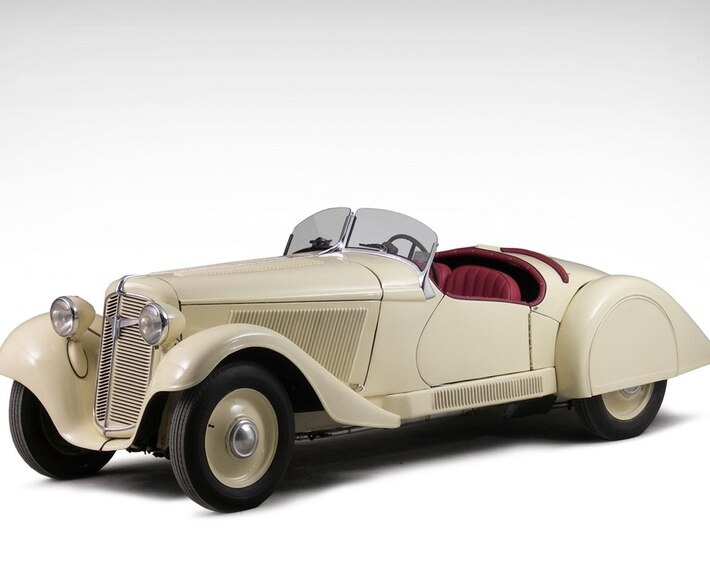
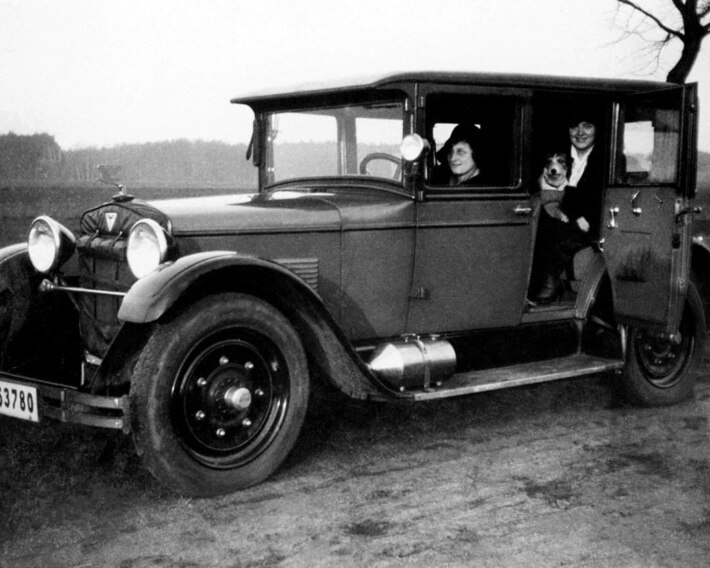
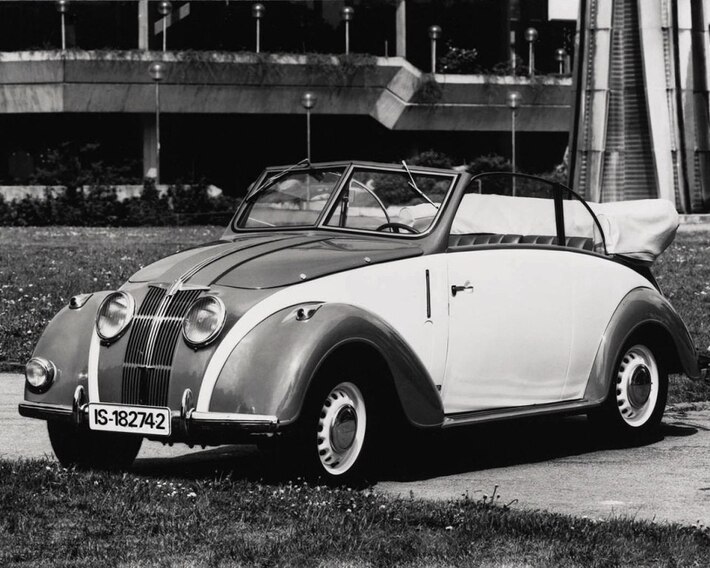
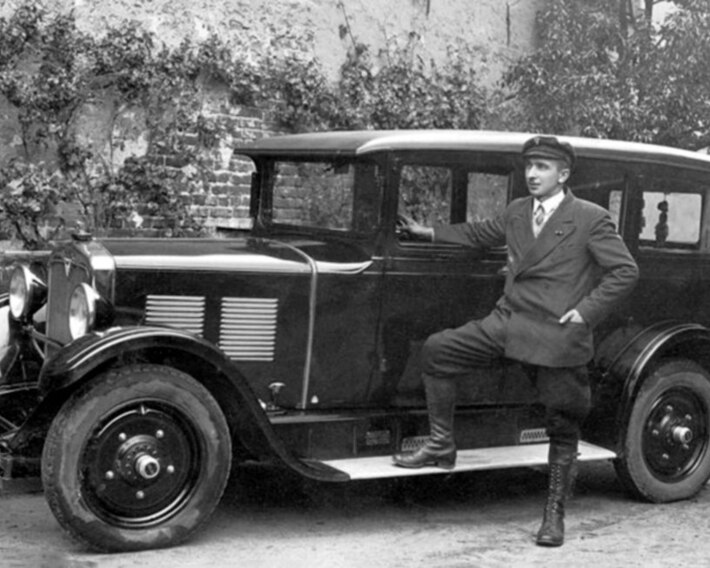
Adler in Pictures
Adler's vehicles represent the pinnacle of German pre-war automotive engineering — technically innovative, elegantly styled, and built to standards that earned the brand comparison with far larger competitors.
Engineering Legacy
Adler's most enduring contribution to automotive history is the Trumpf's front-wheel-drive system — a layout that Hans Gustav Röhr developed into a viable production solution decades before most manufacturers considered it practical. The Trumpf combined its driven front wheels with independent suspension at all four corners, producing handling and stability characteristics that rear-wheel-drive contemporaries could not match in wet or slippery conditions.
Beyond the Trumpf, Adler's contribution to Germany's industrial and transport infrastructure should not be underestimated. As a manufacturer of bicycles, motorcycles, typewriters, and automobiles simultaneously, Adler demonstrated the manufacturing versatility that defined German industrial success in the early twentieth century. The company's demise was a result of historical circumstance rather than commercial failure — at the time car production ceased, Adler was producing some of the most technically advanced affordable cars in Europe.
- Front-wheel-drive innovation — the Trumpf's adoption of front-wheel drive for a mass-production car in 1932 was a decisive step that demonstrated the layout's feasibility and influenced every subsequent FWD design in Europe
- All-independent suspension — the Trumpf combined front-wheel drive with independent suspension at all four corners, a combination that remained rare in European cars for another two decades
- Aerodynamic body design — Adler's 1930s models featured more aerodynamically considered bodywork than most German contemporaries, reflecting the engineering culture that produced the technically advanced Trumpf
- Multi-industry manufacturing — Adler's ability to design and produce bicycles, motorcycles, typewriters, and automobiles from the same Frankfurt plant demonstrated a manufacturing capability that few contemporaries could match
Adler in Azerbaijan
Adler vehicles are extreme rarities anywhere in the world, including Azerbaijan. As pre-war German automobiles that ceased production in 1939, surviving examples are primarily found in specialist museums and the collections of dedicated pre-war automobile enthusiasts. Their historical significance — as pioneers of front-wheel-drive technology and as examples of Germany's pre-war engineering culture — gives them considerable interest for automotive historians and collectors.
For Azerbaijani enthusiasts with an interest in automotive history, Adler represents one of the great forgotten names of early motoring — a company whose technical achievements were overshadowed by the dramatic events of the war years and by the post-war dominance of Volkswagen and other volume manufacturers. Specialist dealers in classic European automobiles occasionally locate surviving Adler examples through estate sales and European museum deaccessions.
Why Adler?
- <strong>Front-wheel-drive pioneer:</strong> Adler introduced Germany's first mass-produced front-wheel-drive car in 1932 — a technical achievement that placed it ahead of every major European manufacturer and established a layout that now dominates global car production.
- <strong>Exceptional rarity:</strong> With car production ceasing in 1939 and the company absorbed shortly after the war, surviving Adler automobiles are among the rarest pre-war German vehicles in existence — of genuine historical significance.
- <strong>Important industrial heritage:</strong> As a manufacturer of bicycles, motorcycles, typewriters, and automobiles simultaneously, Adler represents the industrial ambition of early twentieth-century Germany at its most characteristic.
- <strong>Overlooked collector opportunity:</strong> Pre-war front-wheel-drive cars from Germany are systematically undervalued relative to their historical importance — Adler Trumpf examples represent a genuine collector opportunity that has not yet been fully recognised by the market.
BakuWheels uses cookies to improve your experience, analyse site traffic, and personalise content. By clicking Accept All, you consent to our use of cookies. Learn more in our Cookie Policy.