

Adler Standard (1927–1939)
The Adler Standard was the longest-running and most varied family of models in Adler’s pre-war catalogue, spanning from 1927 to 1939 and encompassing four-cylinder and six-cylinder engines, convertible and limousine body styles, and both entry-level and prestige specifications. The Standard family served as Adler’s primary volume model throughout the period when the company was simultaneously pioneering front-wheel drive technology in its Trumpf range — making it the commercial foundation that funded Adler’s engineering ambitions.
Overview
The Adler Standard family represented Adler’s commitment to the mainstream German car market throughout a period of profound change in the industry. Introduced in 1927 — when Adler was still primarily known for its bicycles, motorcycles, and typewriters — the Standard was the company’s attempt to establish itself as a serious volume car manufacturer using conventional rear-wheel drive technology well-proven by the industry.
The Standard 6, introduced in 1927, was Adler’s first six-cylinder car: a 2.1-litre straight-six producing 40 hp, housed in a conventional chassis with independent front suspension and an open or closed body. It represented genuine progress for a company that had only been building cars for a relatively short time, and it found a market among professional and business buyers who wanted Adler quality in a properly powered touring car. The Standard 8, with its 2.5-litre straight-eight, followed in 1928 as Adler’s most prestigious offering before the Diplomat era.
Through the early 1930s, the Standard name was applied to a series of smaller four-cylinder models that served as Adler’s entry-level range as the FWD Trumpf models took over the more innovative end of the catalogue. These 1.2- to 1.9-litre four-cylinder Standards were conventional, well-built cars that provided Adler dealers with a product for buyers who were not yet ready to embrace the FWD technology of the Trumpf — or who simply wanted the most straightforward and affordable Adler available.
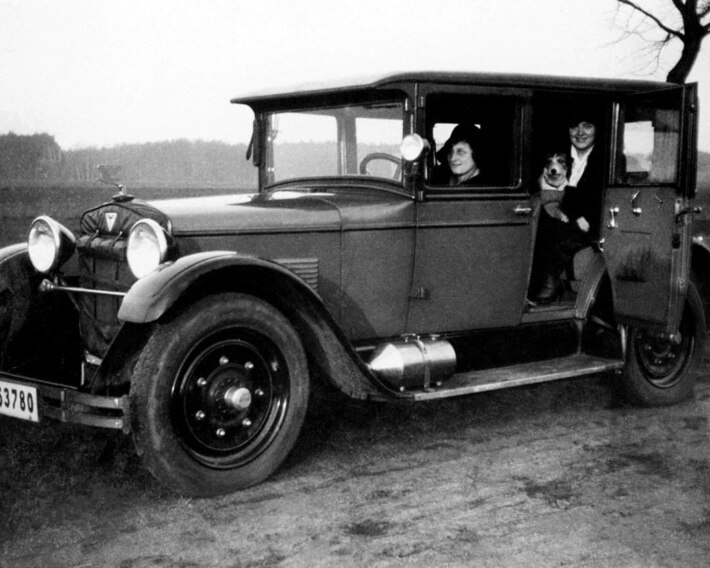
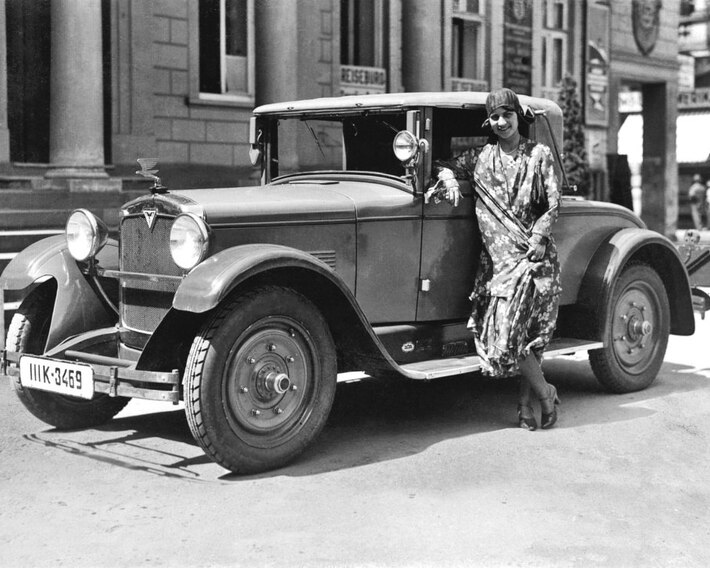
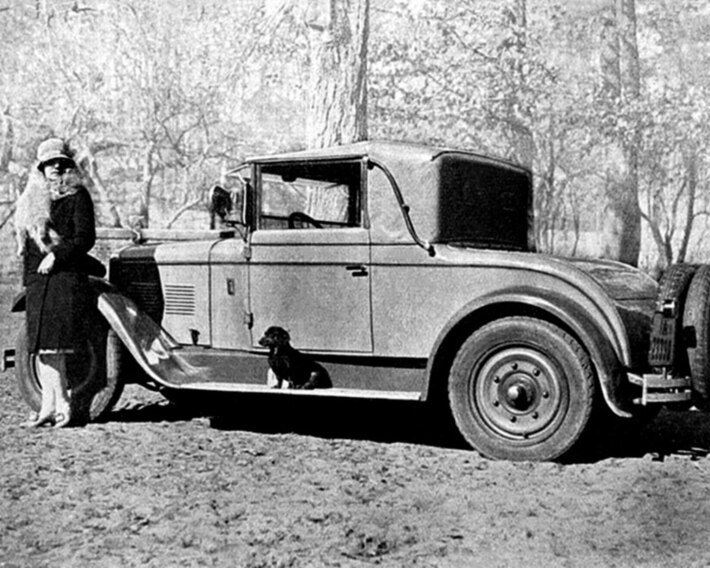
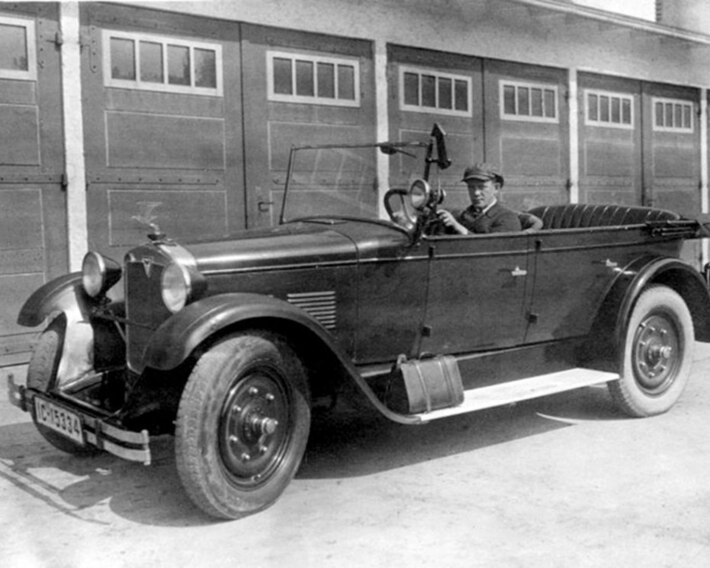
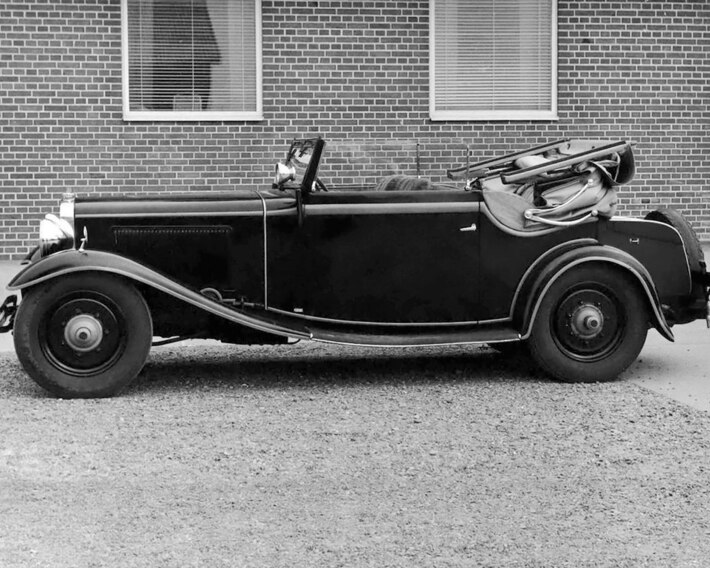
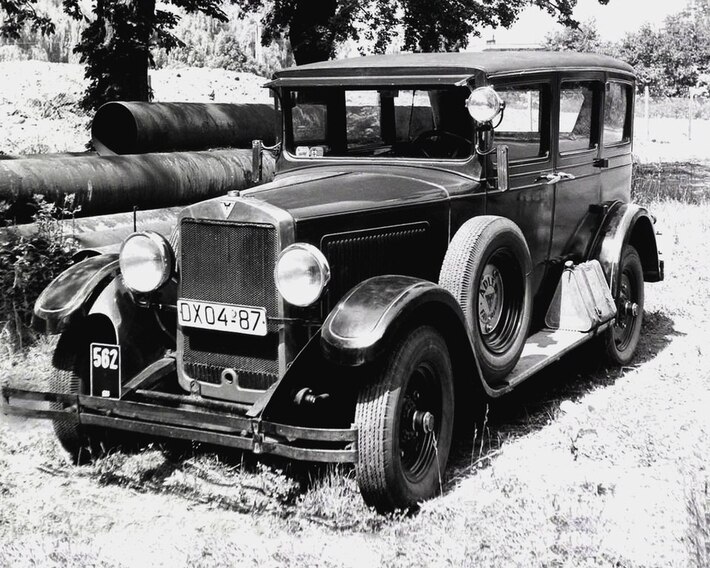
The Standard family continued in production until 1939, by which point Adler’s product range had been substantially rationalised. The long production span means that Standard models span several distinct design periods: the upright, formal bodies of the late 1920s Standards and the more streamlined, integrated styling of the mid-1930s versions are visually quite different cars, though both carry the Standard name.
For collectors, the Standard family offers access to Adler’s history at a more accessible level than the rare FWD models. The four-cylinder Standard variants of the 1930s are the most likely to be encountered at European classic car events; the late 1920s six-cylinder and eight-cylinder variants are significantly rarer and command corresponding premiums. All Standard models benefit from the Adler-Veteranen-Club’s technical support network, which covers the full range from the earliest post-war models to the final pre-war production.
Adler Standard in Pictures
The Standard family’s styling evolved significantly across its twelve-year production span, from the upright, formal bodies of the late 1920s to the more modern, integrated designs of the mid-1930s refresh.
Key Specifications
- Standard 6 engine (1927): 2.1-litre inline 6-cylinder, overhead valves, single carburettor; 40 hp at 3,200 rpm. Smooth and quiet by the standards of 1927; Adler’s first six-cylinder car and a significant milestone in the company’s development as a full-range manufacturer.
- Standard 8 engine (1928): 2.5-litre inline 8-cylinder; 50 hp. Adler’s prestige specification before the Diplomat. Eight-cylinder smoothness was the ultimate luxury car attribute of the period; this variant is extremely rare today.
- 1930s Standard engines: Range of 1.2-litre to 1.9-litre inline 4-cylinder engines; 25–38 hp depending on displacement and specification. Conventional overhead-valve construction; cast iron block and head. Rear-wheel drive on all Standard variants.
- Drive layout: Rear-wheel drive throughout the Standard range; open propshaft to a live rear axle; conventional ladder-frame chassis construction. A deliberate contrast to the FWD Trumpf models, aimed at buyers who preferred established engineering.
- Transmission: 3-speed manual on late 1920s variants; 4-speed manual (with synchromesh on upper gears) on 1930s models. Gear lever floor-mounted on all variants.
- Body styles: Convertible (Cabriolet) and Limousine (Saloon) across the range; the late 1920s Standards were available in open tourer and formal saloon bodies; 1930s models primarily in two-door and four-door saloon specification with occasional coachbuilt variants.
- Suspension: Independent front suspension on later models; beam front axle on earliest Standard variants; semi-elliptic leaf springs at the rear throughout. The suspension specification was updated progressively through the twelve-year production span.
- Brakes: Mechanical brakes on early variants; hydraulic drum brakes introduced progressively through the 1930s refresh. Four-wheel brakes standard from the late 1920s.
- Production years: 1927–1939; the longest production span of any Adler model family. Total production across all Standard variants was Adler’s highest volume during the period, though far fewer survive than contemporary mass-market German makes.
Variant Comparison
| Variant | Engine | Power | Gearbox | Best For |
|---|---|---|---|---|
| Standard 6 (1927–1934) | 2.1L inline 6-cylinder, RWD | 40 hp at 3,200 rpm | 3-speed manual | The first Adler six-cylinder; smooth and refined by late 1920s standards; a prestige offering from Adler before the FWD revolution of the 1930s; correct for collectors interested in the transition from Adler's early post-war cars to its innovative 1930s models; the most historically significant Standard variant |
| Standard 8 (1928–1930) | 2.5L inline 8-cylinder, RWD | 50 hp | 3-speed manual | The flagship Standard variant with eight-cylinder engine; extremely rare survivor; prestige specification for buyers who wanted Adler's highest specification before the Diplomat; the most powerful Standard variant and the rarest in the surviving population; a significant collector acquisition for any Adler specialist |
| Standard (1930s refresh, 1930–1939) | 1.2L to 1.9L 4-cylinder, various; RWD on most variants | 25–38 hp depending on engine | 3 or 4-speed manual | The entry-level Adler of the 1930s; simpler specification; most commonly surviving variant from the Standard family; accessible entry point for new Adler collectors; practical for occasional classic car use; widely represented in the Adler-Veteranen-Club membership |
What Makes the Standard Stand Out
The Standard family’s long production run and variety of specifications give it a unique position in Adler’s history as the range that kept the company viable while its engineers worked on more revolutionary designs.
- Twelve years of continuous development: No other Adler model family spans as long a period as the Standard. This continuity means that collectors can trace the evolution of Adler’s engineering and styling across more than a decade through successive Standard variants — from the upright 1920s bodies to the streamlined 1930s designs.
- The Standard 6 and 8 as historical milestones: The Standard 6 of 1927 was Adler’s first six-cylinder car; the Standard 8 was the company’s first eight-cylinder. Both represent important moments in Adler’s technical development and are of particular interest to collectors tracing the company’s history.
- Commercial foundation for Adler’s FWD revolution: The Standard’s volume sales generated the revenue that allowed Adler to invest in the FWD technology of the Trumpf and Trumpf Junior. Without the Standard’s commercial success, Adler’s pioneering FWD models might never have been possible.
- Entry point for Adler collecting: The 1930s four-cylinder Standard variants are the most accessible entry point for collectors new to the Adler marque. They are more likely to be encountered at European specialist auctions than the rarer FWD models, and their conventional RWD engineering is familiar to any classic car mechanic.
- Convertible body availability: Several Standard variants were available in open convertible body styles, providing an authentic pre-war open-car experience in an Adler with conventional, well-understood engineering. The convertible Standards are more sought-after than the equivalent saloons.
Maintenance & Repairability in Azerbaijan
The Adler Standard’s conventional RWD engineering makes it somewhat more approachable for maintenance than the FWD Trumpf models, though specialist knowledge and European parts sourcing are still essential.
- Conventional RWD drivetrain service: The Standard’s rear-wheel drive layout uses a propshaft and live rear axle — components that any classic car mechanic can service. Oil changes every 2,000–3,000 km, propshaft universal joint greasing every 2,000 km, and rear axle oil change every 10,000 km are the primary drivetrain service items.
- Engine service: Whether four-cylinder or six-cylinder, all Standard engines use conventional pre-war service items: oil changes, carburettor cleaning, ignition contact breaker replacement, valve clearance adjustment. Intervals similar to other pre-war German cars of the era. Classic car oil (SAE 30 or 40, with ZDDP additive) is essential to protect flat-tappet camshaft profiles.
- Parts sourcing from Germany: The Adler-Veteranen-Club in Germany is the primary community resource; specialist pre-war German car dealers provide parts for Standard models. Shipping to Azerbaijan takes 1–2 weeks; some components, especially body panels, require fabrication. The Standard’s longer production run means that parts are somewhat more accessible than for rarer variants.
- Brake system maintenance: Early Standards use mechanical four-wheel brakes; later 1930s models have hydraulic drums. Mechanical brake systems require regular adjustment and shoe replacement; hydraulic systems need annual fluid change and seal inspection. Both systems are straightforward for an experienced classic car mechanic.
- Electrical system: All Standard variants use 6-volt positive-earth electrics. The simple generator-battery-ignition system is easy to diagnose; faults are usually in the generator, points, or wiring insulation. Modern 6-volt LED replacements are available for improved reliability while maintaining system voltage.
- Body and corrosion: Twelve years of production means that body styles vary considerably; specialist body restoration knowledge for pre-war German cars is required for serious bodywork. Corrosion prevention using wax injection into inner body sections is the most effective approach for Azerbaijan’s climate.
- Tyre sourcing: Pre-war tyre sizes are not available from mainstream retailers; European specialists (Blockley, Coker, Dunlop Classic) manufacture appropriate sizes. Order 4–6 weeks in advance to allow for international shipping to Azerbaijan.
Adler Standard vs. Contemporaries
| Model | Core Strength | Main Compromise (Collector Context) |
|---|---|---|
| Adler Standard (1927–1939) | Long-running Adler entry-level range; 1.2L to 2.1L engines; six-cylinder option from 1927; rear-wheel drive conventional engineering; built by the same Frankfurt factory that produced the FWD models; historically important as the backbone of Adler's sales volume throughout the transition to FWD technology | Conventional RWD engineering without the FWD innovation of the Trumpf models; less historically significant than the FWD models; more common than the specialist Adler collector models; parts support requires German specialist contacts |
| Opel 1.8 Liter (1931–1934) | Opel's mass-market entry; 1.8L 4-cylinder; large production volumes making parts very accessible; GM quality and engineering; well-known in Germany; Opel club network provides good specialist support | No FWD innovation; GM ownership reduces German engineering cachet for some collectors; very common compared to the Adler Standard; less historically interesting than Adler's FWD models of the same period |
| Hanomag 6/32 (1926–1928) | Hanomag's mid-range offering; 6/32 PS specification; water-cooled 4-cylinder; simple and durable; well-regarded engineering; interesting survivor for collectors interested in late 1920s German motoring | Even more obscure than the Adler Standard for most collectors; very limited parts availability; mechanically cruder than the Adler of comparable age |
| Ford Köln (German Ford, 1930s) | American Ford engineering adapted for the German market; V8 option from 1932; strong performance; large production volumes; parts accessible through Ford international network; popular in Germany during the period | American engineering character; less refined than the Adler Standard; V8 fuel consumption high by German standards; different collector audience than pre-war German specialists |
Cost-of-Ownership Calculator (Azerbaijan)
Defaults reflect pre-war German collector car usage in Azerbaijan: low mileage, European parts sourcing, and appropriate insurance for a vintage vehicle.
- Estimated annual fuel use: 120 litres
- Estimated annual fuel cost: $78
- Total annual ownership estimate: $5878
- Average monthly ownership estimate: $490
Used Buying Checklist
- Identify the specific variant: The Standard family spans twelve years and multiple engine configurations; confirm the exact model year and engine specification before inspection. A Standard 6 has very different parts availability and value profile to a 1930s four-cylinder Standard.
- Engine oil pressure and condition: Cold start and warm running oil pressure test; inspect for blue smoke at warm idle indicating worn valve guides. The Standard’s engines are robust but genuinely old — most will have had at least one rebuild in their lives; verify quality of any rebuild work.
- Chassis and body corrosion: Probe the ladder frame rails at all body mounting points and crossmembers. Inspect inner wings, floor sections, and sill structure. Corrosion in the chassis rails is a disqualifying defect on a car of this age without a complete frame rebuild budget.
- Rear axle and gearbox: Listen for differential whine under load and overrun; feel for gearbox synchromesh quality on all upper ratios. Check for oil leaks at the rear axle seals and gearbox output shaft. Rear axle and gearbox parts for pre-war Adlers require specialist sourcing.
- Body and coachwork: For open-body variants, inspect the hood fabric and framework for integrity; convertible hood mechanisms on pre-war cars are complex and often in poor condition. For saloons, inspect all door seals, window mechanisms, and roof structure. Original body panels are always preferable to replaced components.
- Documentation: Request all available German registration documents, service records, and provenance. A Standard with documented history is significantly more valuable than an undocumented example of comparable mechanical condition.
Adler Standard FAQ
What is the relationship between the Standard and the FWD Adler models?
The Standard was Adler’s conventional RWD backbone range throughout the period when the company was developing and launching its FWD models. The two ranges were sold simultaneously from 1934 onwards: buyers who wanted Adler’s innovative FWD technology could choose a Trumpf, Trumpf Junior, or Favorit; buyers who preferred conventional engineering bought the Standard. This dual-track approach allowed Adler to serve both conservative and innovative customers simultaneously.
Which Standard variant is most sought after by collectors?
The Standard 6 of 1927–1934 is historically the most significant variant as Adler’s first six-cylinder car. The Standard 8 (1928–1930) is the rarest and most valuable of the Standard family in surviving examples. Among the more common 1930s four-cylinder Standards, convertible body variants command the highest values and collector interest.
Is the Adler Standard harder to maintain than the FWD Trumpf models?
In some respects, the Standard is easier to maintain than the FWD Trumpf models because its conventional RWD drivetrain is more familiar to classic car mechanics and does not require the specialist knowledge of pre-war FWD systems that the Trumpf demands. However, the Standard’s age and the relative scarcity of parts for all Adler models means that any repair beyond basic service requires German specialist contacts regardless of the drive layout.
Should You Buy an Adler Standard?
The Adler Standard offers an accessible entry point into pre-war German car collecting with the backing of the Adler-Veteranen-Club’s community support. For the collector who wants to own an Adler but finds the FWD models too rare, too complex, or too expensive, the Standard family provides a well-built, historically interesting alternative with conventional engineering that is relatively straightforward to maintain. The Standard 6 and 8 variants offer additional historical significance for collectors who want to trace Adler’s development as an engine manufacturer.
The practical limitations of pre-war car ownership in Azerbaijan apply equally to the Standard: European parts sourcing, specialist maintenance knowledge, and careful storage are non-negotiable requirements. The Standard’s conventional RWD engineering makes these requirements somewhat easier to meet than the more unusual FWD models, but the commitment level is similar. Any Standard purchase should be preceded by a specialist inspection and a realistic assessment of any deferred maintenance that will require attention in the first year of ownership.
BakuWheels uses cookies to improve your experience, analyse site traffic, and personalise content. By clicking Accept All, you consent to our use of cookies. Learn more in our Cookie Policy.