

Adler Favorit (1934–1938)
The Adler Favorit was the company’s mid-size front-wheel drive model, bridging the gap between the revolutionary but small Trumpf and the large, conventional Diplomat. With a 1.7-litre four-cylinder engine and Adler’s proven FWD architecture, the Favorit offered genuine family-car practicality combined with the handling advantages of front-wheel drive in a car that was both affordable and well-appointed for its time.
Overview
The Adler Favorit filled a crucial position in the Frankfurt manufacturer’s mid-1930s range: it was the model that offered genuine family-car capacity and a proper mid-size specification while carrying forward Adler’s front-wheel drive philosophy from the smaller Trumpf models. For buyers who needed more space and performance than the 995cc Trumpf Junior could provide, but who either could not afford or did not need the Diplomat’s luxury limousine pretensions, the Favorit was the logical choice.
The engine was a 1.7-litre inline four-cylinder, mounted transversely in the nose in the by-then established Adler FWD configuration. Power output was 38 hp at 3,600 rpm — sufficient for comfortable German highway speeds of the period and adequate for the fully laden family use for which the car was designed. The four-speed manual gearbox with synchromesh on the upper gears made the Favorit more pleasant to drive than the earlier three-speed Trumpf Junior, and the longer wheelbase provided noticeably better rear passenger accommodation.
Adler offered the Favorit in several body configurations. The six-light saloon was the standard production body; coachbuilders produced cabriolet versions for buyers who wanted open-air motoring in a mid-size car; and a Sport variant with enhanced engine output and lower body styling was available for enthusiast buyers. All variants shared the same FWD drivetrain architecture, making the Favorit Sport one of the few mid-size FWD sporting cars available in Germany in the mid-1930s.
The Favorit was discontinued in 1938 as Adler rationalised its range. By that point, the company was focussing its civilian production resources on a smaller number of models as war preparations began to reshape German industrial priorities. The Favorit’s four-year production run left a survivor population that, while modest, provides enough examples for the occasional example to appear at European specialist auctions. Well-preserved saloons typically reach €18,000– €35,000; cabriolet examples command significant premiums.
For the collector, the Favorit is perhaps the most balanced of Adler’s 1930s range: large enough to be a proper family car, small enough to be manageable, equipped with the historically significant FWD system, and available in body styles that range from the practical saloon to the charming cabriolet. It is a car that tells the story of Adler’s mid-decade confidence in its FWD technology — a technology the company applied across the entire accessible portion of its range before the war ended that experiment.
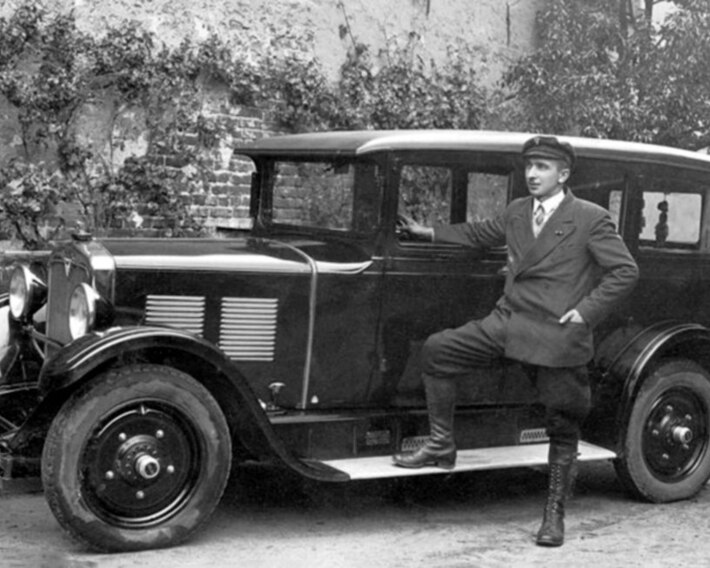
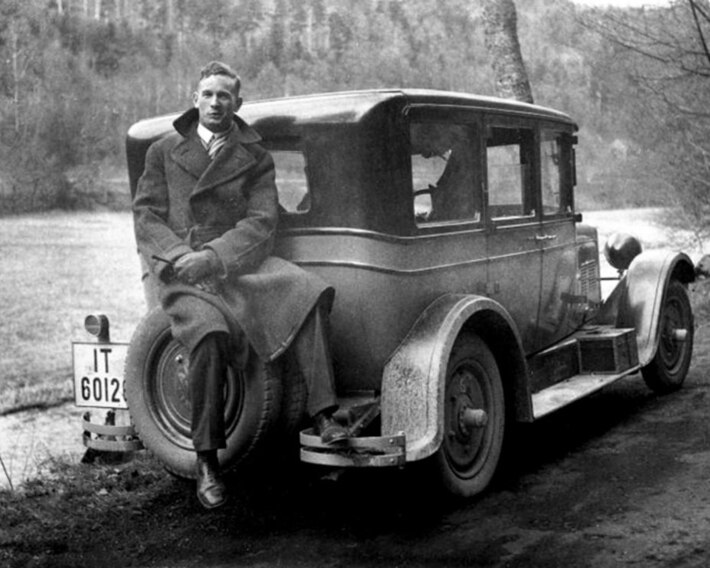
Adler Favorit in Pictures
The Favorit’s body styling sits between the compact Trumpf Junior and the imposing Diplomat, combining the streamlined aesthetic of 1930s German car design with a practical family car silhouette that remains handsome today.


Key Specifications
- Engine: 1.7-litre inline 4-cylinder, overhead valves, single carburettor; 38 hp at 3,600 rpm (standard); 42 hp at 4,000 rpm (Sport variant). Water-cooled, cast iron construction. Transversely mounted, driving the front wheels.
- Drive layout: Front-wheel drive with constant-velocity joints; the same fundamental layout as the Trumpf and Trumpf Junior, scaled to accommodate the larger engine. Benefits include flat floor, improved wet-weather handling, and better traction than RWD contemporaries in adverse conditions.
- Transmission: 4-speed manual gearbox; synchromesh on 2nd, 3rd, and 4th gears. Floor-mounted gear lever on most variants. An improvement over the 3-speed Trumpf Junior that made the Favorit more comfortable for longer journeys.
- Chassis: Pressed-steel platform chassis with independent front suspension and semi-elliptic leaf springs at the rear. Wheelbase approximately 2,700 mm; overall length approximately 4,300 mm. Kerb weight approximately 950–1,000 kg depending on body style.
- Body styles: 4-door saloon (primary production body, six-light); Cabriolet (coachbuilt, rarer); Sport 2-door (rarest). The saloon body features cloth upholstery as standard with leather as an option; the cabriolet uses full leather and hood fabric appropriate to the period.
- Brakes: Hydraulic drum brakes on all four wheels. Larger drums than the Trumpf Junior commensurate with the Favorit’s greater weight and speed capability. Servo-assisted on some later examples.
- Performance: Top speed approximately 105–110 km/h; 0–80 km/h in approximately 20–24 seconds. Fuel consumption approximately 10–12 litres per 100 km. Performance adequate for the car’s family-car market positioning.
- Production years: 1934–1938; four-year production run producing a modest total number of cars. Survivors are relatively rare; cabriolet and Sport variants are particularly scarce.
Variant Comparison
| Variant | Engine | Power | Gearbox | Best For |
|---|---|---|---|---|
| Favorit Standard (1934–1938) | 1.7L inline 4-cylinder, single carburettor, front-wheel drive | 38 hp at 3,600 rpm | 4-speed manual, synchromesh on upper gears | The standard mid-size FWD Adler; complete specification for family use; elegant six-light body; the most common surviving Favorit variant and the correct choice for collectors seeking a representative example of the mid-range Adler FWD family car of the 1930s |
| Favorit Cabriolet (1935–1938) | 1.7L inline 4-cylinder, front-wheel drive | 38 hp | 4-speed manual | The open-bodied Favorit; coachbuilt convertible body offering an authentic 1930s open-car experience; rarer than the saloon and more sought by collectors; charming appearance with the hood lowered; values significantly above the saloon variant at European specialist auctions |
| Favorit Sport (1936–1938) | 1.7L inline 4-cylinder, tuned carburettor, front-wheel drive | 42 hp at 4,000 rpm | 4-speed manual close-ratio | The higher-performance Favorit with improved output and sportier specification; two-tone paint and lower seating position; the most driveable Favorit variant for collectors who want to participate in classic car touring events; rarer than the standard saloon |
What Makes the Favorit Stand Out
The Favorit represents Adler’s FWD technology at its most practically useful: a proper family car with genuine space and performance, not merely a small-car experiment.
- FWD in the mid-size class: In 1934, front-wheel drive was still a novelty even in the small-car class. Offering it in a genuine mid-size family car was bold; the Favorit showed that Adler’s FWD engineering was not a compromise solution for budget cars but a viable architecture for the entire accessible range.
- Practical family car credentials: Four doors, genuine rear passenger space, adequate luggage capacity, and a flat floor thanks to the FWD layout made the Favorit a serious proposition for the German family buyer of the mid-1930s. These practical qualities also make surviving examples more usable as collector cars than more extreme pre-war types.
- Historically significant position in the Adler range: The Favorit’s existence proved that Adler’s FWD commitment was not confined to the budget end of the market. Together with the Trumpf Junior and Trumpf, it established Adler as the European manufacturer most comprehensively committed to front-wheel drive technology in the 1930s.
- Cabriolet body option: The coachbuilt cabriolet variant transforms the Favorit from a practical saloon into a genuinely charming open car. The combination of a mid-size FWD layout with open-air coachwork is historically unique; no other German manufacturer offered a comparable package in this period.
- Collectability and rarity balance: The Favorit is rarer than common pre-war German makes like Opel but not as obscure as to be impossible to research or find community support for. The Adler-Veteranen-Club provides a network of knowledge and parts contacts that makes Favorit ownership more tractable than some other rare pre-war German types.
Maintenance & Repairability in Azerbaijan
The Adler Favorit requires the same approach as other pre-war German classics in Azerbaijan: committed relationships with European specialists, planned parts sourcing, and realistic maintenance budgets. The 1.7-litre engine is straightforward to service but requires specialist knowledge for major work.
- Engine service intervals: Oil changes every 2,000–3,000 km with SAE 30 classic car oil; carburettor service annually; ignition contact breaker and timing check every 5,000 km; valve clearance adjustment every 10,000 km. The 1.7-litre four is less complex than the Diplomat’s six, making routine maintenance somewhat simpler.
- FWD system maintenance: CV joint gaiters should be inspected every 5,000 km; grease nipples on the FWD system should be lubricated every 2,000 km. Worn CV joints produce a characteristic clicking when turning under power; address this promptly to prevent further drivetrain damage. Parts from German specialist suppliers, shipping 1–2 weeks to Azerbaijan.
- Cooling system: The 1.7-litre engine’s cooling system uses a conventional thermostat and water pump; the radiator should be flushed and refilled with appropriate antifreeze annually. Baku’s summer temperatures mean that coolant maintenance is particularly important; a failing thermostat or partially blocked radiator can cause overheating quickly in July and August.
- Brake system: Complete hydraulic brake system inspection annually; fluid replacement regardless of mileage in Baku’s humid summer conditions. Brake drums should be checked for wear and cracking at each annual service; replacement drums are available through German pre-war specialist suppliers.
- Lubrication schedule: Pre-war cars have numerous grease points requiring regular attention. The Favorit’s front suspension kingpins, steering joints, and gearbox linkage should be greased every 1,000–2,000 km. Keep a detailed log of lubrication service to prevent any point being overlooked.
- Corrosion prevention: Annual wax-injection treatment of all inner body sections; dry, ventilated garage storage essential for Baku’s varied climate. Prompt repair of any paint damage to prevent corrosion spreading. The Favorit’s pressed-steel body is vulnerable to rust if protective treatment is not maintained.
- Sourcing support: The Adler-Veteranen-Club in Germany is the primary community resource. German pre-war specialist dealers at Techno-Classica Essen and similar events carry Adler parts. International shipping to Azerbaijan via DHL Express typically takes 3–5 business days for express freight; standard parcels 1–2 weeks.
Adler Favorit vs. Contemporaries
| Model | Core Strength | Main Compromise (Collector Context) |
|---|---|---|
| Adler Favorit (1934–1938) | Adler's mid-size FWD model; 1.7L 4-cylinder; 38 hp; bridges the gap between the small Trumpf and the large Diplomat; front-wheel drive in a segment where competitors were still using RWD; historically significant as part of Adler's comprehensive FWD range | Less powerful than some RWD competitors; parts rarity requires European specialist sourcing; moderate survivor population compared to more common pre-war German makes |
| Opel Olympia (1935–1940) | Opel's mass-market mid-size car; unitised body construction; rear-wheel drive; produced in very large numbers making parts very accessible; Opel was Germany's highest-volume manufacturer; reliable and well-understood mechanically | Conventional RWD with no FWD novelty or historical significance; GM ownership means less German engineering cachet; very common by collector standards — the Favorit is much rarer and more interesting historically |
| DKW Meisterklasse (1930s) | DKW's FWD offering with similar philosophy to the Favorit; FWD layout; 2-stroke engine character; lighter body; well-represented in German classic car collections; good support through DKW/Auto Union specialist network | 2-stroke engine requires oil/petrol mixing and has different character; less refined than the Adler 4-stroke; smaller engine capacity in most variants; different collector community |
| Wanderer W22 (1933–1936) | Auto Union's Wanderer brand mid-size offering; elegant Pinin Farina-influenced body; 1.8L 6-cylinder; Auto Union heritage; well-regarded build quality; appeals to Auto Union collectors | RWD layout; less historically significant for FWD development; Auto Union brand less well-known than Adler among non-specialist collectors; shorter production run |
| Ford V8 (German, 1930s) | American-style V8 performance in a German-built car; Cologne production; strong performance for the era; popular among buyers who wanted American muscle in a German package; good survivor population | Very different character — American V8 brute force versus the Favorit's refined FWD engineering; higher fuel consumption; less sophisticated chassis engineering; no FWD historical significance |
Cost-of-Ownership Calculator (Azerbaijan)
Defaults reflect typical collector car usage for a pre-war German mid-size car: low annual mileage, European parts sourcing budget, and appropriate collector car insurance.
- Estimated annual fuel use: 120 litres
- Estimated annual fuel cost: $78
- Total annual ownership estimate: $5878
- Average monthly ownership estimate: $490
Used Buying Checklist
- FWD drivetrain inspection: Listen for clicking when driving slowly in a tight circle; inspect all CV joint gaiters for splits; check for transmission oil leaks at the front of the engine unit. A worn FWD system significantly affects both value and driveability.
- Engine condition: Cold start check for blue smoke (worn valve guides); oil pressure measurement with a gauge at idle and at speed; inspection under the oil filler cap for milky contamination indicating cooling system intrusion. An engine rebuild is significant cost on the Favorit.
- Body and chassis corrosion: Probe all sill sections, floor pan, inner wing panels, and the base of the A, B, and C pillars. The Favorit’s larger body has more total surface area to protect than the Trumpf Junior; corrosion in the platform chassis is a serious structural concern.
- Brake and hydraulic system: Test all four brakes individually for fade; inspect the master cylinder for seepage and all four wheel cylinders. Check brake hoses for cracking or swelling; perished rubber in the hydraulic system is common on pre-war cars that have been stored rather than used.
- Interior authenticity: Check for original cloth or leather upholstery; verify dashboard instrumentation completeness; inspect the headlining for water staining from roof or screen seal failures. An intact original interior adds substantially to value and is preferable to any period-incorrect restoration.
- Documentation: Request all available history and provenance documentation. Adler-Veteranen-Club registration provides added assurance. Any gaps in ownership history should prompt additional mechanical inspection to identify any undisclosed issues with the drivetrain or body.
Adler Favorit FAQ
How does the Favorit differ from the Trumpf in Adler’s range?
The Favorit sits above the Trumpf in displacement, body size, and specification. The Trumpf used a 1.5-litre engine; the Favorit used a 1.7-litre unit providing somewhat more power and torque for a heavier and larger body. The Favorit offered four full doors as standard, while the Trumpf was primarily a two-door design. Both used the same fundamental FWD architecture; the Favorit simply applied it in a more comprehensively equipped and spacious package.
Is the Favorit more or less rare than the Trumpf Junior?
The Favorit is generally considered rarer in the surviving collector population than the Trumpf Junior, which was produced in larger numbers over a longer period due to its lower price and wider market appeal. The Favorit’s shorter production run and more modest total production figures mean that European specialist auctions feature Favorit examples less frequently than Trumpf Juniors.
What is the best use for a Favorit in modern Azerbaijan?
The Favorit is best suited to dry-weather collector use: appearances at classic car meetings, occasional road drives on suitable days, and display at collector events. Its top speed of approximately 105 km/h and modest braking capability make Baku urban driving in traffic genuinely challenging; plan routes for lower-speed, lower-traffic conditions. Storage in a dry garage is essential year-round.
Can the Favorit be used for historic rallying?
Yes — the Favorit is eligible for numerous European historic rallies by age and type. Its FWD layout gives it a genuine handling advantage in wet conditions compared to period RWD competitors. Pre-war class entries at events such as the Mille Miglia Revival or AvD-Oldtimer Grand Prix would be appropriate targets for a well-prepared Favorit. However, preparing a pre-war car for international rallying from Azerbaijan requires significant logistical planning and a dedicated support team.
Should You Buy an Adler Favorit?
The Adler Favorit is a historically important, genuinely rare, and surprisingly usable pre-war German classic. For the collector who wants to own a piece of front-wheel drive automotive history in a format larger and more practical than the Trumpf Junior, the Favorit offers the ideal combination of historical significance, collector rarity, and manageable mechanical complexity. Values have risen steadily over the past decade as the pre-war FWD market gains international collector attention.
The practical requirements of ownership in Azerbaijan — European parts sourcing, specialist maintenance knowledge, careful storage, and committed conservation — apply to the Favorit as they do to all pre-war German cars. A realistic first-year budget should include an allowance for inspection by a specialist, addressing any deferred maintenance, and establishing the parts supply chain. If you are a serious pre-war German car collector in Azerbaijan, the Favorit represents one of the most historically interesting acquisitions available in Adler’s range.
BakuWheels uses cookies to improve your experience, analyse site traffic, and personalise content. By clicking Accept All, you consent to our use of cookies. Learn more in our Cookie Policy.