

Adler Trumpf Junior (1934–1941)
The Adler Trumpf Junior was Germany’s first mass-market front-wheel drive car priced below 1,000 Reichsmarks — a revolutionary product that brought Adler’s front-wheel drive technology to ordinary buyers who could not afford the larger Trumpf. Powered by a 995cc four-cylinder engine producing 26 hp and featuring a genuinely novel FWD layout for its era, the Trumpf Junior democratised advanced automotive engineering in a way no German manufacturer had achieved at this price point before 1934.
Overview
When Adler introduced the Trumpf Junior at the 1934 Berlin Motor Show, it presented German motorists with something genuinely new: an affordable, small-displacement front-wheel drive car that undercut the price of the established Trumpf while sharing its most important engineering feature. The Trumpf Junior was Adler’s answer to the question of how to bring FWD technology — still regarded as a bold experiment by most European manufacturers in 1934 — to the widest possible market. With a wheelbase of 2,450 mm, a kerb weight under 750 kg, and a price accessible to teachers, civil servants, and skilled tradesmen, the Trumpf Junior found a ready market in a Germany recovering from the depression of the early 1930s.
The engine was a compact 995cc inline four-cylinder unit, mounted transversely in the nose and driving the front wheels through a three-speed gearbox. This configuration — now standard in virtually every mass-market car built — was remarkable in 1934. Adler’s engineers had developed the Trumpf’s FWD system with genuine care for reliability: constant-velocity joints handled the angular variation as the front wheels both steered and drove, and the geometry was calibrated to minimise torque steer under acceleration. The result was a car that handled with more predictability than its rear-wheel drive contemporaries in wet or slippery conditions, and that offered a flat floor and better interior space utilisation thanks to the absence of a transmission tunnel.
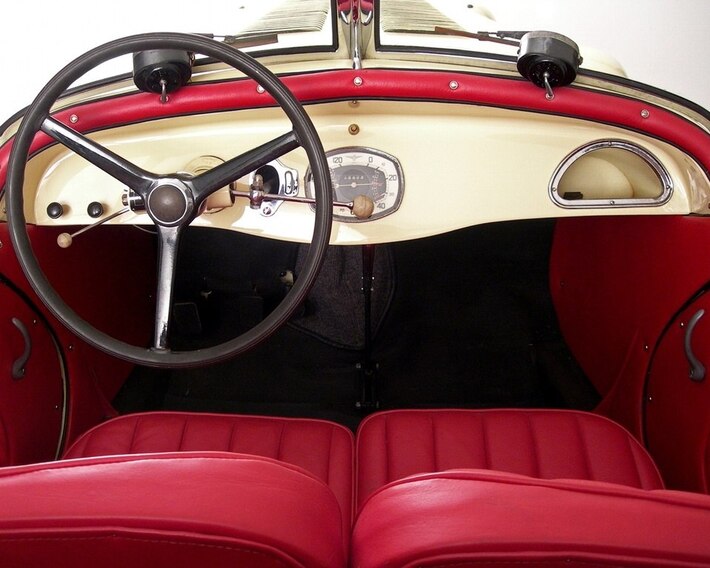
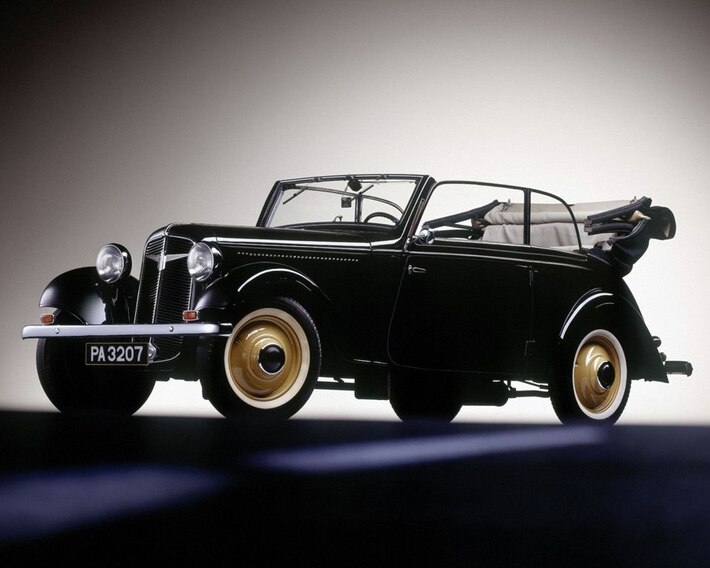
Production continued through the Second World War’s approach, with the final Trumpf Juniors leaving the Frankfurt factory in 1941 as civilian car production wound down for the war effort. Over the seven-year production run, the Trumpf Junior received incremental improvements: a Sport variant with slightly higher output arrived in 1936, synchromesh on the upper gears improved driver comfort, and coachbuilders offered open cabriolet bodies for buyers seeking an open-air experience. Total production reached several thousand examples, of which a small but meaningful number have survived into the 21st century in German, Austrian, and Swiss collections.
For the collector, the Trumpf Junior occupies an important place in the history of automotive engineering. It was not merely a curiosity but a serious, well-engineered product that pointed directly toward the front-wheel drive revolution of the 1960s and 1970s. Driving a Trumpf Junior today, one encounters a car that feels surprisingly modern in its handling balance — the absence of oversteer that characterises pre-war rear-wheel drive cars on wet roads is immediately apparent, and the light, responsive steering makes the car more approachable than its age might suggest.
Values for good Trumpf Juniors in Europe have risen steadily as pre-war FWD pioneers attract increasing collector interest. Well-preserved saloons typically trade between €15,000 and €35,000 in Germany and Austria; cabriolet examples in good condition can exceed €50,000 at specialist auctions. Restoration parts remain available through German specialist suppliers and the Adler club network, making these cars more maintainable than many pre-war survivors.
Adler Trumpf Junior in Pictures
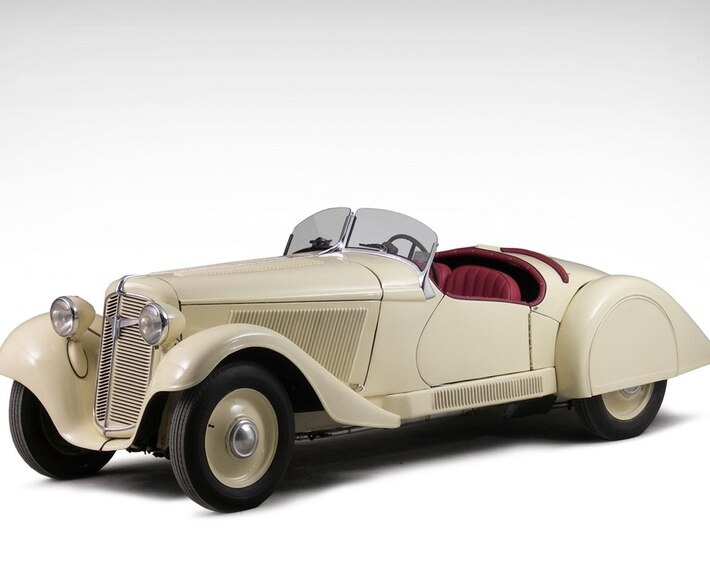
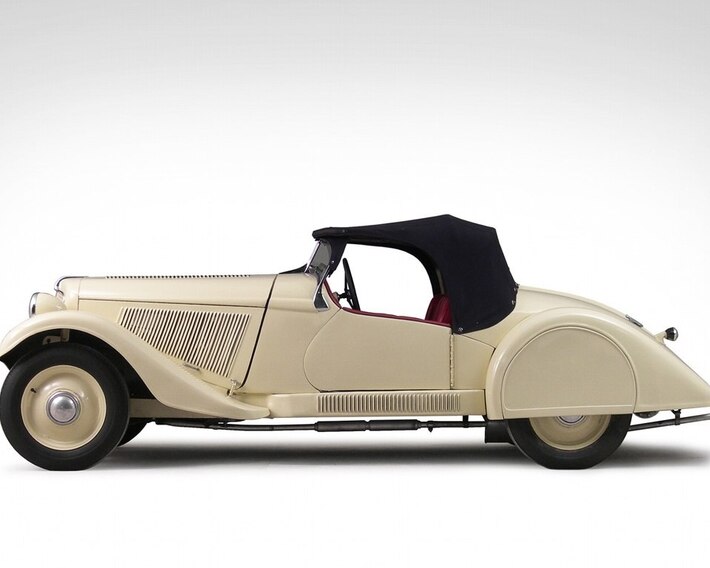
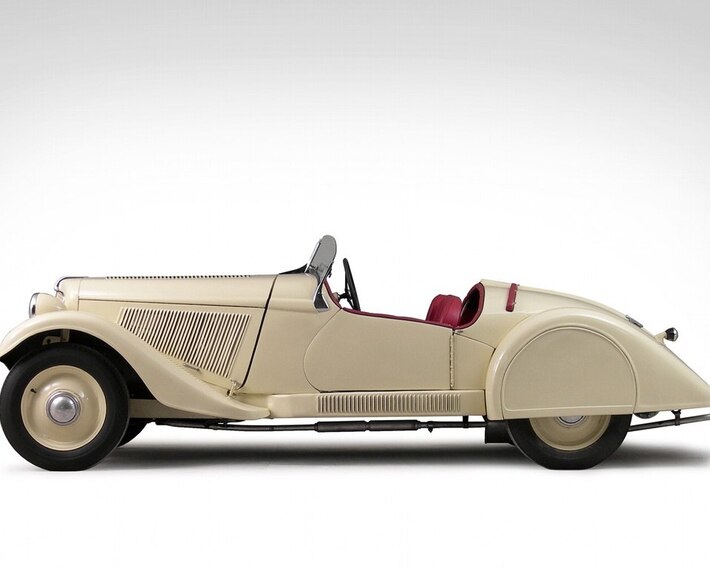
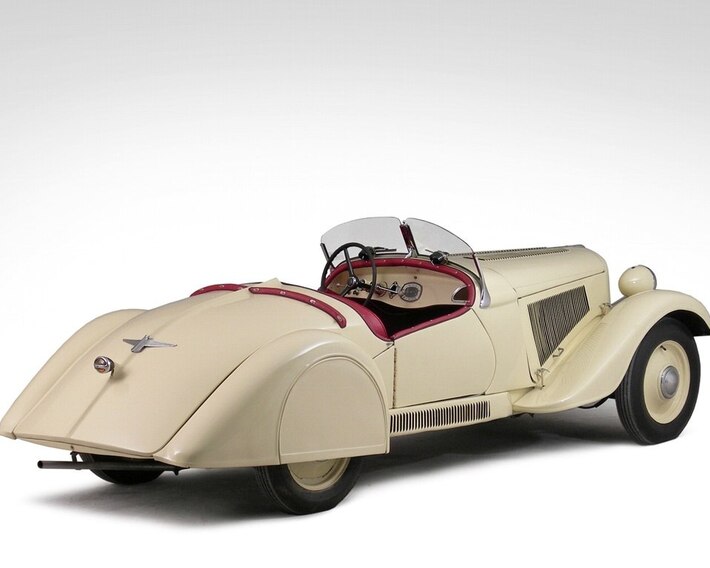
The Trumpf Junior’s body styling reflects the streamlined aesthetic that was fashionable in mid-1930s Germany: a curved roofline, integrated headlamps on later examples, and a compact, purposeful stance that communicates the car’s efficiency-focused engineering philosophy.
Key Specifications
- Engine: 995cc inline 4-cylinder, overhead valves, single carburettor; 26 hp at 3,800 rpm (original); 28 hp at 4,000 rpm (Sport variant from 1936). Water-cooled, cast iron block and head. Mounted transversely in the nose driving the front wheels.
- Drive layout: Front-wheel drive — Germany’s first mass-market FWD car below 1,000cc displacement. Constant-velocity joints on the driveshafts. Transverse engine and gearbox unit ahead of the front axle line.
- Transmission: 3-speed manual gearbox with column shift; synchromesh introduced on 2nd and 3rd gears from 1936. No overdrive or overdrive option. Final drive ratio optimised for economy at modest motorway speeds.
- Chassis: Pressed-steel platform chassis; independent front suspension; leaf-spring rear axle. Wheelbase 2,450 mm; overall length approximately 3,900 mm. Kerb weight approximately 720–750 kg depending on body style.
- Body styles: 2-door saloon (primary production body); 4-door saloon (limited); cabriolet (coachbuilt, rarer). Saloon body offered two and four door variants; cabriolet bodies were built by specialist coachmakers and are significantly rarer than the standard saloon.
- Brakes: Hydraulic drum brakes on all four wheels; a modern feature for a budget-class car in 1934. Mechanically operated handbrake on rear drums.
- Performance: Top speed approximately 90–95 km/h; 0–80 km/h in approximately 28–32 seconds depending on load and altitude. Fuel consumption approximately 8–10 litres per 100 km under normal conditions.
- Production years: 1934–1941; production wound down as Germany’s civilian car manufacturing was curtailed for the war effort. Total production estimated at several thousand examples across all variants.
- Factory: Heinrich Kleyer Werk, Frankfurt am Main, Germany. Adler was originally a typewriter and bicycle manufacturer before becoming one of Germany’s most innovative pre-war car makers.
Variant Comparison
| Variant | Engine | Power | Gearbox | Best For |
|---|---|---|---|---|
| Trumpf Junior (1934–1936, original) | 995cc inline 4-cylinder, single carburettor, front-wheel drive | 26 hp at 3,800 rpm | 3-speed manual, column-shift | The original affordable FWD Adler; lighter body, simpler specification; the entry point to the revolutionary Adler front-wheel drive system at a price accessible to the German middle class; correct for early collectors seeking the first-year specification |
| Trumpf Junior Sport (1936–1939) | 995cc inline 4-cylinder, tuned carburettor, front-wheel drive | 28 hp at 4,000 rpm | 3-speed manual, synchromesh on 2nd and 3rd | The sportier variant with improved carburetion, lighter trim, and slightly higher output; attractive two-tone paint options were available; the most spirited version of the Trumpf Junior to drive; sought by collectors who want to drive their pre-war Adler rather than simply display it |
| Trumpf Junior Cabriolet (1935–1940) | 995cc inline 4-cylinder, front-wheel drive | 26–28 hp | 3-speed manual | The open-bodied version offering a genuine pre-war convertible experience; coachbuilt by specialist bodymakers; rarer than the saloon variants and more sought-after by collectors; the most visually dramatic Trumpf Junior body style; correct soft-top fabric available through European classic car specialists |
What Makes the Trumpf Junior Stand Out
In the pre-war landscape of German small cars, the Trumpf Junior was not simply another budget saloon — it was a genuine engineering achievement that influenced how small cars would be designed decades later.
- Germany’s first affordable mass-market FWD car: The Trumpf Junior was the first German car priced for ordinary buyers that used front-wheel drive as its primary selling point. While Citöen had pioneered FWD with the Traction Avant, that car was larger and more expensive. The Trumpf Junior proved FWD could work in the most cost-sensitive segment of the market.
- Superior wet-weather handling: Front-wheel drive’s inherent understeer characteristic made the Trumpf Junior more predictable in the wet and on loose surfaces than its rear-wheel drive contemporaries. Contemporary German road test reports consistently noted the car’s handling composure in conditions that upset rival designs.
- Flat floor and improved interior space: The absence of a rear-wheel drive transmission tunnel gave the Trumpf Junior a flat floor, improving rear passenger comfort and luggage space relative to competitors in the same price class. This practical advantage was a significant selling point for family buyers.
- Pioneer engineering significance for collectors: The Trumpf Junior sits at the beginning of a direct lineage that leads to the Citroen 2CV, the BMC Mini, and eventually every modern FWD hatchback. For collectors with an interest in the history of automotive engineering, the Trumpf Junior represents a pivotal moment — the democratisation of a technology that would come to dominate the world’s car market.
- Manageable maintenance for a pre-war car: The Trumpf Junior’s mechanically simple 4-cylinder engine and straightforward hydraulic brakes make it one of the more approachable pre-war cars for maintenance. German Adler club members and specialist restorers maintain extensive knowledge of the type, and reproduction parts are available for the most commonly worn items.
- Genuine rarity with growing collector demand: Pre-war German FWD pioneers have attracted increasing attention from serious collectors over the past decade. The Trumpf Junior’s combination of historical significance, manageable size, and relative mechanical accessibility makes it an attractive acquisition compared to more exotic and expensive pre-war machinery.
Maintenance & Repairability in Azerbaijan
Maintaining an Adler Trumpf Junior in Azerbaijan is entirely possible but requires planning, patience, and reliable access to European specialist suppliers. The good news is that the Trumpf Junior’s mechanical simplicity and the active German classic car community make parts sourcing more tractable than for many pre-war types.
- Engine service: The 995cc inline four is a simple side-valve or overhead-valve unit with conventional service requirements: oil changes every 2,000–3,000 km with classic car oil (single-grade, 30W or 40W), carburettor cleaning and adjustment, valve clearance checking every 10,000 km. Any experienced mechanic with classic car knowledge can perform basic service; specialist Adler knowledge is required for major work.
- Parts sourcing from Germany: The primary source for Trumpf Junior parts is Germany, where the Adler-Veteranen-Club and specialist pre-war German car dealers maintain stocks of restoration parts. Shipping to Azerbaijan takes approximately 1–2 weeks via courier services. Major components such as body panels may need specialist fabrication.
- FWD system maintenance: The Trumpf Junior’s constant-velocity joints and front-wheel drive system require specialist knowledge for servicing. Grease nipples on the CV joints should be greased every 5,000 km; worn CV joints can be replaced with units sourced through European pre-war specialist suppliers or fabricated to specification.
- Hydraulic brake system: The hydraulic drum brakes use a single-circuit system; the master cylinder, wheel cylinders, and brake lines should be inspected annually. Rubber seals in the hydraulic system degrade over time; complete system rebuilds using modern equivalent seals are the standard approach. Brake drums and shoes can be sourced through European classic car suppliers.
- Bodywork and corrosion: Pre-war steel bodywork is vulnerable to corrosion; any Trumpf Junior in Azerbaijan should be stored in a dry, ventilated garage and inspected annually for rust. Bodywork repairs require a craftsman familiar with pre-war steel panel techniques; lead-loading and metal bumping are the correct approaches rather than modern filler.
- Electrical system: The Trumpf Junior uses a 6-volt positive-earth electrical system typical of pre-war German cars. The system is simple — generator, battery, ignition, lights, horn — and any problems are readily diagnosed. Modern 6-volt LED bulbs are available as replacements for better reliability while maintaining the correct voltage system.
- Fuel system: The carburettor is a simple single-unit design; rebuild kits are available through European pre-war suppliers. Azerbaijan’s 95-octane petrol is more than adequate for the Trumpf Junior’s low-compression engine. Ethanol content in modern fuels may require attention to fuel line compatibility; rubber components should be inspected annually.
Adler Trumpf Junior vs. Contemporaries
| Model | Core Strength | Main Compromise (Collector Context) |
|---|---|---|
| Adler Trumpf Junior (1934–1941) | Germany's first mass-market FWD car below 1,000cc; 995cc 4-cylinder; revolutionary front-wheel drive layout; well-built and reliable by pre-war standards; genuine historical importance as a pioneer of affordable FWD motoring in Europe | Modest 26–28 hp limits performance; very small interior by modern standards; mechanical knowledge for pre-war FWD systems required for maintenance; availability of specialists in Azerbaijan limited to European imports |
| DKW F7 (1937–1939) | DKW's FWD offering with 2-stroke twin-cylinder engine; similar price class and philosophy to the Trumpf Junior; lightweight body; well-represented in pre-war German market; good survivor population in Germany | 2-stroke engine requires oil mixed with petrol; different character to the Adler 4-stroke; less refined mechanically than the Trumpf Junior; louder and smokier than the Adler at low speed |
| Hanomag Garant (1934–1938) | Hanomag's small car offering in a similar price bracket; conventional rear-wheel drive; simple and durable; reliable water-cooled engine; popular in Germany and good parts survival in the classic car market | Conventional rear-wheel drive — none of the Adler's technological innovation; less historically significant for FWD development; less powerful than the Trumpf Junior Sport |
| Opel Kadett (1936–1940) | Opel's mass-market small car; rear-wheel drive; produced in very large numbers making parts more accessible; well-known brand in Germany; simple and sturdy engineering | Conventional RWD layout; Opel was GM-owned and lacked Adler's engineering innovation cachet; less historically important in the development of affordable FWD motoring in Germany |
| NSU-Fiat 500 (1936–1950) | Italian-designed small car built under licence in Germany; rear-engine layout; tiny and economical; charming appearance; very low price new; good survival rate in European collections | Rear-engine layout with very different handling characteristics; even less power than the Trumpf Junior; primarily Italian engineering and character rather than German; different collector market |
Cost-of-Ownership Calculator (Azerbaijan)
This calculator estimates annual running costs for an Adler Trumpf Junior used as a collector car with very low annual mileage. Defaults reflect the typical usage pattern for a pre-war European collector car in Azerbaijan: occasional show appearances, dry-weather drives, and careful storage.
- Estimated annual fuel use: 120 litres
- Estimated annual fuel cost: $78
- Total annual ownership estimate: $5878
- Average monthly ownership estimate: $490
Used Buying Checklist
Purchasing an Adler Trumpf Junior requires careful inspection of the areas most vulnerable to age and neglect. Pre-war German cars are a specialist purchase; buyer’s due diligence is essential.
- FWD system condition: Check for clicking or vibration when turning under power — a sign of worn CV joints. Inspect the driveshaft gaiters for splits or grease leaks. A worn FWD system is the most expensive mechanical repair on the Trumpf Junior; budget accordingly if any play is detected.
- Engine oil pressure and blue smoke: Start from cold and observe the exhaust; blue smoke on start-up suggests worn valve guides or piston rings. Check the oil pressure with a gauge — the stock pressure indicator is not always reliable. Low oil pressure on a cold engine is a warning sign requiring immediate investigation.
- Bodywork corrosion: Probe all sill sections, floor pan, inner wings, and the base of the A and B pillars with a magnet or corrosion probe. Pre-war steel is thin and welds poorly once heavily corroded; structural rust in the platform chassis requires specialist repair. Surface rust is common and manageable; structural rust changes the economics of any purchase.
- Hydraulic brake system: Test all four brakes individually for fade or pull. Inspect the master cylinder for seepage; check all four wheel cylinders for leaks. A complete hydraulic brake rebuild is straightforward and should be budgeted for any car that has been stored for more than five years.
- Electrical system: Test all lights, horn, and ignition on the 6-volt system. Check the generator output with a voltmeter; a failing generator is common on cars that have been stored. Wiring insulation on pre-war cars is often brittle and should be inspected for cracking.
- Documentation and provenance: Request the original Fahrzeugbrief (German vehicle registration document) or its replacement, any service history, and evidence of the car’s history since new if available. Registration with the Adler-Veteranen-Club in Germany provides additional provenance and access to the club’s technical resources.
Adler Trumpf Junior FAQ
Why was the Trumpf Junior significant in the history of FWD cars?
The Trumpf Junior was the first German mass-market car below 1,000cc to use front-wheel drive as a standard production feature. While Citroen’s Traction Avant and DKW had pioneered FWD in Europe, none had done so at the Trumpf Junior’s price point. The car proved that FWD was not merely an expensive engineering exercise but a viable solution for the most cost-sensitive buyers — a lesson that the Issigonis Mini would repeat with even greater success in 1959.
How does the Trumpf Junior drive compared to its rear-wheel drive contemporaries?
Drivers familiar with pre-war rear-wheel drive cars are typically surprised by the Trumpf Junior’s composure. The FWD layout eliminates the tendency toward lift-off oversteer that characterises period RWD designs; the car understeers gently at the limit rather than stepping sideways. The light steering is precise, and the flat floor improves the driving position. On wet Baku streets, the Trumpf Junior would be significantly more predictable than a period RWD competitor.
Where can I find Trumpf Junior restoration parts?
The primary sources are German pre-war specialist dealers and the Adler-Veteranen-Club, which maintains a network of members with parts holdings and technical knowledge. European classic car parts fairs (Techno-Classica Essen, Auto & Technik Museum Sinsheim) are productive hunting grounds. Shipping from Germany to Azerbaijan takes approximately 1–2 weeks via DHL or similar international courier. Some mechanical components can be fabricated locally in Azerbaijan by skilled engineers working to original drawings.
What is the current collector value of a Trumpf Junior?
In the German and Austrian market, restored Trumpf Junior saloons typically sell for €15,000– €35,000 depending on condition and variant. Cabriolet examples in good condition can reach €50,000 or more. Unrestored project cars with solid structure are available from €5,000–€12,000. Values have risen consistently over the past decade as pre-war FWD pioneers attract collector interest beyond the traditional German classic car audience.
Should You Buy an Adler Trumpf Junior?
The Adler Trumpf Junior is one of the most historically significant small cars of the pre-war era — a genuine pioneer that brought front-wheel drive technology to ordinary German buyers at a time when most manufacturers were still debating whether FWD was practical at all. For the collector with an interest in automotive history and engineering development, the Trumpf Junior offers a connection to a pivotal moment in how cars evolved: a tangible artefact of the path that led directly to the modern transverse FWD layout found in almost every mass-market car today.
The practical realities of pre-war car ownership in Azerbaijan are significant: specialist support requires European contacts, parts shipping adds time and cost to every repair, and the car’s modest performance limits it to dry-weather, low-speed use. But for the serious collector willing to invest in the relationship with European suppliers and the Adler club network, the Trumpf Junior is a rewarding, historically important, and surprisingly driveable classic. If you are considering a purchase, engage a specialist pre-war German car inspector before committing, and budget generously for the first year of ownership.
BakuWheels uses cookies to improve your experience, analyse site traffic, and personalise content. By clicking Accept All, you consent to our use of cookies. Learn more in our Cookie Policy.