

Adler 7/17 PS (1920–1922)
The Adler 7/17 PS was the immediate post-First World War model that filled a brief but historically significant gap in Adler’s range — produced from 1920 to 1922 as Germany began the painful process of reconstruction. Using an approximately 1.9-litre four-cylinder engine producing 17 hp, the 7/17 PS sat between the smaller 6/24 PS and the larger 10/20 PS in Adler’s early 1920s range, providing a mid-point offering for buyers who needed more than the light car but less than the full touring car.
Overview
The Adler 7/17 PS occupies a unique position in the company’s history: it was built in the very first years after the armistice, when Germany was attempting to restart civilian industry from a position of defeat, exhaustion, and economic disruption. The car represents Adler’s immediate post-war product philosophy: use existing engine technology with modest updating to provide a marketable car as quickly as possible, before the more thoroughly developed post-war range was ready.
The approximately 1.9-litre four-cylinder engine used a side-valve configuration similar to the pre-war models but with some post-war refinements in carburetion and cooling. The 17 hp output was modest even by the standards of the early 1920s; the car was not designed to be fast but to be reliable and affordable in the constrained economic conditions of the immediate post-war period.
The production run was brief by necessity: just two years, 1920 and 1921–1922. By the time hyperinflation began to grip the German economy in earnest (1921–1923), the 7/17 PS was already being superseded by more thoroughly developed models. The few examples that were built survived the crisis years with varying degrees of care and maintenance; of those that survived to the modern era, the vast majority are in German and Austrian museum collections.
For the collector, the 7/17 PS is significant primarily as a historical document — evidence of how Adler maintained its automotive manufacturing during the most difficult period in the company’s history. The very existence of these cars in the period between 1920 and 1922 testifies to Adler’s determination to remain an automotive manufacturer despite the devastation of the war and its aftermath.
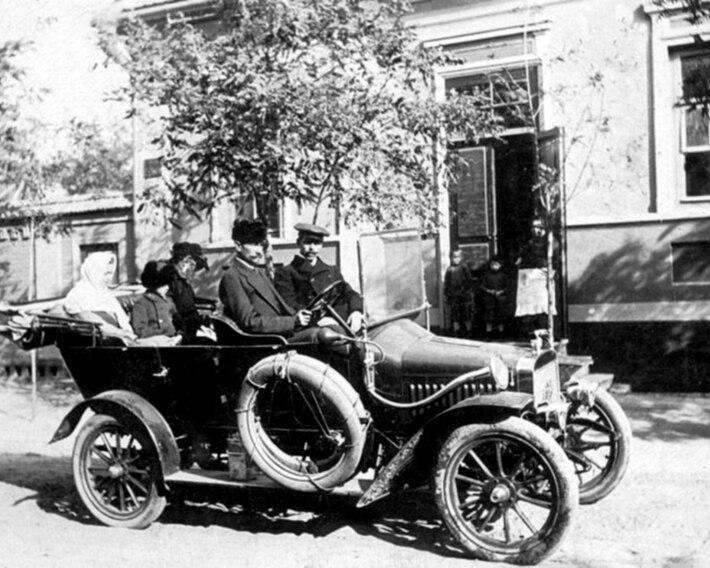
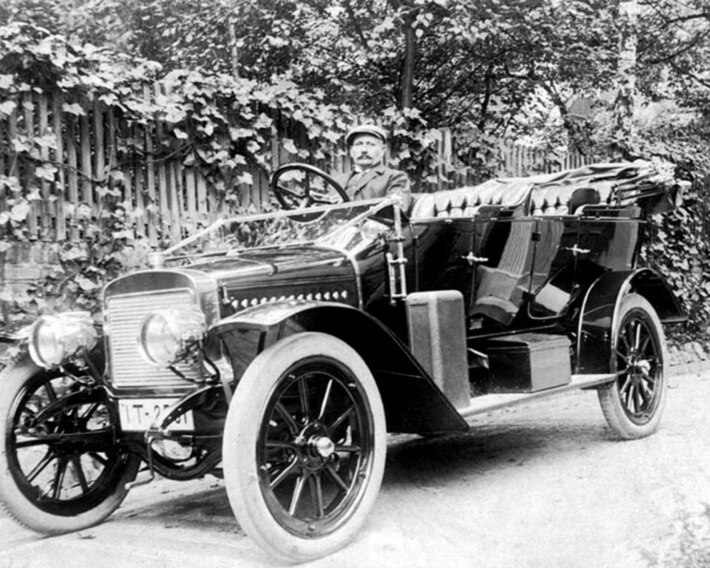
Adler 7/17 PS in Pictures


Key Specifications
- Engine: Approximately 1.9-litre inline 4-cylinder, side-valve; 17 hp at approximately 2,000 rpm. Water-cooled; thermo-siphon cooling or early pump cooling depending on year of production. Cast iron throughout.
- Drive layout: Rear-wheel drive; bevel-gear rear axle; open propshaft. Standard post-war configuration.
- Transmission: 3-speed sliding-mesh gearbox; floor-mounted lever. Double-declutching required for smooth gear changes.
- Chassis: Conventional ladder frame; beam front axle with semi-elliptic springs; semi-elliptic rear springs.
- Body: Open four-seat tourer with folding hood and detachable side screens; Sport variant with two-seat lighter body. Body construction reflects wartime material constraints in the earliest production examples.
- Brakes: Rear-wheel mechanical brakes on early examples; some later 1921–1922 examples may have front wheel brakes added. Cable-operated throughout.
- Performance: Top speed approximately 65–70 km/h; fuel consumption approximately 10–13 litres per 100 km.
- Production years: 1920–1922; just two years of production in Germany’s most economically turbulent post-war period. Extreme rarity in the survivor population.
Variant Comparison
| Variant | Engine | Power | Gearbox | Best For |
|---|---|---|---|---|
| 7/17 PS Standard (1920–1922) | ~1.9L inline 4-cylinder, side-valve, RWD | 17 hp at 2,000 rpm | 3-speed manual, sliding mesh | The standard post-war Adler offering in the mid-range; correct specification for immediate post-WWI German automotive history collecting; open four-seat body; historically significant as Adler’s response to the immediate post-war market before the more refined 6/24 PS update |
| 7/17 PS Sport (1921–1922) | ~1.9L inline 4-cylinder, slightly higher compression, RWD | 19 hp at 2,200 rpm | 3-speed manual | The sporting variant with higher compression and two-seat body; extremely rare survivor; appropriate for collectors who want an early post-war Adler with sporting character; eligible for veteran car sporting events |
What Makes the 7/17 PS Stand Out
- Immediate post-war production context: The 7/17 PS was built in the first two years of Germany’s post-war civilian life — when the Treaty of Versailles was still being implemented, the demobilised German army was being absorbed into the civilian economy, and the political upheavals of the early Weimar Republic were unfolding. It is a physical artefact of Germany’s immediate post-war experience.
- Extreme rarity: Two-year production run, low volumes, 100 years of attrition, and the economic crises of the 1920s mean that surviving 7/17 PS cars are extraordinarily rare. Even in German museum collections, complete examples are exceptional.
- Bridge between pre-war and modern Adler: The 7/17 PS used pre-war engine technology while facing a post-war market that was rapidly changing its expectations. It is the last expression of Adler’s purely pre-war engineering thinking before the company began developing the more modern designs of the mid-1920s.
- Veteran car event eligibility: Full veteran car status at all major international organisations. The 7/17 PS qualifies for the most historically significant events available to veteran car owners.
Maintenance & Repairability in Azerbaijan
- Same protocols as all pre-war Adler models: Veteran car specialist required; all parts from German sources or custom fabrication; annual expert inspection; conservative use only.
- Post-war material quality: Some components on early 1920 examples may show effects of wartime material substitutions carried over from the final war years; inspect all fittings for evidence of non-standard materials and plan replacement with correct-specification components during restoration.
- Very low production volumes: The 7/17 PS’s two-year production run means that the parts pool — original factory parts in European collections and salvage — is even smaller than for other Adler PS models. Fabrication to original drawings is likely to be the primary maintenance approach for mechanical components.
- Community: Adler-Veteranen-Club, FIVA, and the broader German veteran car community are essential resources. Given the 7/17 PS’s extreme rarity, owners of other Adler PS models are the most relevant community contacts for practical advice.
Adler 7/17 PS vs. Contemporaries
| Model | Core Strength | Main Compromise (Collector Context) |
|---|---|---|
| Adler 7/17 PS (1920–1922) | Immediate post-WWI Adler; ~1.9L 4-cylinder; 17 hp; surviving from Germany’s most difficult reconstruction period; historically distinctive as a product of the immediate post-war years before the hyperinflation crisis; brief two-year production run ensures extreme rarity | Very short production run; extremely rare; veteran car specialist maintenance essential; very modest performance even by vintage car standards |
| Opel 8/25 PS (post-WWI) | Opel’s immediate post-war offering; 8/25 PS specification; stronger brand recognition; better parts availability through Opel club network; more common survivor | No FWD significance; Opel common by vintage car standards; less distinctive than a rare Adler at veteran car events |
| Stoewer D5 (post-WWI) | Stoewer’s German car from Stettin; interesting alternative manufacture location; different engineering approach; good documentation through German automotive archives | Extremely obscure; very limited parts and community support; Stoewer ceased car production in 1939 and the brand is forgotten by most automotive historians outside Germany |
Cost-of-Ownership Calculator (Azerbaijan)
- Estimated annual fuel use: 120 litres
- Estimated annual fuel cost: $78
- Total annual ownership estimate: $5878
- Average monthly ownership estimate: $490
Used Buying Checklist
- Authentication: Given the 7/17 PS’s extreme rarity, authentication of any car presented as this model is essential. Engage an Adler-Veteranen-Club expert to confirm the type before purchase.
- Engine condition: Full veteran car specialist assessment; compression test; valve condition. The side-valve engine is robust but age and post-war material quality concerns make a thorough assessment critical.
- Body and chassis: Same probing inspection as all pre-war Adler models; structural corrosion is the most common serious defect; budget for remediation if detected.
- Documentation: All available records; any documentation connecting the car to its original German registration is extremely valuable given the type’s rarity.
- Completeness: Verify that all period-correct fittings are present: headlamps, horn, toolbox, and instruments. Missing original fittings on a rare veteran car are difficult to replace with correct period items.
Adler 7/17 PS FAQ
How does the 7/17 PS fit into Adler’s PS-era range?
The 7/17 PS sat between the smaller 6/24 PS and the larger 10/20 PS in Adler’s immediate post-war range. With seven fiscal horsepower (slightly higher than the 6/24’s six) and 17 actual hp (less than the 10/20’s 20 hp), it filled a mid-point position that provided an option for buyers whose requirements and budgets fell between the two flanking models. The brief production run suggests that the market gap it filled was narrower than Adler had anticipated.
What were the challenges of building cars in Germany in 1920–1922?
Germany in 1920–1922 faced extraordinary challenges: the loss of territories including coal-rich Saar and industrial Alsace-Lorraine reduced raw material availability; war reparations payments consumed industrial output; the workforce was adjusting from military to civilian production; and the emerging inflation that would become hyperinflation in 1921–1923 was already distorting prices and planning. Adler’s decision to maintain car production through this period was a significant commitment to the company’s automotive identity.
Should You Buy an Adler 7/17 PS?
The Adler 7/17 PS is a highly specialist acquisition intended for collectors who specifically want to document the most difficult period in Adler’s automotive history. Its extreme rarity, immediate post-war production context, and brief existence make it one of the most historically distinctive cars in Adler’s range — and one of the most challenging to own responsibly outside Germany.
For the right collector with the appropriate resources, knowledge, and commitment, the 7/17 PS represents an irreplaceable piece of both Adler’s story and Germany’s post-war industrial history. The same practical requirements apply as for all Adler veteran cars: European specialist support, careful storage, low annual mileage, and a generous conservation budget are the foundations of responsible ownership.
BakuWheels uses cookies to improve your experience, analyse site traffic, and personalise content. By clicking Accept All, you consent to our use of cookies. Learn more in our Cookie Policy.