

Adler 9/24 PS (1924–1928)
The Adler 9/24 PS was the upper-mid-range touring car of the German “Golden Twenties” — a four-year production model introduced in 1924 that offered significantly more interior space and a larger approximately 2.3-litre four-cylinder engine than the smaller PS-designation models below it. Built during Germany’s most prosperous and culturally creative inter-war period, the 9/24 PS served buyers who needed a genuine touring car with family capacity and sufficient power for comfortable German highway use.
Overview
The 9/24 PS was Adler’s most substantial touring car offering during the “Golden Twenties” — the period from 1924 to 1929 when German economic and cultural life reached a peak of confidence and creativity that would be brutally interrupted by the Wall Street Crash and the economic depression that followed. During these years, Adler’s Frankfurt factory was producing some of its most commercially successful pre-Standard models, and the 9/24 PS was the flagship of the PS-era range.
The approximately 2.3-litre four-cylinder engine was the largest in Adler’s PS-designation range and produced 24 hp — modest by the standards of the era’s largest cars but entirely adequate for the 9/24 PS’s market positioning as a comfortable, spacious touring car rather than a sporting or prestige model. The longer wheelbase compared to the smaller PS models provided genuine rear passenger space; the 9/24 PS was a proper family touring car in the German tradition of the mid-1920s.
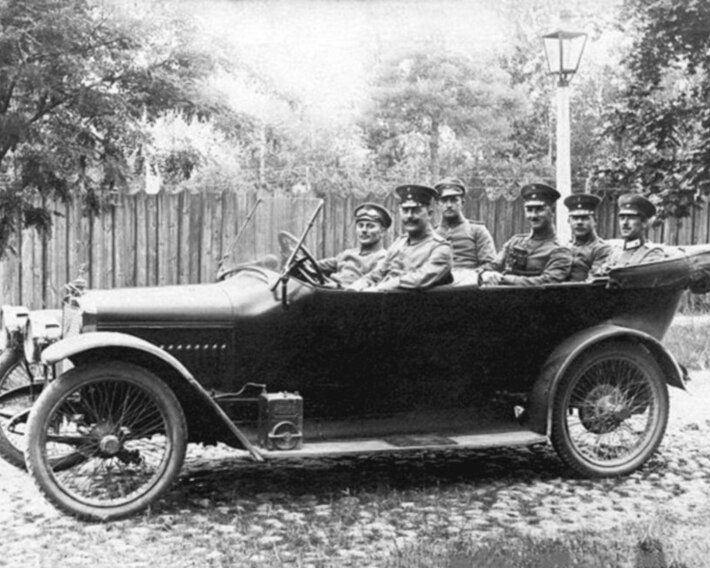
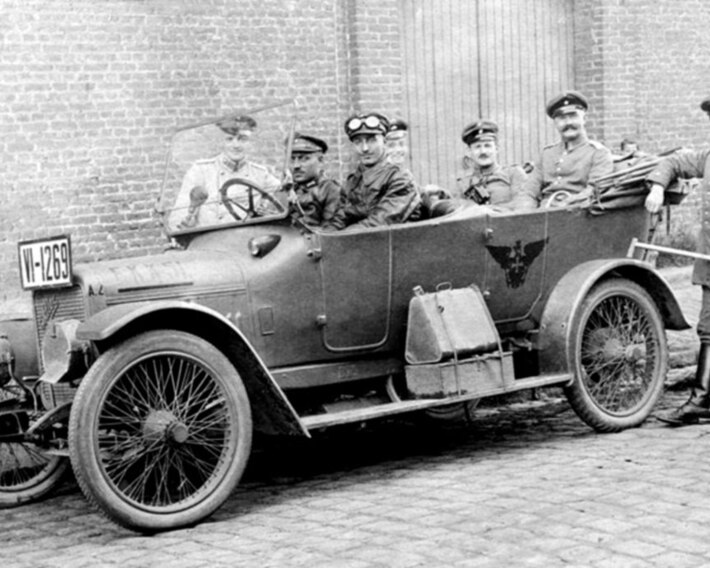
The model was available in the standard open tourer body and in a Landaulet configuration — a body style with a folding rear section that provided weather protection for rear passengers while maintaining the open-car character that was still fashionable for touring use. This transitional body type between the pure open tourer and the fully enclosed saloon reflects the shift in buyer expectations that was occurring through the mid-1920s.
Production continued until 1928 — the longest run of any Adler PS-era mid-range model — before the Standard family took over. The 9/24 PS thus bridges the PS era and the Standard era more closely than any other model, with its final years overlapping with the early Standard 6 production. For collectors, this four-year run means marginally better parts survival prospects than the two-year models, though the 9/24 PS remains a genuinely rare vintage car.
Adler 9/24 PS in Pictures


Key Specifications
- Engine: Approximately 2.3-litre inline 4-cylinder; 24 hp at approximately 2,200 rpm. The largest engine Adler fitted to a PS-designation model; side-valve configuration on earlier production, with overhead-valve option on some later examples. Water-cooled; electric starting standard.
- Drive layout: Rear-wheel drive; conventional propshaft to bevel-gear rear axle. Four-wheel mechanical brakes standard from the beginning of production (a full adoption earlier than some smaller PS models).
- Transmission: 3-speed manual with improving synchromesh on 3rd gear; floor-mounted lever. Some later examples may have had 4-speed options as the Standard family’s influence began to permeate Adler’s production planning.
- Chassis: Longer ladder frame than smaller PS models; independent front suspension on later production; semi-elliptic rear springs. The longer wheelbase provides noticeably better ride quality and passenger comfort than the shorter PS models.
- Body styles: Open four-seat tourer (primary production body); Landaulet (folding rear section, transitional body between tourer and saloon); some custom coachwork on the longer wheelbase chassis. The Landaulet variant is rarer and more sought-after by collectors.
- Performance: Top speed approximately 80–85 km/h on good surfaces; the most capable of the PS-era Adler touring cars in terms of sustained speed. Fuel consumption approximately 12–15 litres per 100 km.
- Weight: Approximately 1,100–1,200 kg in standard tourer specification; heavier than the smaller PS models but with proportionally better engine torque for comfortable touring.
- Production years: 1924–1928; four years, the longest run of any Adler PS-era mid-range model. The production overlap with the Standard 6 (introduced 1927) means that some buyers in 1927–1928 chose between the 9/24 PS and the new Standard family.
Variant Comparison
| Variant | Engine | Power | Gearbox | Best For |
|---|---|---|---|---|
| 9/24 PS Standard Tourer (1924–1928) | ~2.3L inline 4-cylinder, RWD | 24 hp at 2,200 rpm | 3-speed manual, improving synchromesh on 3rd | The standard mid-1920s Adler mid-range tourer; correct four-seat open body with hood and side screens; longer wheelbase and greater passenger space than the smaller 6/25 PS; historically representative of the stable mid-Weimar period before the Standard family replaced the PS-range |
| 9/24 PS Landaulet (1925–1928) | ~2.3L inline 4-cylinder, RWD | 24 hp | 3-speed manual | The partially enclosed Landaulet body style with folding rear hood; a transitional body type between the open tourer and the fully enclosed saloon; appropriate for collectors who want a mid-1920s Adler with more weather protection than the open tourer; rarer than the standard tourer |
What Makes the 9/24 PS Stand Out
- The flagship of the PS-era Adler range: With the largest engine and longest wheelbase of the PS-designation models, the 9/24 PS was Adler’s most substantial offering during the Golden Twenties. It represents the apex of the PS-era engineering tradition before the modern Standard family arrived.
- Golden Twenties production context: The 9/24 PS was built during Germany’s most creative inter-war cultural period. Weimar Germany’s arts, design, and intellectual life reached their peak during these years; a 9/24 PS was contemporary with the Bauhaus, early German cinema, and the cultural explosion that the Nazi era would suppress. The car is a physical artefact of this extraordinary period.
- Landaulet body availability: The Landaulet variant’s partially enclosed rear body represents an interesting transitional body style that was fashionable in the mid-1920s as enclosed bodies became more desirable but the open-car tradition was still respected. Very few Landaulets of any German make from this period survive in complete form.
- Longest PS-era production run: Four years of production gave the 9/24 PS a slightly larger survivor population than the two-year models in the PS range, making it marginally easier to find and somewhat better supported by parts survival in European veteran car collections.
- Historical bridge between eras: The 9/24 PS’s 1927–1928 production overlapped with the new Standard 6; buyers in those years faced a choice between the established PS tradition and Adler’s new six-cylinder direction. Cars sold in 1927–1928 were essentially the last expression of the old Adler tradition.
Maintenance & Repairability in Azerbaijan
- Larger engine service: The ~2.3-litre four-cylinder engine is more powerful but mechanically similar in service requirements to the smaller PS models; oil changes, carburettor service, valve clearance adjustment, and ignition maintenance follow the same patterns. The larger displacement means slightly more coolant volume and more substantial valve and piston assemblies to inspect.
- Four-wheel brake maintenance: Standard four-wheel mechanical brakes on all production; cable inspection and adjustment at every service; drum condition assessment annually. The 9/24 PS’s greater weight means that brake maintenance is particularly important for safe operation.
- Landaulet hood mechanics: The Landaulet body’s folding rear hood mechanism is more complex than a standard open tourer hood; specialist knowledge of 1920s coachwork mechanisms is required for any work on the folding system. Correct hood fabric for period Landaulet bodies is available from European specialist trimming suppliers.
- Parts sourcing: German vintage car dealers, Adler-Veteranen-Club, and European vintage car parts fairs. Four years of production means slightly better parts prospects than shorter-run models; however, all significant mechanical work will require specialist sourcing or fabrication.
- Storage and insurance: Dry garage storage essential; agreed-value collector car insurance with a European provider; annual inspection by a vintage car specialist regardless of mileage driven.
Adler 9/24 PS vs. Contemporaries
| Model | Core Strength | Main Compromise (Collector Context) |
|---|---|---|
| Adler 9/24 PS (1924–1928) | Mid-1920s Adler upper-mid-range car; ~2.3L 4-cylinder; 24 hp; longest production run of the PS-era Adler mid-range models at four years; produced during the “Golden Twenties” stability period; more interior space than smaller Adler PS models; historically important as the last substantial Adler before the Standard family | Conventional RWD engineering without FWD innovation; veteran car specialist maintenance required; rare survivor population; no longer in the mainstream collector market |
| Wanderer W11 (mid-1920s) | Wanderer’s mid-range touring car; slightly more powerful; Chemnitz manufacture; Auto Union heritage connection; good documentation through German automotive archives | Auto Union pre-merger Wanderer is highly specialist; different engineering approach; very limited community support outside Germany |
| Horch 12/60 (mid-1920s) | Horch’s prestigious mid-range offering; more powerful; Horch brand cachet; sophisticated engineering; good European collector community | Horch commands significantly higher values than the Adler; more complex engineering; different collector demographic and price bracket |
| Opel 8/25 PS (mid-1920s) | Opel’s contemporary offering; better brand recognition; larger surviving population; Opel club support; good parts availability by vintage car standards | Very common by vintage car standards; no FWD significance; Opel badge less distinctive than rare Adler at vintage events |
Cost-of-Ownership Calculator (Azerbaijan)
- Estimated annual fuel use: 120 litres
- Estimated annual fuel cost: $78
- Total annual ownership estimate: $5878
- Average monthly ownership estimate: $490
Used Buying Checklist
- Variant identification: Confirm whether the car is a standard tourer or Landaulet; the Landaulet’s more complex coachwork adds to both value and maintenance requirements. Inspect the folding mechanism on Landaulet examples for complete, smooth function before purchase.
- Engine condition: Compression test across all four cylinders; oil pressure measurement; cold and warm start observation for blue smoke or unusual noises. The larger 2.3-litre engine is more expensive to rebuild than the smaller PS units; factor this into the acquisition assessment.
- Chassis and body: Full structural probe inspection; four-wheel brake assessment and cable condition; spring condition evaluation. The longer wheelbase chassis has more total surface area vulnerable to corrosion; allow extra inspection time for the full chassis length.
- Electrical system: 6-volt system inspection; battery, generator, starter motor, and ignition system. Wiring insulation on 100-year-old cars is a fire risk; inspect all loom sections for brittleness and cracking.
- Provenance: All available documentation; Adler-Veteranen-Club connection; club history and any photographic records from earlier ownership. The 9/24 PS’s four-year production run means that some documentation may survive from original German registration.
Adler 9/24 PS FAQ
What is a Landaulet body style?
A Landaulet (also Landaulette) is a body style with an enclosed front compartment and a rear section that can be opened by folding back a portion of the roof. Originally derived from horse-drawn carriage designs, it provided weather protection for the driver while allowing rear passengers to enjoy open-air travel when conditions permitted. Popular from the 1910s through the mid-1920s, the Landaulet fell out of fashion as fully enclosed saloon bodies became the preferred specification for most buyers. A surviving 9/24 PS Landaulet is a rare example of this transitional body style.
How does the 9/24 PS compare to the Standard 6 that replaced it?
The Standard 6 (1927) was a generational advance over the 9/24 PS: a modern 2.1-litre straight-six with smoother character, a more contemporary chassis with better suspension, and body options including fully enclosed saloon specification. Buyers in 1927 who chose the 9/24 PS were accepting older technology at a lower price; those who chose the Standard 6 were investing in the future direction of German automotive design. Both choices were defensible; but the Standard 6 pointed forward, and the 9/24 PS looked back.
What events can a 9/24 PS participate in?
The 9/24 PS (1924–1928) qualifies for vintage car status at FIVA and most national historic vehicle organisations. It is eligible for vintage touring events, national veteran and vintage car rallies in Germany and Austria, and display at major European historic vehicle shows. Specific events for which it would be appropriate include the Solitude Revival, Sachsenring Classic, and various ADAC Historic vehicle events in Germany. Participation from Azerbaijan requires trailer transport to the event venue.
Should You Buy an Adler 9/24 PS?
The Adler 9/24 PS is the most substantial and historically contextually rich of the PS-era Adler touring cars. Its four-year production run, largest engine, and Golden Twenties production period make it the PS-era model most likely to appeal to the collector who wants a usable vintage touring car rather than a purely static museum piece. The longer wheelbase and greater passenger space make it more comfortable for occasional veteran car touring use than the smaller and shorter PS models.
The same practical requirements of Adler veteran car ownership apply fully to the 9/24 PS: European specialist contacts, careful storage, low annual mileage, and a generous budget for conservation rather than use. The 9/24 PS is, of all the PS-era Adler models, perhaps the most realistic choice for a collector in Azerbaijan who wants to actually drive their Adler occasionally — cautiously, carefully, and on suitable roads — rather than keeping it exclusively for display.
BakuWheels uses cookies to improve your experience, analyse site traffic, and personalise content. By clicking Accept All, you consent to our use of cookies. Learn more in our Cookie Policy.