
Scion
Toyota's Youth Brand: Scion Brought Japanese Reliability to a New Generation of Drivers.
Origins & Heritage
Scion was conceived in the early 2000s as Toyota's strategic response to a generational challenge: how to attract younger American buyers who were not yet considering Toyota vehicles when purchasing their first car. Toyota's research identified a clear gap — the mainstream Toyota lineup, while highly regarded for reliability and practicality, carried an image that skewed older. Scion was the answer: a distinct brand with its own identity, its own dealer experience, and vehicles specifically designed to appeal to buyers in their twenties.
Launched in California in 2003 before a national rollout in 2004, Scion's approach was unconventional for the automotive industry. The brand emphasised personalisation through a vast catalogue of Toyota-approved accessories, simplified the purchasing process with "mono-spec" pricing that eliminated haggling, and positioned its vehicles as canvases for individual expression. The xA and xB — compact and distinctively boxy — became instant cult objects among young buyers who appreciated their practicality, their Toyota-derived mechanical reliability, and their accessible price points.
Over its thirteen-year existence, Scion expanded its lineup to include the tC sports coupe, the iQ microcar, the FR-S sports car (co-developed with Subaru), and several other models. Despite genuine enthusiasm from its target audience and a loyal following, Scion struggled to achieve the sales volumes that would justify its existence as a separate brand. In August 2016, Toyota announced Scion's discontinuation — surviving models were absorbed into the Toyota and Subaru lineups, with the FR-S becoming the Toyota 86.
Key Milestones
Iconic Models in Pictures
Scion's lineup celebrated bold design, accessible performance, and individual expression — from the xB's iconic box proportions to the FR-S's driver-focused sports car formula, each model captured a distinct aspect of youth automotive culture.
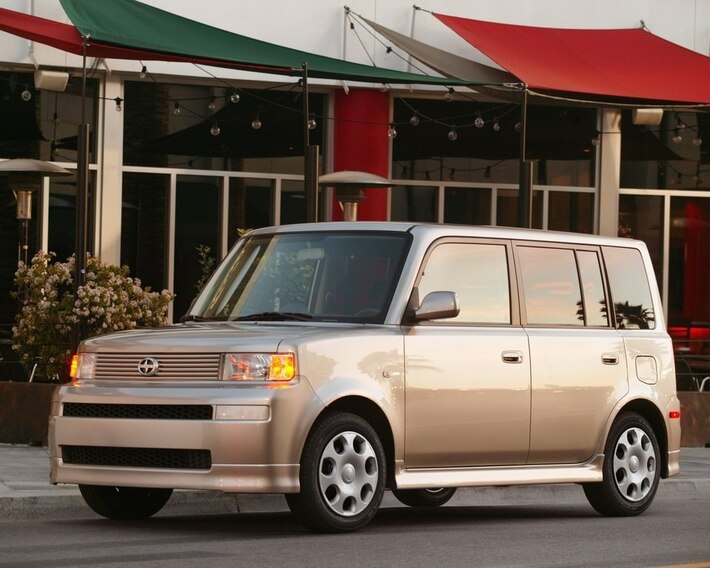
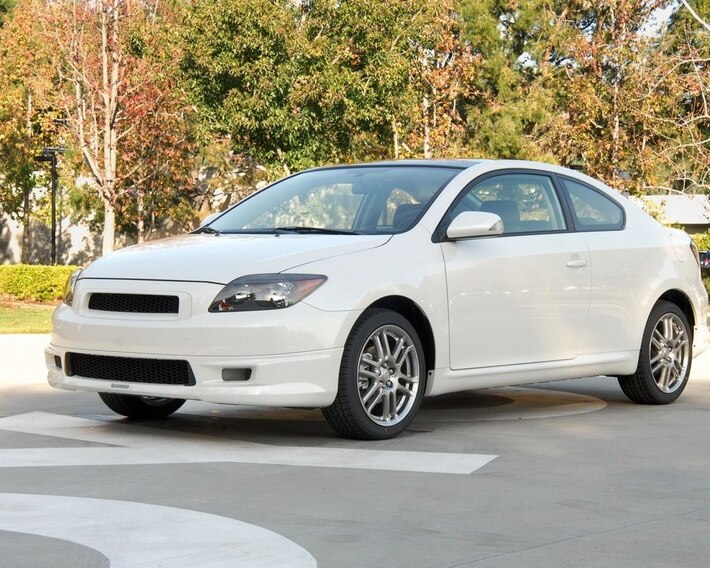
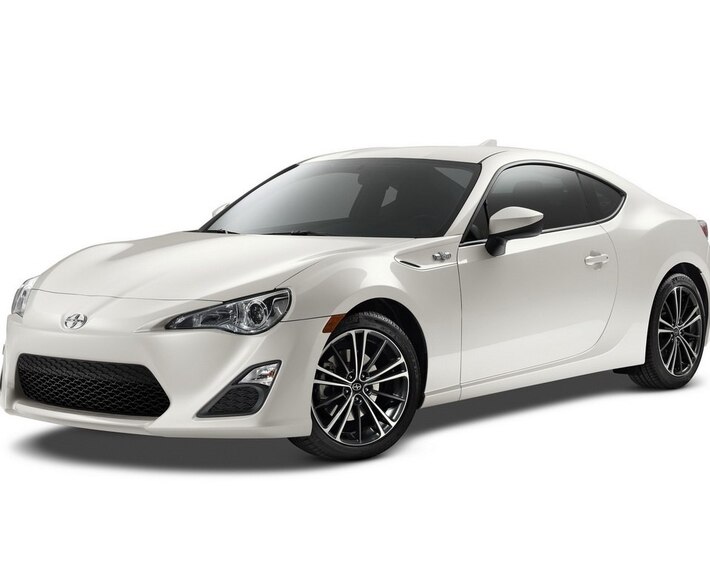
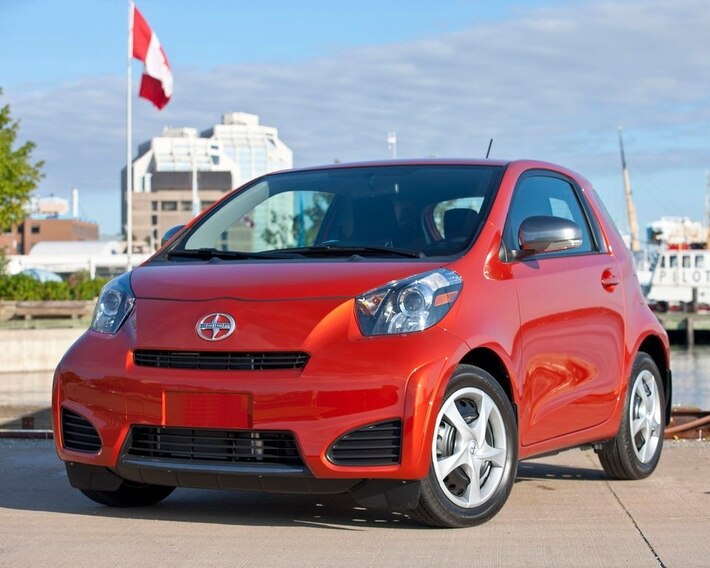
Model Lineup
Scion's range balanced quirky personality with Toyota-backed mechanical reliability — from the boxy urban xB to the driver's sports car FR-S, the brand offered a range of distinctively styled and accessibly priced vehicles built on proven Toyota platforms.
Engineering & Technology
Scion's engineering approach relied entirely on Toyota's proven platform and powertrain architecture — the brand's value proposition was not mechanical innovation but rather a combination of reliable Toyota DNA, bold styling, and unprecedented personalisation capability. All Scion models shared platforms, engines, and major mechanical components with Toyota vehicles, providing buyers with the reliability and after-sales support of a global automotive manufacturer in a vehicle with a distinctly youthful identity.
- Toyota platform architecture — every Scion model was built on a Toyota platform with proven mechanical reliability; the xB used the Corolla platform, the tC shared its underpinnings with the Avensis and Camry, and the FR-S was developed jointly with Subaru on the ZN6/ZC6 rear-wheel-drive platform
- Mono-spec pricing simplicity — Scion's single-specification pricing model eliminated option packages entirely, making every model fully equipped and removing the confusion and negotiation associated with traditional automotive purchasing; buyers added personalisation through factory-approved accessories rather than specification variants
- Modular accessory system — Scion developed an unprecedented catalogue of Toyota-approved accessories enabling buyers to personalise their vehicles without voiding warranties; from body kits and alloy wheels to interior trim and audio systems, the accessory programme became the brand's primary point of differentiation
- FR-S boxer engine — the 2.0-litre horizontally opposed flat-four engine in the FR-S was developed with Subaru specifically for sports car application, mounted low in the chassis to minimise the centre of gravity and optimise weight distribution; the engine's natural aspiration was a deliberate choice to preserve linear throttle response and driver engagement
- Youth-focused dealer experience — Scion implemented a distinct retail protocol at Toyota dealerships that eliminated high-pressure sales tactics, provided transparent pricing, and offered a culturally relevant environment that respected the intelligence and independence of young buyers
Scion in Azerbaijan
Scion vehicles reached Azerbaijan through the parallel import channel from the United States and Japan, where used examples were available at prices reflecting the brand's accessible original pricing and the relative unfamiliarity of the Scion name in CIS markets. The xB's distinctive proportions made it immediately recognisable among Azerbaijani enthusiasts familiar with American car culture, while the FR-S attracted buyers seeking affordable rear-wheel-drive sports car performance — a segment with few genuinely accessible options in the Azerbaijani market.
For Azerbaijani buyers considering a used Scion, the key advantage is the direct compatibility with Toyota parts and service infrastructure. All Scion models share their mechanical components with corresponding Toyota vehicles — a Scion xB is mechanically a Toyota Corolla, and a Scion FR-S is mechanically identical to a Toyota 86/Subaru BRZ. This means that parts availability, service knowledge, and Toyota dealer support are fully applicable to Scion vehicles, making ownership considerably more straightforward than other imported American brands without established CIS service networks.
Why Consider a Scion?
- Toyota reliability in a distinctive package: Every Scion was built on a Toyota platform with Toyota powertrain components — the mechanical reliability, parts availability, and service knowledge of Toyota's global network apply directly to Scion vehicles, providing used car buyers with genuine Toyota-grade durability in a vehicle with a more distinctive design identity.
- FR-S: an accessible purist sports car: The Scion FR-S represents one of the most acclaimed driver's cars at any price point in its era — its rear-wheel drive, naturally aspirated engine, and precision chassis tuning provide a driving experience that expensive sports cars struggle to match for pure mechanical communication; ownership of a used FR-S delivers sports car engagement at affordable prices.
- Abundant Toyota parts compatibility: Because Scion models share their mechanical architecture with Toyota vehicles sold globally, parts for Scion models are either identical to or directly compatible with Toyota equivalents — Azerbaijani Toyota service centres can maintain Scion vehicles with standard Toyota tooling and parts supply.
- Distinctive design rarely seen in Azerbaijan: The xB's boxy proportions and the FR-S's low sports car profile are both visually distinctive in the Azerbaijani market where Japanese and Korean sedans dominate — Scion ownership provides a degree of individuality that few affordable used cars can match.
- Youth-culture significance: Scion vehicles carry genuine automotive culture significance — the FR-S became a favourite of the drifting and tuning community worldwide, and the xB remains an icon of early 2000s American youth automotive culture; for enthusiasts, Scion ownership connects them to a chapter of automotive history that continues to influence car design and culture.
BakuWheels uses cookies to improve your experience, analyse site traffic, and personalise content. By clicking Accept All, you consent to our use of cookies. Learn more in our Cookie Policy.