

Asia Motors
South Korea's pioneering off-road and commercial vehicle subsidiary — building rugged SUVs and practical vans for demanding markets across the developing world.
A Korean Pioneer in Off-Road Vehicles
Asia Motors was founded in 1965 in South Korea as a specialist manufacturer of commercial vehicles and off-road transportation solutions. At a time when South Korea's automotive industry was still in its formative stages, Asia Motors focused on producing practical, durable vehicles suited to the country's rugged terrain and developing road infrastructure. The company became a subsidiary of Kia Motors, which provided technical and financial support while allowing Asia to maintain a distinct brand identity focused on utility vehicles.
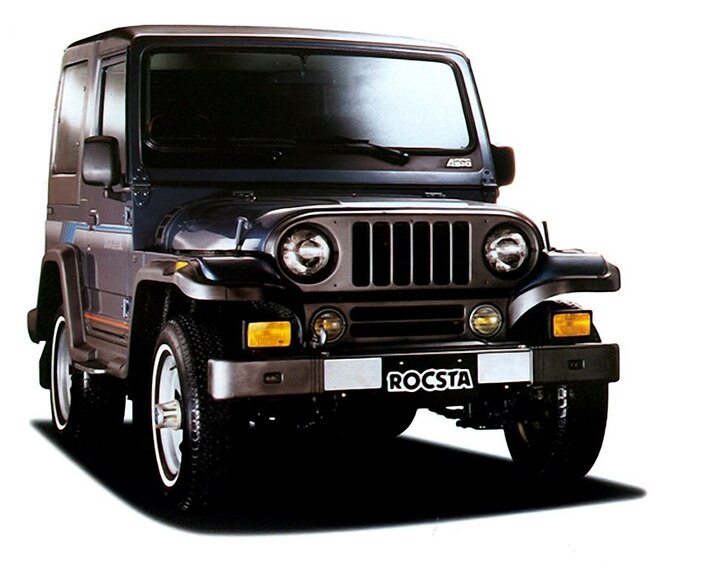
The brand gained international recognition through its Rocsta model, a compact off-road vehicle that drew inspiration from classic Jeep design principles while incorporating Korean manufacturing capabilities. Sold across developing markets in Asia, the Middle East, and Latin America, the Rocsta became Asia Motors' most commercially successful product, admired for its durability, simplicity, and genuine off-road capability at an accessible price point.
Following Kia's acquisition by Hyundai Motor Group in 1998 during the aftermath of the Asian financial crisis, the Asia Motors brand was gradually wound down and its production lines integrated into Kia's broader manufacturing structure. The brand ceased independent operation in 1999, its vehicles and technologies absorbed into the Kia product portfolio that continues today.
Brand Milestones
Notable Models
Asia Motors produced a focused range of utility vehicles — each engineered for practicality and durability over luxury, serving markets that demanded honest, capable transportation.
Asia Motors in Pictures
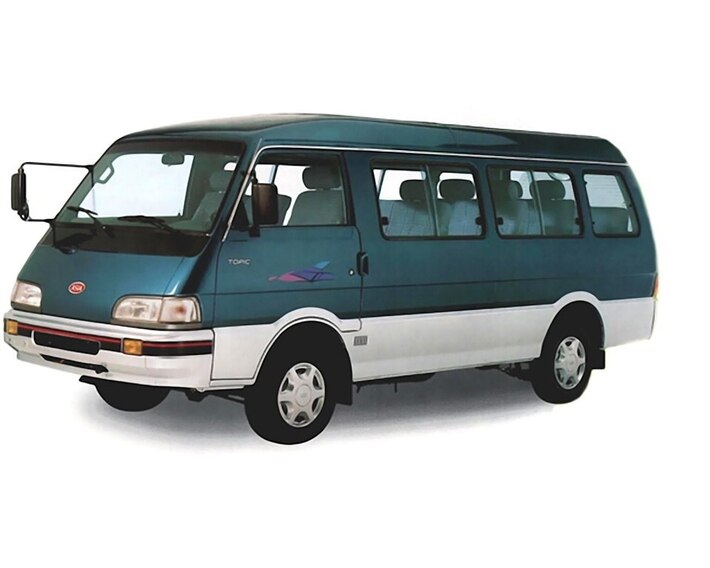
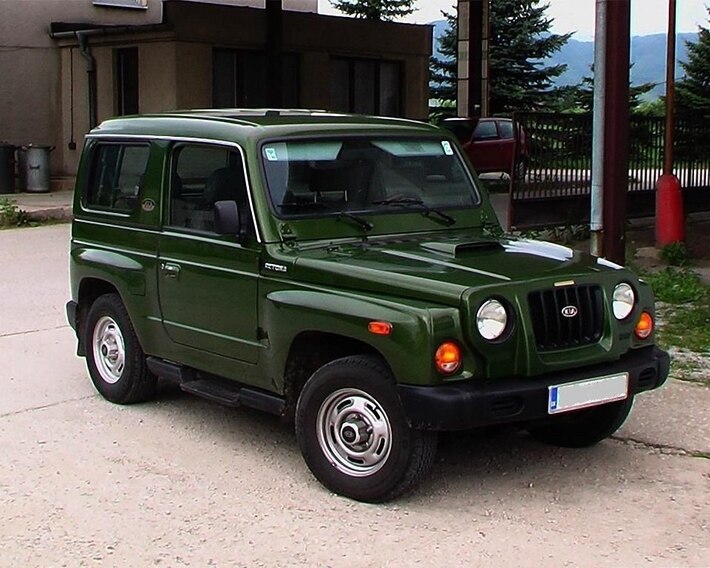
From the Rocsta's rugged off-road proportions to the practical utility of the Topic van, Asia Motors' vehicles were defined by function over form.
Engineering Approach
Asia Motors vehicles were built around a philosophy of mechanical honesty — using proven components, conventional layouts, and robust construction methods that prioritised longevity and repairability over technological complexity. The Rocsta's ladder-frame chassis, solid front and rear axles, and part-time four-wheel-drive system represented a continuation of the practical off-road formula established by Jeep and Land Rover in the post-war era.
The brand's commercial vehicles, including the Topic van, used front-engine, rear-wheel-drive layouts with conventional coil spring suspension — configurations that maximised the usable load space while keeping maintenance straightforward and affordable. Kia-sourced petrol and diesel engines provided the mechanical core, with reliability and parts availability prioritised over performance.
- Ladder-frame chassis construction — providing torsional rigidity for off-road use and the ability to be repaired in field conditions without specialist tooling
- Solid front and rear axles — the Rocsta used live axles at both ends, providing articulation over uneven terrain and mechanical simplicity compared to independent suspension designs
- Part-time four-wheel drive — a manually selectable two-speed transfer case gave the Rocsta genuine off-road capability without the complexity and weight of full-time AWD systems
- Kia diesel powertrain — a 2.2-litre diesel engine provided the torque required for off-road driving and towing while delivering acceptable fuel economy for commercial operators
- Open-body construction options — the Rocsta was available as a soft-top, hard-top, and pick-up variant, giving buyers flexibility to configure the vehicle for different working environments
Asia Motors in Azerbaijan
Asia Motors vehicles, particularly the Rocsta, occasionally appear in the Azerbaijani used vehicle market — typically examples imported from their primary markets in the Middle East, where the model was sold new during the 1990s. Their simple mechanical design and modest parts requirements make them appealing to buyers seeking low-cost, capable transport for rural and off-road environments.
For collectors and enthusiasts interested in the history of South Korean automotive development, Asia Motors represents an important chapter in the transformation of Korean industry from a licence-based manufacturing economy to an internationally competitive automotive power. BakuWheels connects buyers with specialist dealers and private importers who can source classic Asian commercial and utility vehicles.
Why Asia Motors?
- Genuine off-road capability: The Rocsta's ladder frame, solid axles, and mechanical four-wheel drive provide authentic off-road performance in a compact, affordable package — capability that many modern SUVs with unibody construction and electronic traction control cannot replicate.
- Mechanical simplicity: Asia Motors vehicles were designed to be repaired and maintained with basic tools in challenging conditions — a philosophy that continues to attract buyers in markets where dealer service networks are limited.
- Historical significance: Asia Motors represents an important moment in South Korean industrial history — one of the early Korean brands to achieve meaningful international export sales and establish Korean automotive engineering credibility in challenging markets.
- Collector appeal: The Rocsta, in particular, has developed a following among 4x4 enthusiasts who appreciate its honest design, compact dimensions, and the nostalgia of early South Korean automotive export products.
- Low operating costs: Shared mechanical components with contemporary Kia models mean that parts availability, while not universal, is better than for many obscure makes — and the vehicles' simple engineering keeps maintenance costs low.
BakuWheels uses cookies to improve your experience, analyse site traffic, and personalise content. By clicking Accept All, you consent to our use of cookies. Learn more in our Cookie Policy.